WGSN Opened Up Its Runway AI Data to Clients — But Won’t Say How Accurate It Is

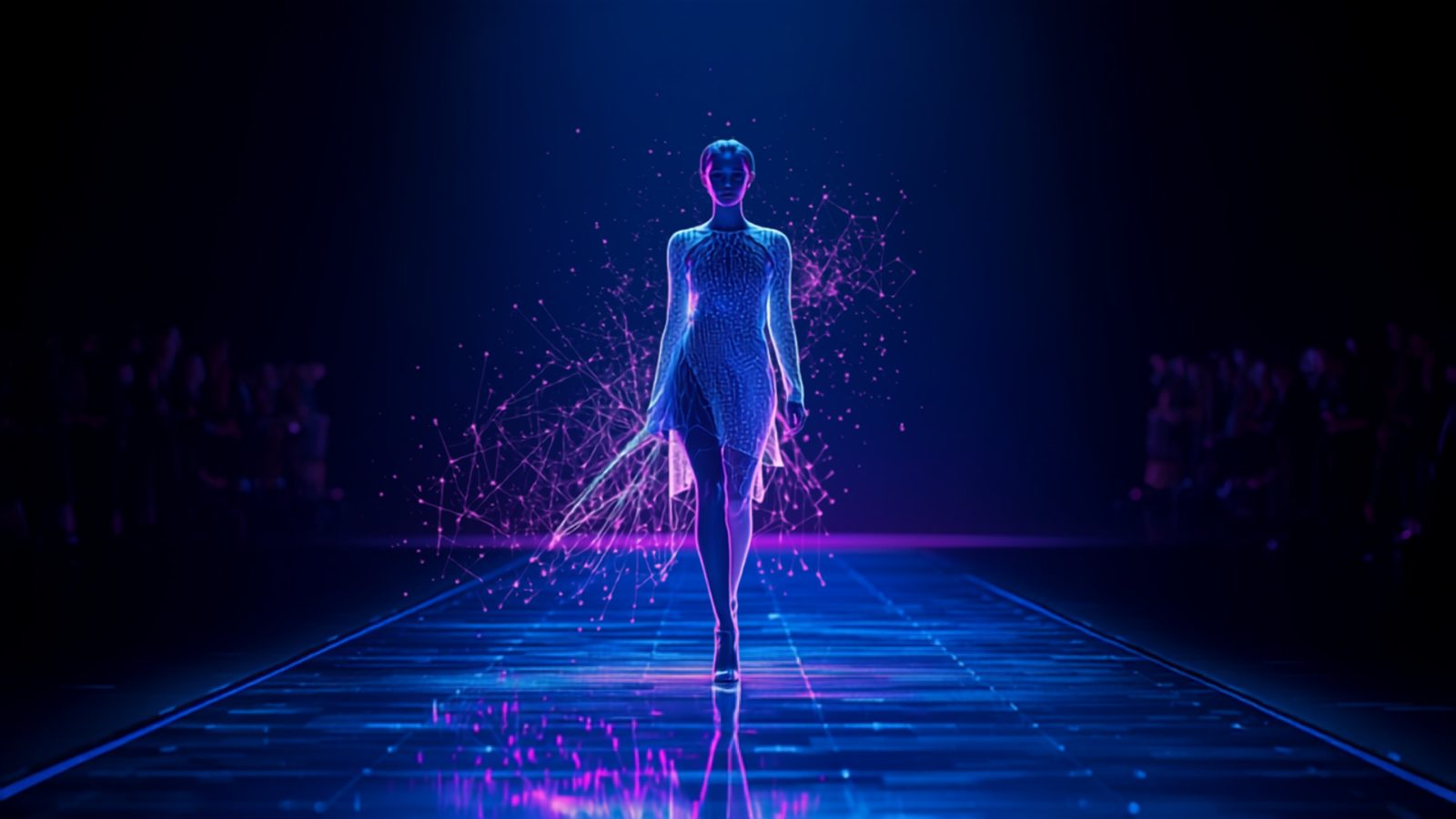
Digital model on illuminated runway with abstract AI data network overlay, representing AI-powered runway trend analysis

WGSN has stopped keeping its runway trend data behind analyst reports and handed the query box straight to clients: the trend forecasting giant’s new Catwalks AI Dashboard lets designers, buyers, and merchandisers filter live fashion week data themselves — by market, season, brand, and city — instead of waiting for a human-written wrap-up. The rollout landed this September, timed to New York, London, Milan, and Paris fashion month, and it says more about where AI trend tools are heading than the dashboard’s feature list alone lets on.

What the Catwalks AI Dashboard Actually Does

The dashboard runs on Fashion Vision, WGSN’s AI image recognition model, which tags runway looks by category and color as shows happen and refreshes the data daily through fashion month. Users can pull up a city, a season, or an individual brand and compare product, color, and style shifts side by side — the kind of cross-referencing that used to mean digging through separate PDF reports or waiting for WGSN’s analysts to publish a seasonal recap.

That’s a real shift in who does the interpreting. WGSN’s existing Catwalks service still pairs live show coverage with commentary from its analyst teams, and that layer isn’t going away. The dashboard sits alongside it as a self-serve option for teams that want to build their own read on a season against their own design criteria, rather than starting from someone else’s conclusions.

Why WGSN Built a Self-Serve Tool

WGSN Group CEO Carla Buzasi has said the dashboard’s build came from specific requests by some of the company’s largest clients — brands that wanted direct access to the underlying data rather than only the finished analysis. That’s a notable admission from a company whose business has historically been selling interpretation, not raw data.

It also reads as a defensive move. Runway-data competitors like Heuritech, Tagwalk, and Stylumia have built businesses around letting fashion teams query catwalk and social data directly, and WGSN’s dashboard closes a gap those companies had been filling. For a fashion brand deciding where to put its trend-intelligence budget, the practical effect is more choice: the same underlying runway season is now available as either a polished analyst narrative or a raw, filterable dataset, often from the same vendor.

The Accuracy Question Nobody’s Answered Yet

What WGSN hasn’t published is how accurate Fashion Vision’s tagging actually is once you drill down to the brand level. Aggregate trend calls — “cargo pants are up,” “brown is replacing black” — can tolerate some noise in the underlying image tagging and still land on a directionally correct answer. A dashboard built for teams to run their own comparisons is a different product: it invites exactly the kind of granular, brand-by-brand query where a model’s blind spots show up fastest, and there’s no published error rate to tell a user when to trust a filtered result versus double-check it.

It’s a version of a problem this site has covered before in AI fashion tools generally: a model’s real-world reliability hinges on what its training data actually represented, and vendors rarely publish that breakdown up front. WGSN framing this as a tool built at clients’ request doesn’t resolve that question — it just means the industry is about to find out the answer through use rather than through a disclosed benchmark.

FAQ

Is the WGSN Catwalks AI Dashboard replacing WGSN’s analyst-written trend reports?

No. WGSN’s existing Catwalks service, which combines live show coverage with analyst commentary and seasonal wrap-ups, continues alongside the dashboard. The dashboard is a separate, self-serve layer for teams that want to query the raw runway data directly.

What technology powers the dashboard’s filtering?

Fashion Vision, WGSN’s AI image recognition model, tags runway looks by category and color to enable the filtering and city/season/brand comparisons, with data updating daily during fashion month.

How does this compare to other runway-data tools on the market?

It puts WGSN more directly in competition with companies like Heuritech, Tagwalk, and Stylumia, which already sell queryable runway and social-media trend data rather than only narrative trend reports.

Source: WWD — “WGSN Launches Platform to Analyze Fashion on the Runway,” and FTW — “Primark Pays £90m to Deliver, BoF Questions Fashion’s AI Image Habit, WGSN Sells Runway Data Direct,” https://ftw.pi.tv/primark-pays-90m-to-deliver-bof-questions-fashions-ai-image-habit-wgsn-sells-runway-data-direct/

By Michelle Jones, Fashion News GF
AI Won’t Gut Fashion’s Workforce — It’s Rewriting Who Gets Hired, New Report Argues

Folded neutral-toned fabric swatches and a spool of thread on a light wood tabletop

A new industry analysis is complicating the usual “AI is coming for fashion jobs” narrative: by 2030, up to 40% of workers in developed economies may need to reskill or shift into new roles as fashion companies adopt AI — but the argument from inside the industry is that the technology is meant to amplify scarce expertise, not simply eliminate headcount. The figure comes from the McKinsey & Company and Business of Fashion State of Fashion 2026 report, and it’s the anchor for a September 3, 2026 industry analysis from Lectra — a major fashion design and production software company — that’s worth unpacking for anyone trying to separate real workforce change from AI hype.

What the Reskilling Number Actually Means

The 40%-by-2030 figure isn’t a layoff forecast. It describes the share of the fashion workforce in developed economies whose day-to-day role is expected to look meaningfully different because of AI and automation — new tools to run, new decisions to make with AI-generated input, new skills to learn on top of what the job already required. That’s a distinction that gets lost in a lot of AI-and-jobs coverage, which tends to collapse “role changes” and “role disappears” into the same story.

Writing in Textile World, John Brearley, President of Americas at Lectra, frames the shift this way: “Technology alone will not solve the talent gap, but when applied intentionally, it can significantly amplify scarce expertise.” His argument is that fashion has a structural talent problem already — specialized pattern-making, fit, and production-planning skills that take years to build and aren’t being replaced fast enough as experienced staff retire — and that AI’s more realistic job in the near term is closing that gap rather than shrinking the workforce that’s left.

Where AI Is Actually Slotting In

The specific mechanism Brearley points to is knowledge capture: “AI-driven solutions can capture institutional knowledge, standardize best practices and provide real-time insights that support better decisions.” In practice, that’s less about a chatbot replacing a designer and more about software that watches how a company’s most experienced pattern-makers or planners actually solve problems, then makes that judgment available to someone five years into their career instead of twenty.

That framing matters for how brands should be evaluating the current wave of AI fashion tools. A lot of what gets marketed as “AI for fashion” is aimed at shoppers — virtual try-on, style recommendations, AI-generated campaign imagery. The reskilling argument points at a quieter, less visible category: tools built for the people inside a fashion company, doing production planning, quality control, and design iteration, where the payoff isn’t a flashier storefront but fewer bottlenecks caused by knowledge that used to live in one person’s head.

Why This Is Worth Watching, Not Just Reading

Reports like State of Fashion get produced every year, and it’s easy to treat the reskilling stat as one more abstract projection. What makes this one worth tracking is that it’s already shaping how a company that actually sells software into fashion production — not a consultancy with no skin in the outcome — is pitching its own tools to the industry. When the vendor’s public argument shifts from “automate this task” to “capture this person’s expertise before it walks out the door,” that’s a signal about where fashion companies are actually spending budget, not just where the marketing copy points.

The open question is whether “amplify scarce expertise” holds up as adoption scales, or whether it turns out to be the more palatable way of describing the same headcount pressure other industries have seen from AI. Worth watching over the next year: whether fashion companies talk publicly about reskilling programs tied to specific AI tools, or whether the tools simply get adopted and the roles they were meant to “amplify” quietly shrink anyway.

FAQ

Does the 40% reskilling figure mean 40% of fashion jobs will be cut by 2030?

No. The McKinsey/Business of Fashion State of Fashion 2026 report projects that up to 40% of workers in developed economies may need to reskill or transition to new roles as AI and automation change how fashion companies operate — that’s a description of role change, not a job-loss forecast.

What kind of AI tools is this actually about?

The analysis focuses on AI used inside fashion companies for things like production planning, pattern-making support, and capturing institutional knowledge from experienced staff — a different category from the shopper-facing AI tools (virtual try-on, style recommendations) that get more headlines.

Who is making this argument?

John Brearley, President of Americas at Lectra, a fashion design and production software company, writing in Textile World and citing the McKinsey & Company / Business of Fashion State of Fashion 2026 report.

Source: Textile World — John Brearley (Lectra), “AI Can Strengthen Fashion’s Skilled Workforce,” published September 3, 2026, https://www.textileworld.com/textile-world/knitting-apparel/2026/09/ai-can-strengthen-fashions-skilled-workforce/

By Michelle Jones, Fashion News GF
AI Still Misreads Skin Tone in New Benchmark — And AI Style Analysis Runs on That Data

Fanned arc of warm and cool fabric colour swatches beside folded fabric on a neutral surface in soft daylight

Upload a selfie, paste in a prompt, and let a chatbot tell you your “color season,” your undertone, and the exact palette that supposedly flatters you. That workflow — call it AI style analysis — went mainstream in 2026, powering everything from viral ChatGPT threads to paid styling apps and color-matching widgets built into retailer websites. A recent benchmark study is a useful reality check on how well the technology underneath actually reads a human face.

What the Research Found

The study, released as a preprint by Haoming Lu of Topaz Labs, introduces a dataset called TrueSkin: 7,299 images — 1,790 photographed and 5,509 synthetically generated — sorted into six skin-tone categories the paper labels Dark, Brown, Tan, Medium, Light, and Pale. The structure borrows the six-point layout of the Fitzpatrick scale but grades on plain visual perception rather than dermatological criteria, which is closer to how a styling tool would use it.

When the researcher tested a range of general-purpose multimodal models on that dataset, none classified skin tone correctly more than roughly half the time. Reported accuracy came in at 44.31% for LLaMA 3.2, 40.45% for LLaVA-NeXT, 48.83% for Janus-Pro-7B, 43.12% for Qwen 2.5, and 41.40% for Phi-3.5. A model trained specifically on TrueSkin reached 74.18%, an improvement of more than 20 percentage points over the off-the-shelf systems.

The mistakes were not random. The paper describes a consistent bias toward lighter skin tones, alongside a countervailing pattern in which many mid-range brown samples were pushed the other way and misread as dark. Image-generation models showed a related weakness: when the researcher asked systems such as SDXL, SD3, and FLUX.1-dev to render a specified skin tone, unrelated details in the prompt shifted the result — adding “braided hair,” for instance, tended to make the generated skin deeper than requested.

Why This Matters for AI Style Analysis

Seasonal color analysis is, at its core, a classification task performed on a person’s coloring — skin depth and undertone first, then hair and eyes. If a model’s read of skin tone is skewed before it ever gets to picking colors, every recommendation downstream inherits that skew. And because the study found the error is not evenly distributed, the people most likely to be handed an inaccurate palette are those with medium-to-deep skin — the same groups that face-analysis systems have historically served worst.

This is not limited to novelty chatbot prompts. Fashion and beauty retailers are actively wiring color-matching and AI stylist features into their apps and product pages, and many of those features call the same class of general-purpose vision models the study evaluated. A styling widget that quietly nudges warm-toned or deeper-skinned shoppers toward the wrong palette is a fairness problem and a conversion problem at the same time.

The Practical Takeaway

The research also points to a fix that already exists: a purpose-built model beat the strongest general chatbot in the same test by a wide margin. That is a strong argument that “ask a big AI model” is the wrong tool for this specific job, and that anyone shipping — or paying for — AI style analysis should know whether it runs on a specialized system or a generic one.

If you are using one of these tools yourself, treat the output as a starting hypothesis rather than a verdict, especially for deeper skin tones. Shoot your reference photo in indirect natural light, skip makeup, and wear something neutral or bare your shoulders so fabric color does not bounce onto your face. Run it more than once and compare. And if the result genuinely matters to a wardrobe decision, a human color analyst is still the more reliable check — the automated version has caught up on convenience, not yet on accuracy.

FAQ

What counts as “AI style analysis”?

It is an umbrella term for tools that analyze a photo of you — usually a selfie — to estimate your undertone, contrast level, and “color season,” then recommend a color palette or specific outfits. Some run inside general chatbots through a prompt; others are standalone apps or features built into retailer websites.

Does this study mean AI color analysis is useless?

No. It can be a helpful, low-cost first pass. But the findings suggest you should be skeptical of any single result, particularly if you have medium-to-deep skin, and aware that a general-purpose chatbot performed worse than a model built specifically for skin-tone classification.

How do I get the most accurate read from one of these tools?

Use indirect natural light — not a ring light, overhead bulbs, or direct sun — remove makeup, and keep strong colors away from your face by wearing white, a skin-tone top, or baring your shoulders. Take several photos, compare the results, and cross-check against a human analyst if the stakes are high.

By Michelle Jones, Fashion News GF

Source: Haoming Lu, Topaz Labs — “TrueSkin: Towards Fair and Accurate Skin Tone Recognition and Generation,” arXiv preprint arXiv:2509.10980 (v2, revised February 2026), https://arxiv.org/abs/2509.10980

PointAI Skips Generative AI Entirely for One-Second Virtual Try-On — And ABFRL Is Testing It

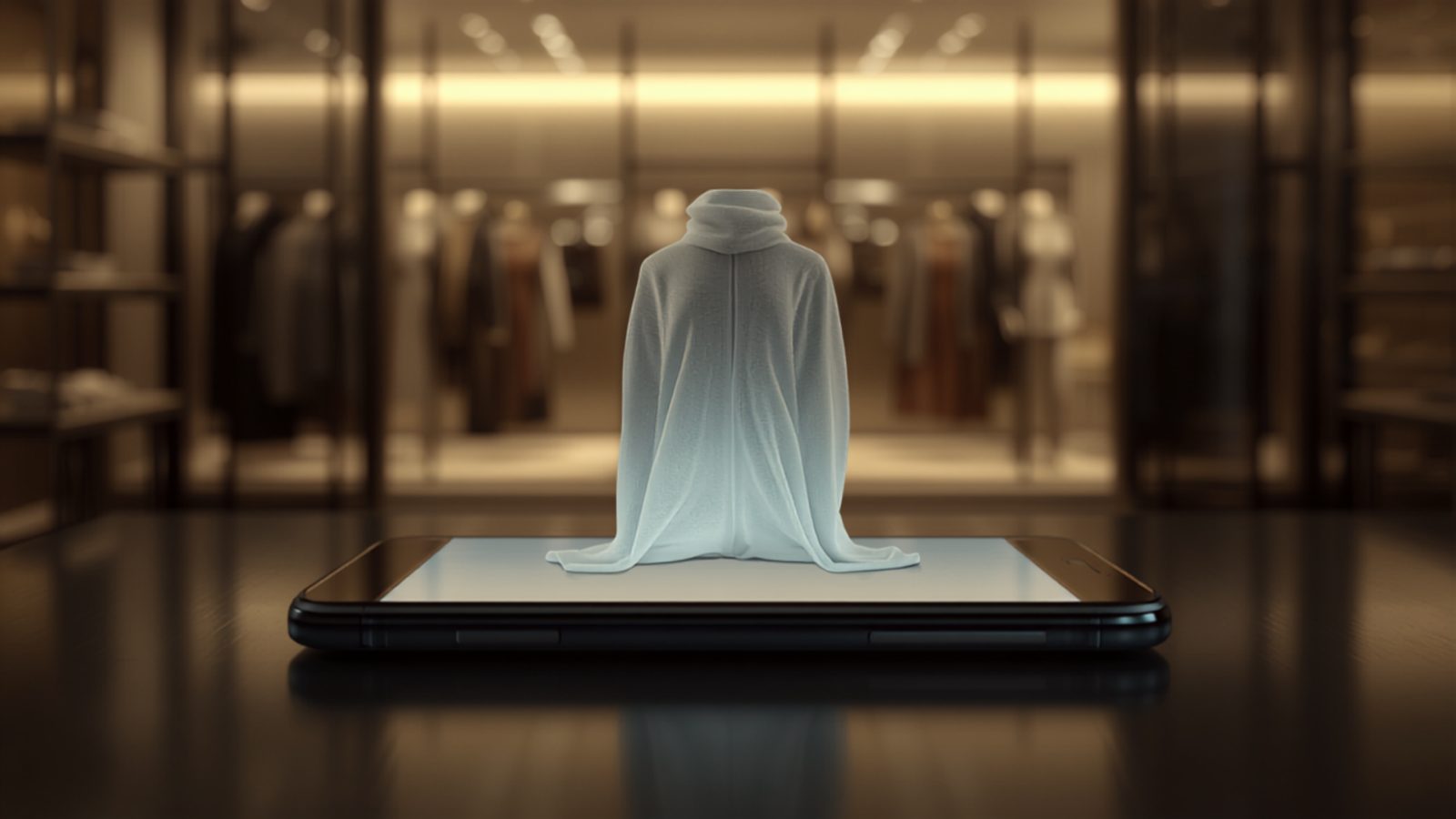
A translucent digital garment simulation floating above a smartphone screen inside a modern fashion boutique

PointAI, a Simulation AI company built by a former Microsoft Research scientist, says it can render a photorealistic virtual try-on in under a second — without touching a generative AI model at all. That claim is now being tested inside one of India’s largest fashion retailers, and it points at a fork in the road for how “AI try-on” gets built going forward.

Two Very Different Ways to Fake a Fitting Room

Most of the virtual try-on tools that have made headlines this year — including the DressX-powered luxury pilots we covered a few weeks back — work the same way under the hood: a generative model looks at a photo of a shopper and a photo of a garment, then predicts, pixel by pixel, what the combination should look like. It’s often convincing, but it’s still a guess. The model has never actually draped that fabric on that body; it’s pattern-matching against everything similar it’s seen before.

PointAI is pitching something structurally different. Rather than asking a generative model to imagine how a garment would fall, its Simulation AI pairs proprietary AI models with physics-based simulation — the same category of engine used to animate cloth in film and games — to calculate how a specific fabric actually behaves on a specific body shape. According to the company, that combination renders a result in under a second, trained across more than 200,000 body-type variations, at roughly 1/100th the per-image cost of generative try-on APIs, which the company says typically run around $0.15 per image and take 30 to 60 seconds to generate.

Why a Retailer the Size of ABFRL Is Paying Attention

The technology isn’t just a lab demo. PointAI is already working with Aditya Birla Fashion and Retail Limited (ABFRL) — one of India’s largest fashion retail groups, with a footprint that runs into the thousands of stores — where the two companies showcased an in-store virtual trial setup and an AI styling advisor at ABFRL’s Fashion Excellence Day in Mumbai this week. Nothing is formally signed for a nationwide rollout yet, but the demo reportedly covered a mix-and-match trial room experience alongside a broader evaluation across ABFRL’s roughly 3,000 stores. PointAI has also shown the same underlying tech at Bharat Tex 2026 alongside Gokaldas Exports, in front of global manufacturing clients including Adidas, Aerie, Banana Republic, M&S, and Puma, and separately lists Amazon, Flipkart, Myntra, and Rakuten among its retail relationships.

That’s a meaningfully different sales pitch than most AI fashion tools make. The company isn’t leading with “look what generative AI can do” — it’s leading with independence from generative AI. Its argument is that not relying on a commercial foundation model API from OpenAI or Google gives enterprise retailers something generative try-on can’t: predictable unit economics, no exposure to a third party’s pricing changes, and tighter control over how shopper photos are processed. For a retailer running try-on at the scale of a few thousand stores, a $0.15-per-render generative pipeline and a 30-to-60-second wait aren’t rounding errors — they’re the difference between a feature that scales and one that gets quietly shelved.

What This Signals for the Rest of the Industry

PointAI founder Nitin Vats framed the bet in blunt terms: “The last decade of commerce was built for people who browsed. The next is built for people who delegate to agents.” That’s consistent with what we’ve been tracking across AI fashion coverage all year — brands are racing to make discovery and fit-checking instant enough that a shopper (or eventually a shopping agent acting for them) doesn’t bounce before converting. Where PointAI’s approach stands out is in treating “instant and cheap” as a technical requirement to be engineered around, rather than a trade-off to accept as the price of using generative AI.

None of that guarantees physics-based simulation wins out over generative approaches long-term — plenty of retailers will still choose GenAI try-on for its flexibility in rendering totally novel styling combinations a physics engine hasn’t modeled. But it’s a useful reminder that “AI try-on” isn’t one technology; it’s a category with genuinely different engineering bets underneath it, and the bet that wins at enterprise scale may not be the one that gets the most demo-day attention.

FAQ

Is PointAI’s virtual try-on already live in stores?
Not at full scale yet. PointAI has demoed its technology with Aditya Birla Fashion and Retail (ABFRL) at a Mumbai event this week, with a broader rollout across ABFRL’s roughly 3,000 stores reportedly under evaluation — no formal nationwide agreement has been announced.

How is “Simulation AI” different from the generative AI try-on tools other brands use?
Generative try-on tools predict what a garment-on-body image should look like based on patterns learned from training data. PointAI instead pairs AI models with physics-based simulation that calculates how a specific fabric actually drapes on a specific body shape, which the company says is faster and cheaper to run at scale.

Which retailers is PointAI already connected to?
Beyond the ABFRL pilot, PointAI lists relationships with Amazon, Flipkart, Myntra, and Rakuten, and it showcased the technology alongside manufacturer Gokaldas Exports at Bharat Tex 2026 in front of brands including Adidas, Aerie, Banana Republic, M&S, and Puma.

By Michelle Jones, Fashion News GF
Source: The Print / ANI Press Releases, “PointAI, AI Partner to Aditya Birla Fashion, Eyes Rollout of One-Second Virtual Try-On Technology Across ABFRL Stores” (published August 22, 2026), https://theprint.in/ani-press-releases/pointai-ai-partner-to-aditya-birla-fashion-eyes-rollout-of-one-second-virtual-try-on-technology-across-abfrl-stores/3022239/

ImagineArt’s New AI Fashion Studio Wants to Replace the Photoshoot Entirely

Glowing holographic digital fashion model standing in a blue-lit studio, representing AI-generated fashion photography

ImagineArt launched AI Fashion Studio on August 13, 2026, a tool built to generate fashion photography and video without booking a model, renting a studio, or hiring a photo crew — and the pitch isn’t a novelty filter, it’s a full production replacement. Brands create a reusable AI model once, then dress it in garments, set a background, direct a pose, and generate finished stills or video from that same digital model across an entire product range. For a category that runs on photoshoots — new ones for every drop, every season, every SKU — that’s a direct hit on one of fashion’s oldest cost centers.

What AI Fashion Studio Actually Does

The tool works as a six-step workflow: pick or generate an AI model, dress it in the garment, add accessories, set the background, direct the pose, then generate the image or video. The output can be exported as a square, vertical, or widescreen file, which covers the different crops a brand needs for a product page, an Instagram Reel, and a paid ad without a separate shoot for each. ImagineArt says the tool comes with full commercial rights and no licensing fees, and it plugs into the company’s other tools — AI Ad Studio, AI Film Studio, and Audio Studio — so a brand can take the same generated model straight into ad creative or a short video without switching platforms.

The detail that matters most for how brands will actually use this is model consistency. Instead of generating a different AI face for every image — the thing that makes a lot of AI-generated fashion content look obviously synthetic and inconsistent — a brand builds one reusable model and keeps using it across a full collection, and in theory across future collections too. That’s the difference between a gimmick and something a brand can actually build a catalog around.

Why This Is Bigger Than Another AI Photo Tool

Fashion photography has always had a built-in floor cost: book a model, book a studio, book a photographer and stylist and retoucher, then do it again next season. That floor cost is exactly why smaller and independent brands have historically looked less polished online than the majors — not because their product is worse, but because they can’t afford the shoot. A tool that collapses that whole process into a browser workflow with no crew and no studio rental doesn’t just make big brands faster, it changes who can compete on visual polish at all. ImagineArt is explicitly pitching this at solo designers and small brands without studio budgets, alongside the e-commerce and editorial teams you’d expect.

The other side of that is the question this kind of tool always raises: what happens to the models, photographers, and studio crews whose work this is designed to replace. ImagineArt frames the tool around eliminating “a persistent bottleneck in fashion production” — reshoot risk, rebooking risk, the logistics of coordinating a crew — but a bottleneck for a brand’s production calendar is also, in plain terms, paid work for the people currently filling that role. That tension isn’t unique to fashion, but fashion is one of the first creative industries where the AI version of the output is close enough to commercial-grade that the substitution argument is now genuinely live, not hypothetical.

What to Watch From Here

The near-term test isn’t whether AI Fashion Studio can produce a usable image — that bar has effectively already been cleared by this category of tool. It’s whether brands are willing to put a fully synthetic model on a product page without disclosure, and whether shoppers notice or care when they do. Watch two things over the next few months: whether major retailers start using tools like this for core product photography rather than just marketing content, and whether any brand gets called out publicly for running AI-generated models without saying so. Both of those will do more to set the norms here than anything in ImagineArt’s own launch materials.

FAQ

What is ImagineArt’s AI Fashion Studio?
It’s an AI tool, launched August 13, 2026, that lets brands build a reusable AI fashion model, dress it in garments, and generate catalog-quality photography and video without a physical model, studio, or photo crew.

Does it replace photographers and models entirely, or just cut down on reshoots?
ImagineArt positions it as a full alternative to traditional shoots, not just a reshoot backup — the six-step workflow (model, garment, accessories, background, pose, generation) is designed to produce finished, publish-ready output on its own.

Who is this actually built for?
ImagineArt is targeting e-commerce brands that need consistent visuals across many SKUs, editorial teams building campaigns and lookbooks, social and ad teams, and solo designers or small brands that don’t have a studio budget in the first place.

Source: FinancialContent / ABNewswire, “ImagineArt Launches AI Fashion Studio for Fashion Photography and Video” (published August 13, 2026), https://www.financialcontent.com/article/abnewswire-2026-8-13-imagineart-launches-ai-fashion-studio-for-fashion-photography-and-video

By Michelle Jones, Fashion News GF
69% of Americans Would Let AI Buy for Them — And Fashion Shoppers Are Already Spending 56% More

Close-up of hands using a smartphone while browsing a clothing rack, representing AI-assisted fashion shopping

A new survey from marketing agency Croud, published August 11, 2026, found that 69% of Americans would let an AI agent complete a purchase without stopping to approve it first — and fashion is one of the categories where that trust is already showing up in real spending. According to the Croud Consumer Index, shoppers who use AI tools during the fashion buying process spend 56% more than shoppers who don’t, and they’re 23% more likely to search by style or aesthetic rather than typing a specific product name or SKU. For a category that has spent the last two years testing AI try-on tools and AI-powered search bars, this is the first data point suggesting the behavior shift is actually sticking.

What the Croud Index Actually Measured

Croud’s researchers weren’t just asking whether people like chatbots. The index tracked how consumers move through a purchase when an AI tool is involved at any stage — research, comparison, or checkout — and found the behavior is more deliberate than the “lazy shopper” narrative around AI usually assumes. 73% of AI users said they research a brand through a large language model before buying, and 39% said they cross-check an AI recommendation against four or more other sources before committing. Only after that vetting process does the willingness to hand off the final step show up: half of consumers said they’re comfortable using AI checkout across at least three different product categories, and 75% said they’d use AI-powered instant checkout in at least one.

Croud U.S. CEO Val Davis framed the pattern as counterintuitive: AI, she said, “is making the consumer journey more human, not less,” because shoppers are layering in more validation steps before trusting a recommendation, not fewer. Global CMO Dani Jordan put the fashion-specific finding more bluntly: “AI shoppers research with intention, search by need and aesthetic over brand, and ultimately spend more.”

Why Fashion Is Where the Aesthetic-Search Number Matters Most

The 23% jump in style-and-aesthetic search over keyword search is the number worth sitting with if you follow this category. Traditional fashion e-commerce search was built around exact-match logic — a shopper types “black midi dress” and the site returns anything tagged that way, regardless of whether the cut, fabric, or occasion actually fits what the shopper had in mind. AI-native search flips that: a shopper can describe a mood, a body concern, or an event and get results filtered on those softer terms instead. Croud’s data suggests that once shoppers get a taste of that kind of search, they don’t go back to typing keywords — and they spend more once they find something that actually matches the vague idea in their head.

That also explains the 56% spend gap better than “AI makes buying easier” does. A shopper who searches by aesthetic and cross-checks four sources before buying isn’t being pushed into an impulse purchase — they’re arriving at checkout more convinced, for a piece they researched more thoroughly, which is a very different (and stickier) kind of high-spend behavior than a one-click impulse buy.

What This Signals for the Rest of the Year

The gap between the top-line number (69% comfortable with unsupervised AI purchasing) and the research-heavy behavior underneath it is the real story. Consumers aren’t asking AI to think for them — they’re asking it to filter faster while they still do the deciding, and only extending full autonomy to the final checkout click once they’ve already validated the choice themselves. Thorne VP of Growth Rajiv Ragu made a related point about how brands need to show up in that research phase at all: success in AI search, he said, “isn’t about optimizing for one platform” but about “building authoritative content” that AI tools can actually surface when a shopper describes what they want in plain language. As more of the fashion research phase moves into LLM conversations instead of search engine results pages, that’s the piece of this data worth watching next.

FAQ

What did the Croud Consumer Index actually find?
Surveying U.S. consumers, Croud found 69% would let an AI agent complete a purchase without approving it first, 73% research brands via LLMs before buying, and AI-assisted fashion shoppers spend 56% more than shoppers who don’t use AI tools.

Why do AI-assisted fashion shoppers spend more?
Croud’s data points to research depth, not impulse buying — AI users are more likely to search by style or aesthetic and to cross-check recommendations across multiple sources before purchasing, arriving at checkout more convinced of the fit.

Does this mean shoppers want AI to just buy things for them automatically?
Not exactly. The high comfort number applies mainly to the final checkout step after a shopper has already done their own research and validation — the data shows a deliberate process, not blind delegation.

Source: PR Newswire, “Croud Consumer Index Reveals 69% Of Americans Would Let AI Buy For Them Without Approval” (published August 11, 2026), https://www.prnewswire.com/news-releases/croud-consumer-index-reveals-69-of-americans-would-let-ai-buy-for-them-without-approval-302848958.html

By Michelle Jones, Fashion News GF

Daydream Wants to Put a “Shop With AI” Button on Every Fashion Brand’s Website

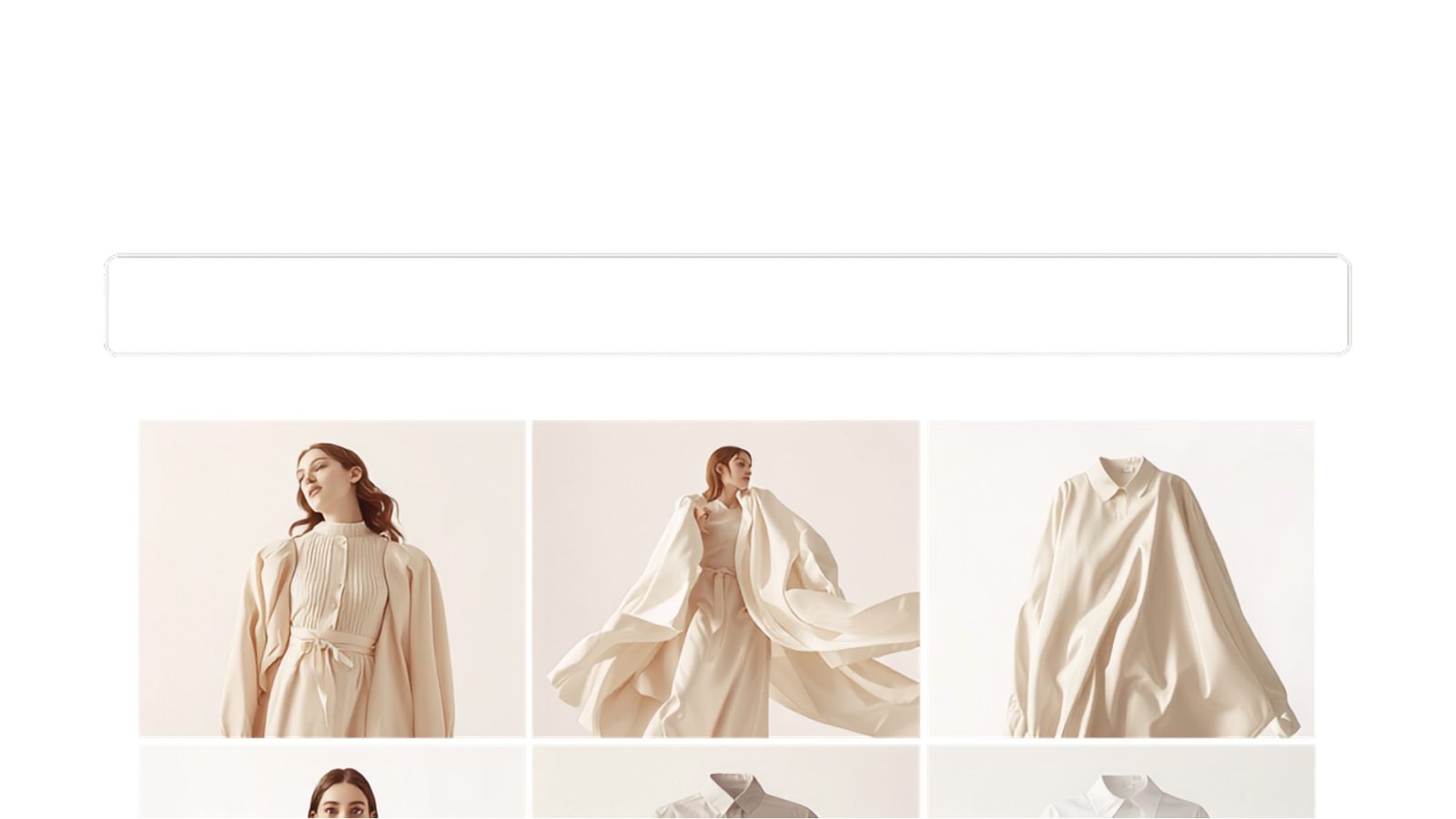
Minimalist fashion e-commerce website with an empty AI search bar above a grid of clothing product photos

Daydream, the AI fashion search platform founded by e-commerce veteran Julie Bornstein, just made a strategic pivot worth paying attention to: instead of pulling shoppers onto its own site, it’s now putting its “Shop with AI” search tool directly onto fashion brands’ own websites. The new program, called Powered by Daydream, went live July 29 with STAUD, Alice + Olivia, Couper, Cult Mia, and Hampden Clothing already using it, and more than 25 additional brands — including Anine Bing, Mansur Gavriel, Sandro, and Maje — signed on to follow. It’s a small move on paper. In the context of this year’s AI shopping land grab, it’s a meaningful one.

What Just Launched

Daydream built its reputation as a standalone AI shopping destination: describe what you want in plain language — “a flowy midi dress for a summer wedding, nothing too tight” — and it searches across its catalog of more than 3 million products from over 10,000 brands and 325 retailers to surface matches, the same way a human stylist would translate a vague request into specific pieces. Since exiting beta, the platform has passed 1.5 million shoppers and raised $50 million in seed funding from Forerunner Ventures, Index Ventures, Google Ventures, and True Ventures.

Powered by Daydream takes that same natural-language and visual-discovery engine and embeds it directly into a brand’s own site through a “Shop with AI” button, wired into that brand’s existing product catalog and infrastructure. A shopper on STAUD’s website can now describe cut, drape, silhouette, occasion, or price range conversationally and get results pulled only from STAUD’s own inventory — no keyword guessing, no leaving the site. “Search has never been a strong suit on most fashion sites,” founder and CEO Julie Bornstein said of the launch. “Powered by Daydream allows brands to bring that same experience to their own websites.”

Why Brands Keeping the Data Is the Real Story

Most of the AI shopping coverage this year has centered on a different pattern: conversational agents — ChatGPT’s shopping features, Amazon’s agentic tools, various in-app AI stylists — that sit between the shopper and the brand, deciding what gets surfaced and often keeping the customer relationship and data for themselves. Brands, in that arrangement, become inventory sources rather than the destination.

Powered by Daydream runs the opposite direction. Co-founder and Chief Brands Officer Lisa Yamner was direct about the pitch to brands: “We’ve made the integration as simple as possible. We handle the technical work for them.” But the more important detail is what brands get to keep — the customer data and the on-site experience stay with the retailer, rather than routing the shopper’s search history and purchase intent through a third-party AI layer. For a fashion brand watching bigger platforms build AI agents that could just as easily send a customer to a competitor’s product, owning the AI search experience on your own domain is a defensible position, not just a nicer search bar.

STAUD’s Chief Commercial Officer Alicia Carbone framed the value in terms of what conversational search reveals that keyword search doesn’t: “Understanding how preferences evolve through conversation gives us context that simply isn’t available through traditional search.” That’s a data argument as much as a UX one — a brand that can see how a shopper’s language shifts mid-search (“actually, something less formal”) learns more about intent than a filter click ever will.

What This Means Going Forward

For shoppers, the immediate change is a search box that behaves more like a stylist than a filter menu, without having to bounce between a brand’s site and a third-party shopping app to get it. For the industry, this is worth watching as a counter-trend to the AI agents pulling shoppers off-site: expect more fashion retailers to treat “who owns the search experience” as a competitive question in the next year, the same way AI checkout became one in 2026. A tool that boosts conversion but hands your customer data to someone else is a very different trade than one that does the same job while keeping that relationship in-house — and the brands signing on to Daydream’s program this month are betting on the second version.

FAQ

What is Powered by Daydream, exactly?
It’s a program that lets fashion brands embed Daydream’s AI-powered natural-language search and visual discovery tool directly on their own websites, searching only that brand’s inventory rather than a third-party marketplace.

Which brands are actually using it right now?
STAUD, Alice + Olivia, Couper, Cult Mia, and Hampden Clothing are live as of the July 29 launch. Anine Bing, Mansur Gavriel, ba&sh, Sandro, Maje, MESHKI, and Ramy Brook are among more than 25 additional brands that have signed on.

How is this different from Daydream’s original shopping app?
Daydream’s original product is a standalone destination site where shoppers search across many brands at once. Powered by Daydream instead licenses that same AI search technology to individual brands to run on their own websites, so the brand — not Daydream — keeps the customer data and the site experience.

Source: PR Newswire, “Daydream Launches AI-Powered Search and Discovery Solution for Fashion Brands and Retailers” (published July 29, 2026), https://www.prnewswire.com/news-releases/daydream-launches-ai-powered-search-and-discovery-solution-for-fashion-brands-and-retailers-302837597.html

By Michelle Jones, Fashion News GF

Luxury’s AI Stylist Just Went Global in 52 Languages: What Brands Seekers’ Launch Signals

Jewel-toned silk fabrics draped around a decorative gold globe with luxury jewelry, symbolizing global luxury fashion access

A Bahrain-based luxury retailer just launched an AI personal stylist that works in 52 languages and ships to more than 150 countries — and the more interesting story isn’t the AI, it’s the languages. Most AI styling tools that have rolled out over the past two years were built English-first, tested on U.S. and Western European shoppers, then translated as an afterthought. This launch flips that order, and it points to where AI fashion tools are actually headed next.

What Just Launched

Brands Seekers, a Bahrain-headquartered luxury fashion platform that ships from Italy, introduced its proprietary Luxury Fashion Concierge AI Personal Stylist while simultaneously expanding the site itself to 52 languages, including Arabic, Hindi, Chinese, Japanese, Korean, and a long list of European languages. The catalog spans more than 350 brands — BOSS, Calvin Klein, Tommy Hilfiger, Armani Exchange, Guess, Karl Lagerfeld, Dsquared2, PINKO, Liu Jo, and Philipp Plein among them.

The stylist itself works the way most AI shopping assistants do on paper: tell it the occasion, budget, dress code, color preference, and season, and it builds a complete outfit — clothing, shoes, bag, accessories — pulled exclusively from live inventory, with a plain-language explanation of why each piece was chosen. Founder and CEO Ali AlShuwaikh framed the goal directly: “Luxury fashion shopping should feel personal and accessible regardless of a customer’s language or location.”

That last phrase — regardless of language or location — is doing more work than it might look like at first read.

Why the Language Rollout Is the Real Signal

Walk through almost any AI stylist or virtual try-on tool that’s launched at a major fashion retailer this year, and the pattern repeats: English interface, U.S. sizing assumptions, a handful of European markets added later if adoption justifies the engineering cost. That’s not a knock on the technology — it’s a reflection of where the training data, the QA teams, and the initial customer base tend to sit.

The problem is that luxury demand doesn’t sit there. A meaningful share of global luxury spending has been coming from Gulf, Southeast Asian, and South Asian shoppers for years, and a huge portion of that shopping now happens online, in a shopper’s own language, often through a phone rather than a desktop browser. An AI stylist that only reasons well in English is effectively invisible to a large slice of the customers luxury brands most want to reach. Building the styling logic and the localization layer at the same time — rather than bolting translation onto an English-first product — is a genuinely different design choice, and it’s the part of this launch worth paying attention to if you’re tracking where AI fashion tools are actually improving versus where they’re just adding a new feature to an old interface.

It also raises the bar. Once one platform proves an AI stylist can operate credibly across 52 languages and 150-plus countries, “we’ll add more languages eventually” becomes a much weaker answer for competitors — including the bigger retail names that have leaned on English-first agentic shopping tools this year.

What This Means Going Forward

For shoppers, the practical upside is straightforward: an AI stylist that reasons in your own language should give recommendations that account for how you actually describe fit, occasion, and style — not a translated approximation of a recommendation built for someone else’s shopping habits. For the industry, this is a useful data point on where the next round of AI fashion tool competition is likely to happen: not purely on how clever the styling logic is, but on how many real shoppers, in how many markets, the tool can actually serve well. Expect more platforms to talk about localization the way they’ve talked about AI checkout and conversational commerce over the past year — because right now, it’s the gap that’s easier to exploit.

FAQ

Is this the first AI stylist available in this many languages?
It’s among the broadest simultaneous language rollouts paired with an AI styling feature at a fashion retailer to date, though rapid AI localization work is happening industry-wide, so the field will likely narrow quickly.

Does the AI stylist recommend items that aren’t actually in stock?
No — per the company, recommendations are pulled exclusively from live inventory, so it won’t suggest unavailable or discontinued pieces.

Why does language support matter more than the AI itself?
Because the styling logic behind most AI fashion tools is converging fast, while genuine multilingual, multi-market support is still rare — making it one of the clearer ways to tell which platforms are built for a global customer base versus a single home market.

Source: IssueWire, coverage of Brands Seekers’ Luxury Fashion Concierge AI Personal Stylist launch (published July 17, 2026), https://www.issuewire.com/brands-seekers-expands-ai-powered-luxury-fashion-shopping-across-52-languages-1870796191048108

By Michelle Jones, Fashion News GF

AI Virtual Try-On Is Driving Up to 10x Higher Luxury Conversion: What the New Data Shows

Woman using an AI virtual try-on app on her phone in a luxury fashion boutique

A new data set just put a real number on something the industry has been claiming for years: AI virtual try-on doesn’t just look impressive in a demo, it measurably changes whether someone actually buys. A July 2026 report from try-on company DRESSX, built from 1.2 million shoppers across 216 countries, found that luxury shoppers who used a try-on feature converted at rates up to roughly ten times higher than those who didn’t. That’s not a rounding-error improvement — it’s the kind of gap that reshapes how a fashion e-commerce team prioritizes its roadmap.

What the New Data Actually Shows

The report tracked shopper behavior across luxury platforms including Victoria Beckham, Loulou de Saison, TTSWTR, and Pascal, comparing people who engaged with an AI try-on tool against those who browsed the same catalog without it. The headline numbers:

  • Cart adds: try-on users added items to cart at an 11% rate versus 4% for non-users — roughly 3x higher.
  • Purchases: try-on users converted at 3% versus 2% for non-users overall, a 50% lift.
  • Luxury specifically: the gap widens sharply — 10% view-to-cart for try-on users versus 2% for non-users, and 2.8% view-to-purchase versus just 0.3% for non-users.
  • Retention: 49% of try-on users returned the next day versus 6% of non-users; at 30 days it was 44% versus 1%.
  • Browsing depth: try-on users viewed roughly 7x more product listings and ran 25% more searches per session.

For context, average online fashion conversion sits around 1-2%, and luxury e-commerce typically converts even lower than that — often cited around 0.7-0.8% — against 23-30% for in-person retail, where shoppers can physically try something on before paying for it. That in-person advantage is exactly the gap AI try-on is designed to close.

Why the Luxury Gap Is So Much Bigger Than the Overall Number

The most interesting detail in the report isn’t the topline “50% higher” stat most coverage led with — it’s the breakdown by price tier. Engagement with try-on tools climbed steadily as price went up: about 4% of shoppers used it on items under $50, rising to 19% for $100-249, 22-23% for $250-999, and 27% for anything over $1,000.

That pattern lines up with what fashion retailers already know anecdotally: the more expensive an item is, the more a shopper needs to resolve doubt before paying for it. A $30 t-shirt is a low-stakes guess. A $900 coat is a real financial decision, and “will this actually look right on me” is often the exact thing stopping someone from checking out. AI try-on — DRESSX’s version uses silhouette mapping, fabric modeling, and generative rendering to show the garment on a shopper’s own body shape — directly answers that question before the shopper has to submit a card number. It’s also worth noting 70% of this engagement happened on mobile, where that kind of pre-purchase doubt is hardest to resolve any other way (no dressing room, no returns desk nearby).

What This Means If You’re Shopping — or Building a Fashion Site

For shoppers, the practical takeaway is simple: if a site you’re browsing offers a try-on feature, using it isn’t just a novelty — the data suggests it genuinely correlates with fewer regret purchases and fewer returns, since apparel return rates industry-wide still sit at a rough 30-40%. For anyone building or running a fashion e-commerce operation, the report is a fairly direct argument that try-on tooling belongs closer to the top of the roadmap than “nice-to-have,” particularly for anything priced above the impulse-buy threshold. We covered the broader shift of AI moving from a discovery gimmick into an actual point-of-sale tool in our recent look at AI checkout going live across major retailers — this new data is effectively the receipts for why that shift is happening.

FAQ

Does AI virtual try-on actually reduce returns, or just boost sales?
The report ties try-on usage to both — higher conversion and, separately, industry data on try-on tools generally showing meaningfully lower return rates, since shoppers have already seen a rendering of fit and drape before committing to buy.

Is this data specific to luxury brands, or does it apply to fashion e-commerce broadly?
The steepest gains were in the luxury segment specifically, but the underlying pattern — higher price, higher try-on engagement, higher conversion lift — showed up across price tiers in the full data set, not just at the top end.

What technology is actually behind these try-on tools?
DRESSX’s system, which supplied this data, combines silhouette mapping, fabric modeling, and generative AI to render how a specific garment would look on a shopper’s own body, rather than showing it on a generic model.

By Michelle Jones, Fashion News GF

Source: Business of Fashion & Marketing Tech News, coverage of the DRESSX 2026 AI Virtual Try-On Report (published July 23, 2026), https://www.marketingtechnews.net/news/ai-try-on-ecommerce-conversion-dressx-study/

AI Checkout Has Arrived in Fashion Retail: What’s Actually Live in 2026

Folded fashion garments in muted purple and cream tones stacked beside a shopping bag, representing AI-powered fashion retail checkout

Updated July 2026 | By Michelle Jones, Fashion News GF

AI shopping just stopped being a novelty. Over the past few months, a handful of major fashion and beauty retailers quietly turned “chat with an AI about clothes” into “buy clothes without ever leaving the chat.” If you’ve been half-ignoring the AI-shopping headlines because they sounded theoretical, this is the point where it became real — and where it’s worth understanding what’s actually live before you accidentally check out inside a chatbot.

From Discovery Tool to Real Sales Channel

For the past couple of years, AI’s role in fashion shopping was mostly about discovery — a styling assistant suggesting outfits, a chatbot answering sizing questions. Checkout still happened on the brand’s own website. That wall has started coming down in 2026.

A recent mid-year retail technology recap flagged AI-powered checkout as one of the defining fashion retail stories of the first half of 2026 — not because one brand tried it, but because several did, independently, within months of each other. Industry estimates from Bain & Company put the agentic AI commerce market at $300–500 billion by 2030, and McKinsey has estimated AI agents could eventually generate as much as $1 trillion in U.S. retail revenue. Those are the kinds of numbers that turn an experiment into a roadmap.

Who’s Actually Live Right Now

Gap became the first major fashion company to offer in-chat checkout, letting shoppers buy directly from its house of brands inside Google’s Gemini using Google’s Universal Commerce Protocol (UCP) — a framework built to give retailers more control over the AI shopping experience than earlier, discovery-only integrations allowed. Ulta Beauty followed with a similar Gemini checkout setup shortly after.

JD Sports Fashion took a different technical route, becoming the first enterprise retailer to deploy Stripe’s Agentic Commerce Suite alongside commercetools’ AI Hub. That combination connects AI platforms — starting with Microsoft Copilot, with Google Gemini and OpenAI’s ChatGPT to follow — directly to JD’s real-time inventory and a secure checkout, so shoppers can go from “find me running shoes” to a completed purchase without a browser tab. JD Sports CEO Regis Schultz summed up the logic behind the move plainly: the company wants to “reach customers wherever shopping decisions are happening,” and did it without a full platform rebuild.

Not every AI platform is playing the same game, either — OpenAI quietly shut down its own Instant Checkout feature earlier this year, reportedly because it didn’t offer the flexibility OpenAI wanted, while Google’s UCP has picked up more than 20 retail partners since launch. That split matters: it means “AI checkout” isn’t one standard yet, it’s several competing ones, and which platform a brand builds for changes what the experience actually looks like.

What This Actually Means If You Shop

Practically, if you’re already asking ChatGPT, Gemini, or Copilot for outfit or gift ideas, don’t be surprised if a “buy now” option starts showing up inside that same conversation for a growing list of brands. It’s genuinely convenient — no re-typing your size and shipping address into five different sites. But it’s also new enough that the usual advice applies: check that you’re completing payment through the retailer’s actual verified integration (Stripe, in JD Sports’ case) rather than a lookalike prompt, and don’t assume every AI platform handles your saved payment details the same way. Agentic commerce is being built for speed; the fraud-prevention habits you already use for online shopping still apply here.

FAQ

What is “agentic commerce” in fashion retail?
It’s shorthand for letting an AI platform (like ChatGPT, Gemini, or Copilot) handle the full shopping journey — product discovery, sizing, and checkout — inside the chat itself, instead of redirecting you to the retailer’s website to complete the purchase.

Which fashion or beauty brands currently let you check out inside an AI chatbot?
Gap and Ulta Beauty both support in-chat checkout through Google’s Gemini via the Universal Commerce Protocol. JD Sports Fashion supports AI-driven checkout through Microsoft Copilot via Stripe’s Agentic Commerce Suite, with Gemini and ChatGPT support expected to follow.

Is it safe to buy clothes through an AI chatbot?
The retailers rolling this out are using established payment infrastructure (like Stripe) rather than building custom checkout from scratch, which is a good sign. Still, treat it like any new payment method: confirm you’re in an official, verified integration before entering card details, and watch for lookalike prompts that aren’t actually connected to the retailer.


Source: Retail Technology Innovation Hub — “Physical flops, AI successes and QR code wins: the biggest retail technology stories from H1 2026,” https://retailtechinnovationhub.com/home/2026/7/5/physical-flops-ai-successes-and-qr-code-wins-the-biggest-retail-technology-stories-from-h1-2026

Source: CNBC — “Gap says it will launch checkout within Google’s Gemini, in an AI first from a major fashion company,” https://www.cnbc.com/2026/03/24/gap-google-gemini-checkout-ai-platform.html

Affiliate Disclosure: FashionNewsGF.com is a participant in the Amazon Services LLC Associates Program, an affiliate advertising program designed to provide a means for sites to earn advertising fees by advertising and linking to Amazon.com. As an Amazon Associate we earn from qualifying purchases. Learn more