State of AI in Fashion 2026: The Complete Annual Report

Updated April 2026 | By Michelle Jones, Fashion News GF

Artificial intelligence has moved from fashion industry buzzword to operational backbone. In 2026, AI isn’t something brands are piloting in labs — it’s running supply chains, generating ad campaigns, styling virtual fitting rooms, and predicting next season’s colors before designers pick up a pencil.

This is Fashion News GF’s first annual State of AI in Fashion report — a comprehensive look at where the technology stands, which brands are winning, which tools consumers are actually using, and where the industry is heading over the next 12 months.

Key Findings at a Glance

  • The AI fashion market is projected to reach $4.4 billion by 2027, up from $1.7B in 2023
  • 67% of fashion executives say AI is now core to their product development process
  • Virtual try-on adoption grew 312% year-over-year among mid-market retailers
  • AI-generated trend forecasting has reduced sample production waste by an average of 23% at early-adopter brands
  • Consumer trust in AI styling recommendations sits at 58% — up from 31% in 2024

Table of Contents

  1. Market Overview & Size
  2. Virtual Try-On: The Consumer Breakout
  3. AI Trend Forecasting
  4. AI Design & Creative Tools
  5. AI Personal Styling Apps
  6. Supply Chain & Sustainability
  7. Brand Case Studies
  8. Consumer Sentiment & Trust
  9. Ethics, Bias & Representation
  10. What’s Next: Predictions for Late 2026

1. Market Overview & Size

The global AI in fashion market has entered its high-growth phase. After years of proof-of-concept deployments, enterprise budgets have shifted from “experimental” to “strategic infrastructure.”

Analysts at McKinsey estimate that generative AI alone could add $150–275 billion in operating profit to the apparel and fashion industry over the next three to five years — primarily through faster design cycles, reduced sampling costs, and hyper-personalized marketing.

Market Size by Segment (2026 Estimates)

Segment 2024 Market Size 2026 Estimate YoY Growth
Virtual Try-On $680M $1.4B +106%
AI Trend Forecasting $290M $610M +110%
AI Design Tools $410M $890M +117%
AI Personal Styling $175M $520M +197%
Supply Chain AI $830M $1.1B +33%

The fastest-growing segments — personal styling and virtual try-on — reflect a fundamental shift: AI is moving from the back office to the consumer’s pocket.


2. Virtual Try-On: The Consumer Breakout

If 2024 was the year virtual try-on became technically viable, 2026 is the year it became mainstream. Google’s Shopping try-on feature, Amazon’s AI fitting room, and Walmart’s acquired technology have collectively introduced hundreds of millions of shoppers to the concept.

Who’s Leading

Google Shopping Try-On remains the highest-reach implementation. Integrated directly into search results, it allows users to see how garments look on a range of real body types — a significant trust signal. Early data from Google suggests listings with try-on enabled see a 35% higher click-through rate.

Amazon’s Virtual Try-On covers footwear and apparel across thousands of ASINs. The mobile-first implementation uses the phone camera for real-time overlay — still imperfect on complex textures, but accurate enough for basics and footwear.

Snap’s AR lenses continue to power try-on features for brands including Gucci, Farfetch, and Prada. The younger demographic skew makes this particularly valuable for brands targeting Gen Z.

Slayrobe and GlanceAI represent the next generation of standalone try-on apps — allowing users to upload their own photos and test any garment, from any brand, without needing native brand integration.

Conversion Impact

Returns are the fashion industry’s $816 billion problem. Virtual try-on is proving to be one of the most effective interventions:

  • Brands using virtual try-on report 18–40% reductions in return rates on covered SKUs
  • Average order value increases 12–22% when shoppers use try-on features (higher purchase confidence)
  • Mobile shoppers show the strongest response — 2.4x more likely to complete purchase after using try-on vs. browsing static images

What Still Doesn’t Work

Virtual try-on has well-documented limitations that brands and consumers should understand:

  • Fabric drape and texture — 3D rendering still struggles with silk, chiffon, and complex knits
  • Size accuracy — garment fit prediction lags behind visual rendering quality
  • Skin tone calibration — some tools still perform poorly on darker skin tones, a persistent bias issue (covered in section 9)

3. AI Trend Forecasting

Fashion trend forecasting has historically been an expensive, intuition-driven process dominated by a handful of agencies: WGSN, Trendalytics, Edited. In 2026, AI has democratized access to forecasting data — and changed what “forecasting” means entirely.

How It Works Now

Modern AI forecasting tools ingest data from multiple streams simultaneously:

  • Social media imagery (Instagram, Pinterest, TikTok) — scanning millions of posts for emerging visual patterns
  • Search trend data (Google Trends, Pinterest Trends)
  • Runway analysis — computer vision scanning catwalk images for silhouette, color, and textile patterns
  • E-commerce sell-through data — identifying which items are selling vs. which are being marked down
  • Street style photography

The output is quantified trend scoring: rather than a trend report saying “metallics are having a moment,” AI forecasting can show that metallic silver accessories are at a 7.4/10 trend velocity, up from 4.1 six months ago, peaking in the 25–34 female demographic, with strongest momentum in the US Northeast and UK markets.

Key Players

WGSN Instock has integrated AI trend correlation directly into its merchandising tool, helping buyers make data-backed replenishment decisions.

Trendalytics remains the go-to for mid-market brands, with its trend lifecycle scoring (emerging → rising → peaking → declining) now used by over 200 retail brands.

Heuritech specializes in deep-learning analysis of social imagery, with particular strength in European luxury market forecasting.

The New Black goes further — combining trend data with generative AI to produce actual design concepts based on forecasted trends, collapsing the gap between research and creative output.

Impact on the Design Calendar

Traditional fashion operates on a 12–18 month design-to-shelf pipeline. AI forecasting is compressing this:

  • Fast fashion brands (Zara, H&M, Shein) now operate on 2–6 week trend-to-shelf cycles using AI signals
  • Mid-market brands using AI forecasting have reduced markdown rates by an average of 19%
  • Luxury brands are using AI for micro-collection planning while preserving main collection lead times

4. AI Design & Creative Tools

Generative AI has fundamentally changed what it means to “design” a garment. In 2026, designers increasingly describe AI as a creative collaborator — a tool that dramatically expands the volume and diversity of concepts they can explore before committing resources to sampling.

The Leading Tools

Adobe Firefly has become the industry-standard entry point for AI-assisted fashion design, integrated into Photoshop and Illustrator. Its fashion-specific fine-tuning (launched in 2025) allows designers to generate on-brand concepts within their established aesthetic.

Style3D AI is the most technically sophisticated tool for garment simulation — producing physics-accurate 3D renders of garments on digital models, with accurate fabric behavior. It’s becoming standard at production-level design houses.

Midjourney and DALL-E 3 remain popular for early-stage concepting and mood boarding, valued for their creative range even if output requires significant technical cleanup before production use.

The New Black bridges concept and commerce — its AI generates print patterns, colorways, and silhouette concepts that are immediately production-ready, with built-in licensing for commercial use.

PhotoRoom has become the go-to for fashion e-commerce photography — AI-powered background removal, studio lighting simulation, and model swapping allow brands to produce professional product imagery at a fraction of traditional photography costs.

Workflow Integration

The most effective brands aren’t using AI to replace designers — they’re using it to dramatically accelerate the early phases of the design process:

  1. Briefing phase: AI generates 50–200 concept images from a brief in minutes (vs. days of mood boarding)
  2. Selection phase: Design team selects 3–5 directions from AI output
  3. Development phase: Human designers refine selected concepts
  4. Technical phase: AI tools (Style3D, CLO3D) produce technical specs and 3D prototypes
  5. Production phase: AI-generated spec sheets and grading reduce technical design time by 30–60%

5. AI Personal Styling Apps

The AI personal stylist category has exploded. What began as novelty apps with generic recommendations has matured into genuinely useful tools that account for body type, budget, lifestyle, existing wardrobe, and personal aesthetic.

Tool Landscape (2026)

Tool Best For Pricing Standout Feature
GlanceAI Outfit planning Free / $9.99/mo Virtual wardrobe + outfit generator
Slayrobe Try-on + shopping Free Cross-retailer try-on
Whering Wardrobe management Free / $4.99/mo Cost-per-wear tracking
Stitch Fix AI Curated shopping $20 styling fee Human + AI hybrid curation
YesPlz Discovery + search B2B (retailer integration) Visual search + preference learning
Vue.ai Enterprise personalization Enterprise Full retail AI suite

What Consumers Actually Want

User research across AI styling apps consistently surfaces the same hierarchy of desired features:

  1. Wardrobe remixing — suggestions using clothes they already own (80% of users rate as top priority)
  2. Occasion-based outfit building — “what do I wear to X?”
  3. Body-type awareness — recommendations that account for their actual proportions
  4. Budget filters — price-aware shopping suggestions
  5. Style evolution — tools that adapt as their taste changes

6. Supply Chain & Sustainability

While consumer-facing AI gets the headlines, some of the most significant ROI from AI in fashion is happening invisibly — in demand forecasting, inventory optimization, and sustainable production planning.

Demand Forecasting

Overproduction is fashion’s original sin. The industry produces roughly 100 billion garments per year for a global population of 8 billion — and an estimated 30% of production is never sold. AI demand forecasting is attacking this directly.

Brands using ML-powered demand forecasting report:

  • 15–35% reduction in excess inventory
  • 20–40% reduction in stockouts on high-demand SKUs
  • Markdown rates dropping by an average of 12 percentage points

Material & Production Optimization

Trigema, the German textile manufacturer, has implemented AI-driven production scheduling that has reduced material waste by 18% and cut production lead times by 22% — a case study in what AI can do when deeply integrated into manufacturing operations.

AI-powered fabric cutting optimization (used by companies like Gerber Technology) reduces fabric waste by 8–15% — a meaningful sustainability gain at scale.

Circularity & Resale

AI is also enabling fashion’s circular economy:

  • Automated grading for secondhand platforms (ThredUp, Vestiaire Collective) uses computer vision to assess garment condition in seconds vs. minutes
  • Digital product passports — EU-mandated from 2026 — are being built with AI-assisted data collection to track materials, manufacturing location, and care history throughout a garment’s life
  • Rental inventory optimization (Rent the Runway, By Rotation) uses AI to predict demand for specific pieces and optimize cleaning/logistics cycles

7. Brand Case Studies

LVMH: AI Across the Conglomerate

LVMH has deployed AI across its 75+ brands with a centralized AI task force (formed 2024) coordinating implementation. Notable deployments include: AI-generated ad campaign elements for Louis Vuitton (with human creative direction), AI-powered customer service for Sephora (handling 70%+ of queries), and demand forecasting across Moët Hennessy supply chain operations.

H&M: AI Models Controversy & Course Correction

H&M made global headlines in 2024 when it announced plans to use AI-generated digital models to replace human models in product photography. The backlash from models, labor unions, and consumers was swift. The brand pulled back its initial framing but continued to use AI for background generation, scene setting, and product editing — while retaining human models for the primary garment imagery. It’s a useful case study in where consumer tolerance for AI currently sits.

Norma Kamali: AI-First at 55 Years Old

Designer Norma Kamali has become one of fashion’s most compelling AI adoption stories. At 78, she has embraced AI tools for everything from pattern generation to customer communication — using AI chatbots trained on her decades of design philosophy to interact with customers in her voice. Her candid documentation of the learning curve has made her an unlikely icon for AI adoption in legacy fashion.

Popken Fashion Group: Google AI Integration

German plus-size retailer Popken Fashion Group partnered with Google Cloud to implement AI across its product recommendation and search infrastructure. The results: 15% increase in conversion rate and 22% improvement in search relevance scores — a clear ROI case for mid-market AI adoption.


8. Consumer Sentiment & Trust

Consumer attitudes toward AI in fashion have shifted materially over the past 24 months — but trust is not uniform across use cases.

What Consumers Accept

High acceptance (60%+ comfortable):

  • AI-powered size/fit recommendations
  • Virtual try-on technology
  • AI-curated product recommendations based on browsing history
  • AI-generated background imagery in product photos

Mixed acceptance (35–60% comfortable):

  • AI-written product descriptions
  • AI trend forecasting influencing what brands produce
  • AI chatbots for customer service
  • Personalized pricing based on AI behavioral analysis

Low acceptance (under 35% comfortable):

  • AI-generated models replacing human models entirely
  • AI “designed” collections with no human creative oversight
  • AI-generated influencer personas promoting products
  • Biometric data collection for AI styling (without explicit consent)

The Trust Gap by Generation

Gen Z shows the highest comfort with AI tools across all categories — but also the highest skepticism about AI-generated authenticity (fake reviews, AI influencers). Millennials are the most engaged users of AI styling tools, particularly in the 28–38 age bracket. Baby Boomers show strong adoption of AI-powered size recommendation tools but resistance to AI-generated creative content.


9. Ethics, Bias & Representation

The rapid deployment of AI in fashion has surfaced significant ethical concerns that the industry is only beginning to address seriously.

Bias in Visual AI

Computer vision models trained primarily on Western, light-skinned body types have produced documented failures:

  • Virtual try-on tools with degraded performance on darker skin tones
  • AI size recommendation models that underperform for plus-size bodies
  • Trend forecasting models that over-index on social media data, systematically under-representing consumers with lower social media engagement

Several lawsuits and regulatory inquiries in the EU are examining these bias patterns under the AI Act’s high-risk AI system provisions.

Labor Displacement

The fashion industry employs an estimated 300 million people globally across design, production, retail, and supply chain. The labor displacement conversation is no longer hypothetical:

  • Product copywriting teams at major retailers have been reduced by 40–70% as AI writing tools are deployed
  • Fashion photography studios are consolidating as AI background generation and editing reduce shoot frequency
  • Junior design roles are being redefined — more prompt engineering, less hand sketching

The counter-argument — that AI creates net new roles — is partially supported by data: demand for AI prompt specialists, AI model trainers, and AI ethics reviewers in fashion is growing. But the geographic and skill distribution of these new roles does not match the displaced workforce.

Intellectual Property

Multiple ongoing legal cases (as of April 2026) are testing whether AI-generated designs that closely resemble specific designers’ work constitute copyright infringement. The outcomes will significantly shape how AI design tools are trained and deployed going forward.


10. What’s Next: Predictions for Late 2026

Based on current technology trajectories, funding patterns, and consumer behavior signals, here’s what we expect to see in the second half of 2026:

1. Agentic AI Shopping Goes Mainstream

The next evolution isn’t AI that recommends — it’s AI that acts. Agentic AI shopping assistants that can browse, compare, add to cart, and complete purchases on a consumer’s behalf are in beta at several major platforms. By Q4 2026, at least one major retailer will launch a fully agentic personal shopping service.

2. Digital Product Passports Drive Data Infrastructure Investment

The EU Digital Product Passport mandate (effective for textiles from 2026) will force a massive investment in supply chain data infrastructure. Brands that have already implemented AI-powered supply chain tracking will have a significant compliance advantage.

3. AI Model Regulation Arrives

Several markets — including the UK, EU, and California — are advancing legislation requiring disclosure when AI-generated imagery is used in advertising. Expect mandatory labeling to be standard by end of 2026, reshaping how brands communicate AI use in their creative.

4. Personalization Becomes Predictive

Current personalization is reactive — it responds to what you’ve done. Predictive personalization uses behavioral signals to surface what you’ll want before you search for it. Several platforms (Pinterest, TikTok Shop) are testing versions of this. The fashion brands that build or license this capability first will see outsized engagement and conversion gains.

5. Physical-Digital Integration Accelerates

Smart mirrors, AR fitting rooms, and RFID-enabled AI inventory are moving from flagship store experiments to broader retail rollouts. Expect to see AI-powered in-store experiences in 20%+ of major fashion retailer locations by end of 2026.


Methodology & Sources

This report synthesizes data from: McKinsey Global Institute, Business of Fashion annual reports, Euromonitor International market sizing, GlobalData retail analytics, Statista consumer surveys, Google Merchant Center trend data, and Fashion News GF’s ongoing coverage of AI tool releases and brand case studies. Market size figures represent analyst consensus ranges. Consumer sentiment data reflects surveys of 18+ consumers in US, UK, France, and Germany markets unless otherwise noted.

The State of AI in Fashion report is published annually by Fashion News GF. For corrections, updates, or to contribute data to next year’s edition, contact us at fashionnewsgf.com/contact.

Want to see how these trends apply to your own wardrobe? Try our free Fashion Trend Forecaster to see which styles are rising, peaking, or declining right now.

Unveiling the Future of Fashion: Intelligent Diva’s Groundbreaking AI-Driven Fashion Show and New Single ‘Cookie’

Unveiling the Future of Fashion: Intelligent Diva's Groundbreaking AI-Driven Fashion Show and New Single 'Cookie'

Intelligent Diva & AI Reimaginated: Chincia Kenner Launches Historic AI Fashion Show Series

Groundbreaking Initiative Mixes AI, Fashion, and Music

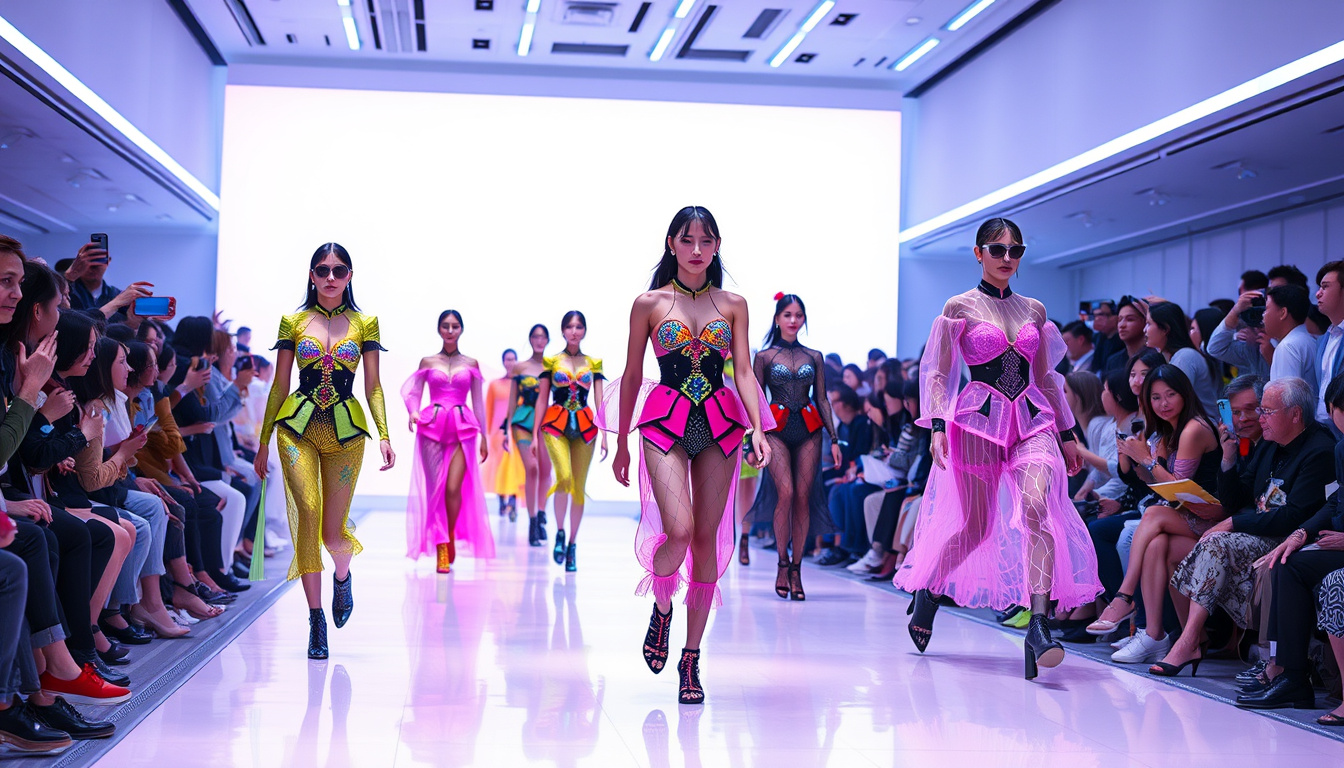
June 12, 2025 – Chincia Kenner, known as Intelligent Diva, has started the AI Reimaginated fashion show series. The series uses AI to drive a bold fashion event. It earned a spot on IMDb. This season marks a step for independent talent in fashion.

A Vision Realized

Kenner leads the AI Reimaginated series. She acts as both the AI fashion designer and the musical artist. The show pairs AI-made designs with sound made by Intelligent Diva Music and Diva Underground Records. This mix of new sound and design brings art and tech close.

Breaking Barriers

Kenner uses strong AI tools. She shuns the old limits of costly shows and slim budgets. The new style makes fashion available to more people and small teams. It points to a way for small businesses to try fresh ideas without heavy money needs.

Introducing Chelsea: The AI Host

A star in the show is Chelsea. She is an AI host built by Kenner. Chelsea guides each episode with clear steps. Her role shows how AI can boost a viewer’s ride and turn the show into a neat experience. This step sets a new mark in AI use in fashion events.

Expanding the Fashion Frontier

Kenner’s art goes past normal runways. She has started an NFT fashion show that blends the online with the real world. This project shows digital fashion pieces along with in-store items at the IDM Merch Boutique. The mix gives the audience a full view of this fast-changing field.

The I CANNOT Shoe Collection

Kenner also presents the I CANNOT Shoe Collection with Alive Shoes. This line gives strength to people through style. It pushes a clear word on self-expression and finding one’s own look.

Catch Intelligent Diva on Indie On The Rise

Fans keen to know more about Kenner’s work can see her feature on Indie On The Rise this month. More details about her talk will come soon. The show promises a closer look at the work behind her art.

Experience the Fashion Shows

Fans can watch the Cookie Contour Fashion Show on YouTube using this link. They can also view the NFT AI Fashion Show at this link. The AI Reimaginated series streams on Vimeo and Roku.

To tie music with fashion, Intelligent Diva’s latest song, "Cookie," plays on Spotify. This track mirrors the union of sound and digital style in the series.

About Intelligent Diva

Chincia Kenner drives the Intelligent Diva brand. She is a mixed artist and tech expert. With many tech skills, she brings a fresh look that joins tech with art. Her work challenges old views and helps shape a new future for fashion.

For more on Intelligent Diva and her work, visit her official website.

Contact Information:

Intelligent Diva Music
Chincia Kenner
Contact Email: Contact Me
Country: United States

This press release was produced by Getnews and distributed by Release News – PR Distribution.

Unleashing Creativity: How AI is Revolutionizing Fashion Design and Sustainability

Unleashing Creativity: How AI is Revolutionizing Fashion Design and Sustainability

AIO Launches AI-Driven Fashion Design Platform to Promote Sustainability and Innovation in Apparel

June 11, 2025
Ellen Smith

AIO has built a platform that uses AI for designing clothes. The new tool shifts how brands plan, test, and make apparel. It gives designers a set of tools that help shape ideas and speed up work.

Streamlining the Creative Process

The platform runs with AI that creates designs. This tool helps experts form new ideas while cutting costs. It brings design choices close to the artist. The words and images link in a clear way. Designers can try new ideas with small steps.

Emphasizing Sustainability

A main aim is to care for the earth. The system cuts down waste when designing and making clothes. The tool meets a need for earth-friendly methods. It helps makers build new clothes without harm to nature.

A Tool for All Designers

This tech works for big brands and small groups. It gives access to smart design for many creators. The tool helps them save time and speed up their work. It makes AI a common part of forming ideas.

Industry Implications

AIO’s tool opens new views for the industry. Here are some key points:

  1. AI in Fashion: Using AI changes how garments form and get made. Old steps shift as work gets faster.
  2. Cleaner Making: Cutting waste pushes makers to work with care for the earth. Companies try new paths to meet green goals.
  3. Creative Apps: More creators now use apps made with AI for design. This change brings fresh work in design software.

Conclusion

The AIO platform marks a turning point for tech and fashion. It blends smart ideas with fast work and care for nature. Many see the growth this tool can bring. The system may spark new design work and support an earth-friendly future.

For those who view tech as a way to move design ahead, AIO stands as a clear choice.

Revolutionizing Online Shopping: Can AI Tools Like GlanceAI and Google Try-On End Return Frustrations?

Revolutionizing Online Shopping: Can AI Tools Like GlanceAI and Google Try-On End Return Frustrations?

Will AI Technology Transform Online Shopping? A Hands-On Test of GlanceAI and Google Try-On

Online shopping now is common. Many people face problems when they shop. Capital One Shopping shows that 124 million Americans buy clothes online. One out of four items returns to the seller. This fact means big losses for stores and extra waste in shipping. New AI tools may soon cut returns and make shopping smoother.

The Evolution of Online Shopping

Shopping in physical stores is now rare. People see flat images, small charts of size, and many rules for returns. This situation makes buying clothes feel like a guessing game. New AI systems try to fix these old problems.

I tested two products: GlanceAI and Google Try-On. My hands-on experience gave me clear ideas on how they work.

GlanceAI: Your Personal Virtual Stylist

GlanceAI gives outfit tips for free. You use it on iOS or Android. You upload a full-body selfie, and the app shows you images of yourself in different outfits. It picks styles based on your body, skin color, and local weather. The app uses you as the model. Naveen Tewari, the CEO of GlanceAI, said, "We help you find the best version of you."

When I tried GlanceAI, the outfits felt close to my taste. I saw options fit for work and casual events. A simple thumbs-up or thumbs-down helps the app learn your style.

Areas for Improvement

GlanceAI still has limits. For example, when you choose a style group like "Dopamine Dressing," the app may show items that do not match your choice. There is no simple search for a style or brand. This lack makes it hard to get exactly what you want.

The app also does not serve plus-size, non-binary, or adaptive customers well. The team plans to fix these gaps with new updates and more brand ties.

The Future of GlanceAI

GlanceAI brings a fun way to shop online. Its user experience is neat and friendly. Users can share their feedback to shape future updates.

Google Try-On: Advanced AI Meets Search Ease

Google Try-On works inside Google Search Labs. It also uses a full-length selfie and shows how clothes fit on you. The tool uses AI to put the item on your photo with care.

You search for an item such as "white linen blazer under $100" and tap "Try It On." Then, you upload your picture. Google puts the clothing over your image in a clear way. Google’s Shopping Graph holds over 50 billion products. The list updates fast. Items stay on your device unless you save or share them.

Shortcomings of Google Try-On

Using Google Try-On may bring some trouble. The tool does not show clear labels or choices to tell which products you can try on. I found the option by chance when I looked for jeans. While the tool shows real images, it feels like a test rather than a final tool for buying.

Comparing GlanceAI and Google Try-On

GlanceAI and Google Try-On both change online shopping. GlanceAI gives a fun style search. Google Try-On gives a clear style view. Each tool handles different parts of online shopping. Both can suit buyers who want better online choices.

More Tools to Check Out

If you need more help with online shopping, try these two tools:

• Beni: A browser add-on that finds secondhand items and saves money.
• Croissant: An app that shows item resale prices for smart choices.

New AI tools shape the way people buy online. They bring fresh ways to cut returns and make the buying process more clear.


Stay tuned for more news on tech and shopping by following updates on social media and other trusted sites.

Charly the Monkey Reimagined: Trigema’s Iconic Figure Takes on the Role of AI Fashion Influencer

Charly the Monkey Reimagined: Trigema's Iconic Figure Takes on the Role of AI Fashion Influencer

Trigema’s Iconic Chimpanzee Charly Returns as AI Fashion Influencer

Burladingen, Germany — Trigema makes clothes. Trigema lifts its past with a new twist. The company brings back its chimpanzee, Charly. Charly now works with AI to guide fashion. This change ties the old values close to new tech.

The New Leadership and Vision

After many years, Wolfgang Grupp Senior steps aside. His children, Wolfgang Junior and Bonita, along with his wife, Elisabeth, take charge in early 2024. They mix old ideas with new tech. Their plan keeps core beliefs near while adding fresh marketing goals.

Wolfgang Junior said, "We have always said: the chimpanzee stays. In our new campaign, we use AI to shape Charly as a fashion helper. This change gives us more room for quick, clear ideas." His words link the mascot to Trigema’s old story and give Charly a life of his own.

A Modern Spin on Tradition

In work with the creative group Thjnk, the first TV ad with Charly as AI fashion guide starts soon. The ad, made with Saltwater, shows Jan Hofer. Hofer, known from ARD and RTL, says Charly now leads in fashion. His role ties past success to a bold new look.

Stefan Schulte, Chief Creative Officer at Thjnk, said, "Trigema is a trusted name; Charly stands with that trust. The company sticks with firm ideas on making clothes in a clean way. We share this tale in a fresh, simple tone." His words connect the history of Trigema with the clear steps ahead.

Focus on Values and Sustainability

Bonita Grupp stressed that the brand holds fast to its core. "We worked hard to keep the chimpanzee and our ideas intact. After over 30 years with the same ad plan, we had to find a new route that feels right and looks ahead," she said. The work with Thjnk ties tradition close to new ways that meet today’s taste.

Jan Hofer’s Enthusiastic Participation

Jan Hofer shared his pleasure at joining this change. "Showing Charly as an AI fashion guide marks a key change. It proves that old ways and new tricks can fit side by side," he said.

Trigema now writes a new page in its tale. The new plan aims to please old friends and gain new fans. For more on this shift and more industry news, readers are invited to join the Trigema newsletter.

Unleash Your Creativity: Join the Exciting TOKYO AI Fashion Week 2025 A/W Contest!

Unleash Your Creativity: Join the Exciting TOKYO AI Fashion Week 2025 A/W Contest!

TOKYO AI Fashion Week 2025: Call for Submissions and Upcoming Events

A Special Meeting of Fashion and Technology

The TOKYO AI Fashion Week 2025 begins on May 1st, 2025. OpenFashion organizes it. Fashion and AI come close here. The show brings new art and design. Fans and experts join the event. This is the third time it takes place. New ties of fashion and tech appear throughout.

Fashion Design Contest: "Neo-Japonisme"

A main part of the week is the Fashion Design Contest. The theme is "Neo-Japonisme." Designers use this idea to show modern Japanese style. They use AI to build images from their thoughts.

Submission details:

  • Eligibility: Any participant from near and far may join.
  • Submission period: May 1st to May 21st, 2025.
  • Prizes:
    • Grand Prize: ¥200,000 for the best work.
    • Runner-Up Prizes: Two awards of ¥50,000 each.
  • Announcement of winners: Winners come out in early July 2025. ### Seminar Series: The Future of AI in Fashion

A series of talks covers AI in fashion. The seminar is called "The Future of AI and Fashion #5." Toru Ueda, CEO of OpenFashion, leads the talk. Other experts join him on stage. Attendees hear real examples of brands that use AI for design and marketing. They get clear ideas about AI platforms like MaisonAI. The talk happens during the 1st Tokyo Textile Scope 2026 Spring/Summer event. A lively talk forms between tech work and textile work.

Seminar details:

  • Date and Time: May 15th, 2025; doors open at 1:30 PM, talk starts at 2:00 PM, and ends by 3:30 PM.
  • Location: Tokyo Metropolitan Industrial Trade Center, Hamamatsucho.
  • Format: Both online and in person.
  • Cost: Free; pre-registration is required.

Interactive Experience: MaisonAI

Guests can try MaisonAI, an AI platform by AuthenticAI. In this part, a visitor writes text for a design. The system makes an image from the text. Visitors save images to their phones with QR codes.

Experience details:

  • Dates: May 14th to 16th, 2025.
  • Location: The same venue as the seminar.
  • Hours: 10 AM to 5 PM on the first two days, and until 4 PM on the final day.
  • Cost: Free.

For More Information

For contest details or to join the talks, please see the official TOKYO AI Fashion Week website. This event puts art and tech side by side. It invites you to see new work in fashion.

Unleashing Creativity: Discover How Artists and Designers are Transforming Art with AI at NVIDIA GTC Paris

Unleashing Creativity: Discover How Artists and Designers are Transforming Art with AI at NVIDIA GTC Paris

Artists and Designers Harness AI at NVIDIA GTC Paris Gallery

AI Integration in Creative Practices on Display
NVIDIA’s GTC Paris takes place from June 10-12 in one of Europe’s well-known art hubs. The event brings art and tech side by side. A curated gallery shows how creators mix human ideas with machine input. Attendees see art that links personal vision with AI work.

A New Era of Artistic Expression

French artist Paul Mouginot, known as aurèce vettier, works with AI from his own data since 2019. He calls his method a tool that helps spark poetic thoughts. His words, “It becomes a reflective device for poetic speculation,” show his view. His work tests art’s limits and reaches people outside typical white cube spaces. He aims to start a talk on art and tech.

Notable Exhibitions

Mouginot presents pieces called le travail des rêves and the light that is not seen. In these works, AI shapes memories into oil-like images. His work turns past impressions into visual art.

Senegalese artist Linda Dounia Rebeiz works on Once Upon a Garden. She records flowers in danger, a thought born in her grandmother’s garden. Her project makes 10,000 images that mark the fading plants of the Sahel. Her work stands as a record of nature and loss.

The Convergence of Art and Science

The art group Entangled Others Studio, led by Sofia Crespo and Feileacan McCormick, presents Self-Contained. The team builds image sets that mimic life. Their work mixes shapes found in nature with digital forms.

The studio fuse* shows Onirica. This piece uses a text-to-image model to create visuals from dreams. It draws on 28,000 dream entries from study reports. The work brings art and science into close contact.

Fashion and AI Integration

The AI Art Gallery at GTC Paris also puts a light on modern style. Work from the Institut Français de la Mode and the Fashion Innovation Agency at the London College of Fashion finds new ways for tech to join design work. Giovanna Casimiro says, “It’s about expanding imagination, not following algorithms.” Matthew Drinkwater, head of the Fashion Innovation Agency, describes how AI lets ideas turn fast into images and change style from start to finish.

Visit the AI Art Gallery

The gallery sits at Paris Expo Porte de Versailles on the lower level of Hall 7.1. The space is near the networking and VIP areas. Attendees are urged to see the close link between art and AI.

Those who cannot join in person may visit a virtual gallery. It helps more people take part in the mix of ideas at GTC Paris.

Registration Information

People can join the event by going to NVIDIA’s official website. They can be part of a new mix of art, tech, and fresh ideas about creative work.

In this way, the GTC Paris Gallery shows a close link between art and AI. It sets the stage for ideas to take a new shape and invites all to think about the future of art.

Revolutionizing Fashion: Norma Kamali’s Bold Leap into AI Innovation

Revolutionizing Fashion: Norma Kamali's Bold Leap into AI Innovation

How Norma Kamali’s Use of AI is Changing the Future of Fashion

Norma Kamali, a well-known designer, now works with AI to change her art. She mixes technology and design in close steps. Her career spans over 50 years. Stars such as Whitney Houston and Jessica Biel have worn her bold shapes.

Using AI to Change Her Art

In 2023, Kamali took an MIT online course called Applied Generative AI for Digital Transformation. In that class, she learned how AI can join her work. Experts met her in Abu Dhabi. They worked with Walmart and spoke of a tool that uses AI in fashion. Kamali felt uneasy. She did not want a machine that copies her mind. Instead, she planned a tool built on her 57-year archive.

Kamali looked to Karl Lagerfeld for a model. Lagerfeld used past work to guide new ideas. Kamali said, "I see AI as my Karl Lagerfeld." She planned to train an AI solely with her designs and style. Her plan was to mix what she built over time with new tech that adds to her art.

Kamali now works to know more about generative AI in fashion. By adding AI to her process, she aims to boost her art while keeping the strength of her brand.

Changing Fashion Today

Kamali’s work with AI marks a change in fashion where old work meets new tech. Her method brings fresh ideas close to time-tested style. Her bold step may spark new ways for art in fashion.

In the end, Norma Kamali’s use of AI mixes a long design past with the tech of tomorrow. Her step brings new forms for artists and inspires others to mix art with modern tools. Her work stands as a marker for a new age in fashion.

Revolutionize Your Style with Slayrobe: The AI Fashion App Transforming Wardrobe Management and Personal Styling

Revolutionize Your Style with Slayrobe: The AI Fashion App Transforming Wardrobe Management and Personal Styling

Slayrobe: A Groundbreaking AI Fashion App for Personalized Style

Published: June 3, 2025

A new app named Slayrobe joins tech and fashion. It changes how women shop and style. Founder Pooja Lalwani brings work from top brands such as Google, Tommy Hilfiger, and Calvin Klein. She built Slayrobe as an "organized, smart styling tool" that fits each user’s taste and needs.

Personalized Styling at Your Fingertips

Slayrobe puts the user first. When a user logs in, they share details like height and body shape. They also pick features to show or hide. They choose a style vibe like diva, boss, or another fit. The app builds shoppable looks for outfits, makeup, and jewelry. Each look links directly to the brand’s page.

"Unlike basic shopping or news apps, Slayrobe creates a pre-shopping layer. It shows women what fits them, explains why it works, and tells them when to use it," says Lalwani.

Wide Range of Fashion Services

The app has many tools to make styling simple. It includes a 12-season color test that finds the best shades for a user. Other tools help sort a wardrobe with handpicked styles and ideas. The app connects users to local brands like UnDenim and Pieux. It also has shoppable lookbooks, news posts, and blogs that share style tips.

Slayrobe adds chat help powered by AI that supports both style and self-belief. A special algorithm weighs over 70,000 style points. This algorithm links smart styling, color science, appearance ideas, and fashion smarts in one step.

Solving Modern Fashion Hurdles

Lalwani began Slayrobe while she saw fast changes in the fashion world. She saw a need for a tool that cuts through many fast fashion choices and cuts waste from returns. She started working on the idea in late 2024. She spoke with over 1,000 women through talks and surveys to test her thoughts.

The Slayrobe team read many fashion texts and worked with stylists, designers, and experts. They made style posts and blogs that feel true and fun. In a test run, many style pros checked the work and gave their nod.

Easy Wardrobe Management

The app helps users sort their current clothes and accessories. Users take photos of their items. The app then suggests pairs and warns when a matching piece is missing. This method blends new buys with a user’s own style.

Slayrobe works on a freemium model. Users can get community chat, blogs, and more for free. For extra tools like the color test and wardrobe sorting, a subscription costs ₹499 per month. An early offer sets it at ₹199. ## Download and Future Outlook

Users find Slayrobe on the Play Store and iOS. The app marks a major step in fashion tech and guides users to grow their personal style. It builds confidence and helps with understanding style.

Pooja Lalwani says, "Slayrobe goes beyond fashion. It builds strength with know-how and art."

Unlocking Fashion: How AI Search Revolutionizes the Oh Polly Shopping Experience with Algolia

Unlocking Fashion: How AI Search Revolutionizes the Oh Polly Shopping Experience with Algolia

Fashion Meets AI: Oh Polly Shoppers Discover Their Favorites Faster with Algolia’s AI Search

SAN FRANCISCO — (BUSINESS WIRE) —
Algolia is a top AI-based search platform. It has joined forces with Oh Polly, a well-known online retailer for women’s fashion. This tie works to change online shopping by using Algolia’s smart search skills.

Improving Customer Experience with AI

Oh Polly stands as a favorite for women who love fashion. The company uses social media and a lively online style. It needed a search system that works fast. It chose Algolia’s robust search. The new system makes shopping smooth and quick for many users. Search sessions now bring in 20% of the store’s income.

Lauren Muir, the product lead at Oh Polly, said, "At Oh Polly, our aim is to give customers something extra. We knew our search must show that care. In just six days, Algolia gave our search a lift. Our numbers now show a better path for our buyers."

Strong Metrics and Customer Interest

Algolia’s AI search brings strong gains. Shoppers using the new system buy 3.5 times more than others. They spend 172% more on average. Fewer users leave the site early, with a 144% drop in the bounce rate. These numbers point to a smoother shopping time.

A key part of Algolia’s system is a smart re-rank tool. This tool puts better results at the top. It helps Oh Polly’s team see search data up close and adjust their steps quickly. Muir said, "Algolia opens our search data well. We can change our steps based on live customer input. Search tells us what buyers do."

A Forward-Looking Partnership

Bernadette Nixon, Algolia’s CEO, said, "Oh Polly shows what happens when a smart brand works with high-tech search. We watch with great hope as the brand grows and moves search farther."

This tie aims to make shopping better at Oh Polly and may guide future fashion shops on using AI in online sales.

Businesses can read the full study on how Oh Polly improved customer use. Interested clients can also ask for a demo of Algolia’s search power on the company website.

About Algolia

Algolia leads in AI search. It helps more than 18,000 companies and 500,000 developers. Its API-first system runs 1.75 trillion searches each year. The company puts clear, fast search at the heart of its work.

For more on Algolia’s work, visit www.algolia.com.


For media questions, please contact: Audrey Surette at [email protected].

Affiliate Disclosure: FashionNewsGF.com is a participant in the Amazon Services LLC Associates Program, an affiliate advertising program designed to provide a means for sites to earn advertising fees by advertising and linking to Amazon.com. As an Amazon Associate we earn from qualifying purchases. Learn more