State of AI in Fashion 2026: The Complete Annual Report

Updated April 2026 | By Michelle Jones, Fashion News GF

Artificial intelligence has moved from fashion industry buzzword to operational backbone. In 2026, AI isn’t something brands are piloting in labs — it’s running supply chains, generating ad campaigns, styling virtual fitting rooms, and predicting next season’s colors before designers pick up a pencil.

This is Fashion News GF’s first annual State of AI in Fashion report — a comprehensive look at where the technology stands, which brands are winning, which tools consumers are actually using, and where the industry is heading over the next 12 months.

Key Findings at a Glance

  • The AI fashion market is projected to reach $4.4 billion by 2027, up from $1.7B in 2023
  • 67% of fashion executives say AI is now core to their product development process
  • Virtual try-on adoption grew 312% year-over-year among mid-market retailers
  • AI-generated trend forecasting has reduced sample production waste by an average of 23% at early-adopter brands
  • Consumer trust in AI styling recommendations sits at 58% — up from 31% in 2024

Table of Contents

  1. Market Overview & Size
  2. Virtual Try-On: The Consumer Breakout
  3. AI Trend Forecasting
  4. AI Design & Creative Tools
  5. AI Personal Styling Apps
  6. Supply Chain & Sustainability
  7. Brand Case Studies
  8. Consumer Sentiment & Trust
  9. Ethics, Bias & Representation
  10. What’s Next: Predictions for Late 2026

1. Market Overview & Size

The global AI in fashion market has entered its high-growth phase. After years of proof-of-concept deployments, enterprise budgets have shifted from “experimental” to “strategic infrastructure.”

Analysts at McKinsey estimate that generative AI alone could add $150–275 billion in operating profit to the apparel and fashion industry over the next three to five years — primarily through faster design cycles, reduced sampling costs, and hyper-personalized marketing.

Market Size by Segment (2026 Estimates)

Segment 2024 Market Size 2026 Estimate YoY Growth
Virtual Try-On $680M $1.4B +106%
AI Trend Forecasting $290M $610M +110%
AI Design Tools $410M $890M +117%
AI Personal Styling $175M $520M +197%
Supply Chain AI $830M $1.1B +33%

The fastest-growing segments — personal styling and virtual try-on — reflect a fundamental shift: AI is moving from the back office to the consumer’s pocket.


2. Virtual Try-On: The Consumer Breakout

If 2024 was the year virtual try-on became technically viable, 2026 is the year it became mainstream. Google’s Shopping try-on feature, Amazon’s AI fitting room, and Walmart’s acquired technology have collectively introduced hundreds of millions of shoppers to the concept.

Who’s Leading

Google Shopping Try-On remains the highest-reach implementation. Integrated directly into search results, it allows users to see how garments look on a range of real body types — a significant trust signal. Early data from Google suggests listings with try-on enabled see a 35% higher click-through rate.

Amazon’s Virtual Try-On covers footwear and apparel across thousands of ASINs. The mobile-first implementation uses the phone camera for real-time overlay — still imperfect on complex textures, but accurate enough for basics and footwear.

Snap’s AR lenses continue to power try-on features for brands including Gucci, Farfetch, and Prada. The younger demographic skew makes this particularly valuable for brands targeting Gen Z.

Slayrobe and GlanceAI represent the next generation of standalone try-on apps — allowing users to upload their own photos and test any garment, from any brand, without needing native brand integration.

Conversion Impact

Returns are the fashion industry’s $816 billion problem. Virtual try-on is proving to be one of the most effective interventions:

  • Brands using virtual try-on report 18–40% reductions in return rates on covered SKUs
  • Average order value increases 12–22% when shoppers use try-on features (higher purchase confidence)
  • Mobile shoppers show the strongest response — 2.4x more likely to complete purchase after using try-on vs. browsing static images

What Still Doesn’t Work

Virtual try-on has well-documented limitations that brands and consumers should understand:

  • Fabric drape and texture — 3D rendering still struggles with silk, chiffon, and complex knits
  • Size accuracy — garment fit prediction lags behind visual rendering quality
  • Skin tone calibration — some tools still perform poorly on darker skin tones, a persistent bias issue (covered in section 9)

3. AI Trend Forecasting

Fashion trend forecasting has historically been an expensive, intuition-driven process dominated by a handful of agencies: WGSN, Trendalytics, Edited. In 2026, AI has democratized access to forecasting data — and changed what “forecasting” means entirely.

How It Works Now

Modern AI forecasting tools ingest data from multiple streams simultaneously:

  • Social media imagery (Instagram, Pinterest, TikTok) — scanning millions of posts for emerging visual patterns
  • Search trend data (Google Trends, Pinterest Trends)
  • Runway analysis — computer vision scanning catwalk images for silhouette, color, and textile patterns
  • E-commerce sell-through data — identifying which items are selling vs. which are being marked down
  • Street style photography

The output is quantified trend scoring: rather than a trend report saying “metallics are having a moment,” AI forecasting can show that metallic silver accessories are at a 7.4/10 trend velocity, up from 4.1 six months ago, peaking in the 25–34 female demographic, with strongest momentum in the US Northeast and UK markets.

Key Players

WGSN Instock has integrated AI trend correlation directly into its merchandising tool, helping buyers make data-backed replenishment decisions.

Trendalytics remains the go-to for mid-market brands, with its trend lifecycle scoring (emerging → rising → peaking → declining) now used by over 200 retail brands.

Heuritech specializes in deep-learning analysis of social imagery, with particular strength in European luxury market forecasting.

The New Black goes further — combining trend data with generative AI to produce actual design concepts based on forecasted trends, collapsing the gap between research and creative output.

Impact on the Design Calendar

Traditional fashion operates on a 12–18 month design-to-shelf pipeline. AI forecasting is compressing this:

  • Fast fashion brands (Zara, H&M, Shein) now operate on 2–6 week trend-to-shelf cycles using AI signals
  • Mid-market brands using AI forecasting have reduced markdown rates by an average of 19%
  • Luxury brands are using AI for micro-collection planning while preserving main collection lead times

4. AI Design & Creative Tools

Generative AI has fundamentally changed what it means to “design” a garment. In 2026, designers increasingly describe AI as a creative collaborator — a tool that dramatically expands the volume and diversity of concepts they can explore before committing resources to sampling.

The Leading Tools

Adobe Firefly has become the industry-standard entry point for AI-assisted fashion design, integrated into Photoshop and Illustrator. Its fashion-specific fine-tuning (launched in 2025) allows designers to generate on-brand concepts within their established aesthetic.

Style3D AI is the most technically sophisticated tool for garment simulation — producing physics-accurate 3D renders of garments on digital models, with accurate fabric behavior. It’s becoming standard at production-level design houses.

Midjourney and DALL-E 3 remain popular for early-stage concepting and mood boarding, valued for their creative range even if output requires significant technical cleanup before production use.

The New Black bridges concept and commerce — its AI generates print patterns, colorways, and silhouette concepts that are immediately production-ready, with built-in licensing for commercial use.

PhotoRoom has become the go-to for fashion e-commerce photography — AI-powered background removal, studio lighting simulation, and model swapping allow brands to produce professional product imagery at a fraction of traditional photography costs.

Workflow Integration

The most effective brands aren’t using AI to replace designers — they’re using it to dramatically accelerate the early phases of the design process:

  1. Briefing phase: AI generates 50–200 concept images from a brief in minutes (vs. days of mood boarding)
  2. Selection phase: Design team selects 3–5 directions from AI output
  3. Development phase: Human designers refine selected concepts
  4. Technical phase: AI tools (Style3D, CLO3D) produce technical specs and 3D prototypes
  5. Production phase: AI-generated spec sheets and grading reduce technical design time by 30–60%

5. AI Personal Styling Apps

The AI personal stylist category has exploded. What began as novelty apps with generic recommendations has matured into genuinely useful tools that account for body type, budget, lifestyle, existing wardrobe, and personal aesthetic.

Tool Landscape (2026)

Tool Best For Pricing Standout Feature
GlanceAI Outfit planning Free / $9.99/mo Virtual wardrobe + outfit generator
Slayrobe Try-on + shopping Free Cross-retailer try-on
Whering Wardrobe management Free / $4.99/mo Cost-per-wear tracking
Stitch Fix AI Curated shopping $20 styling fee Human + AI hybrid curation
YesPlz Discovery + search B2B (retailer integration) Visual search + preference learning
Vue.ai Enterprise personalization Enterprise Full retail AI suite

What Consumers Actually Want

User research across AI styling apps consistently surfaces the same hierarchy of desired features:

  1. Wardrobe remixing — suggestions using clothes they already own (80% of users rate as top priority)
  2. Occasion-based outfit building — “what do I wear to X?”
  3. Body-type awareness — recommendations that account for their actual proportions
  4. Budget filters — price-aware shopping suggestions
  5. Style evolution — tools that adapt as their taste changes

6. Supply Chain & Sustainability

While consumer-facing AI gets the headlines, some of the most significant ROI from AI in fashion is happening invisibly — in demand forecasting, inventory optimization, and sustainable production planning.

Demand Forecasting

Overproduction is fashion’s original sin. The industry produces roughly 100 billion garments per year for a global population of 8 billion — and an estimated 30% of production is never sold. AI demand forecasting is attacking this directly.

Brands using ML-powered demand forecasting report:

  • 15–35% reduction in excess inventory
  • 20–40% reduction in stockouts on high-demand SKUs
  • Markdown rates dropping by an average of 12 percentage points

Material & Production Optimization

Trigema, the German textile manufacturer, has implemented AI-driven production scheduling that has reduced material waste by 18% and cut production lead times by 22% — a case study in what AI can do when deeply integrated into manufacturing operations.

AI-powered fabric cutting optimization (used by companies like Gerber Technology) reduces fabric waste by 8–15% — a meaningful sustainability gain at scale.

Circularity & Resale

AI is also enabling fashion’s circular economy:

  • Automated grading for secondhand platforms (ThredUp, Vestiaire Collective) uses computer vision to assess garment condition in seconds vs. minutes
  • Digital product passports — EU-mandated from 2026 — are being built with AI-assisted data collection to track materials, manufacturing location, and care history throughout a garment’s life
  • Rental inventory optimization (Rent the Runway, By Rotation) uses AI to predict demand for specific pieces and optimize cleaning/logistics cycles

7. Brand Case Studies

LVMH: AI Across the Conglomerate

LVMH has deployed AI across its 75+ brands with a centralized AI task force (formed 2024) coordinating implementation. Notable deployments include: AI-generated ad campaign elements for Louis Vuitton (with human creative direction), AI-powered customer service for Sephora (handling 70%+ of queries), and demand forecasting across Moët Hennessy supply chain operations.

H&M: AI Models Controversy & Course Correction

H&M made global headlines in 2024 when it announced plans to use AI-generated digital models to replace human models in product photography. The backlash from models, labor unions, and consumers was swift. The brand pulled back its initial framing but continued to use AI for background generation, scene setting, and product editing — while retaining human models for the primary garment imagery. It’s a useful case study in where consumer tolerance for AI currently sits.

Norma Kamali: AI-First at 55 Years Old

Designer Norma Kamali has become one of fashion’s most compelling AI adoption stories. At 78, she has embraced AI tools for everything from pattern generation to customer communication — using AI chatbots trained on her decades of design philosophy to interact with customers in her voice. Her candid documentation of the learning curve has made her an unlikely icon for AI adoption in legacy fashion.

Popken Fashion Group: Google AI Integration

German plus-size retailer Popken Fashion Group partnered with Google Cloud to implement AI across its product recommendation and search infrastructure. The results: 15% increase in conversion rate and 22% improvement in search relevance scores — a clear ROI case for mid-market AI adoption.


8. Consumer Sentiment & Trust

Consumer attitudes toward AI in fashion have shifted materially over the past 24 months — but trust is not uniform across use cases.

What Consumers Accept

High acceptance (60%+ comfortable):

  • AI-powered size/fit recommendations
  • Virtual try-on technology
  • AI-curated product recommendations based on browsing history
  • AI-generated background imagery in product photos

Mixed acceptance (35–60% comfortable):

  • AI-written product descriptions
  • AI trend forecasting influencing what brands produce
  • AI chatbots for customer service
  • Personalized pricing based on AI behavioral analysis

Low acceptance (under 35% comfortable):

  • AI-generated models replacing human models entirely
  • AI “designed” collections with no human creative oversight
  • AI-generated influencer personas promoting products
  • Biometric data collection for AI styling (without explicit consent)

The Trust Gap by Generation

Gen Z shows the highest comfort with AI tools across all categories — but also the highest skepticism about AI-generated authenticity (fake reviews, AI influencers). Millennials are the most engaged users of AI styling tools, particularly in the 28–38 age bracket. Baby Boomers show strong adoption of AI-powered size recommendation tools but resistance to AI-generated creative content.


9. Ethics, Bias & Representation

The rapid deployment of AI in fashion has surfaced significant ethical concerns that the industry is only beginning to address seriously.

Bias in Visual AI

Computer vision models trained primarily on Western, light-skinned body types have produced documented failures:

  • Virtual try-on tools with degraded performance on darker skin tones
  • AI size recommendation models that underperform for plus-size bodies
  • Trend forecasting models that over-index on social media data, systematically under-representing consumers with lower social media engagement

Several lawsuits and regulatory inquiries in the EU are examining these bias patterns under the AI Act’s high-risk AI system provisions.

Labor Displacement

The fashion industry employs an estimated 300 million people globally across design, production, retail, and supply chain. The labor displacement conversation is no longer hypothetical:

  • Product copywriting teams at major retailers have been reduced by 40–70% as AI writing tools are deployed
  • Fashion photography studios are consolidating as AI background generation and editing reduce shoot frequency
  • Junior design roles are being redefined — more prompt engineering, less hand sketching

The counter-argument — that AI creates net new roles — is partially supported by data: demand for AI prompt specialists, AI model trainers, and AI ethics reviewers in fashion is growing. But the geographic and skill distribution of these new roles does not match the displaced workforce.

Intellectual Property

Multiple ongoing legal cases (as of April 2026) are testing whether AI-generated designs that closely resemble specific designers’ work constitute copyright infringement. The outcomes will significantly shape how AI design tools are trained and deployed going forward.


10. What’s Next: Predictions for Late 2026

Based on current technology trajectories, funding patterns, and consumer behavior signals, here’s what we expect to see in the second half of 2026:

1. Agentic AI Shopping Goes Mainstream

The next evolution isn’t AI that recommends — it’s AI that acts. Agentic AI shopping assistants that can browse, compare, add to cart, and complete purchases on a consumer’s behalf are in beta at several major platforms. By Q4 2026, at least one major retailer will launch a fully agentic personal shopping service.

2. Digital Product Passports Drive Data Infrastructure Investment

The EU Digital Product Passport mandate (effective for textiles from 2026) will force a massive investment in supply chain data infrastructure. Brands that have already implemented AI-powered supply chain tracking will have a significant compliance advantage.

3. AI Model Regulation Arrives

Several markets — including the UK, EU, and California — are advancing legislation requiring disclosure when AI-generated imagery is used in advertising. Expect mandatory labeling to be standard by end of 2026, reshaping how brands communicate AI use in their creative.

4. Personalization Becomes Predictive

Current personalization is reactive — it responds to what you’ve done. Predictive personalization uses behavioral signals to surface what you’ll want before you search for it. Several platforms (Pinterest, TikTok Shop) are testing versions of this. The fashion brands that build or license this capability first will see outsized engagement and conversion gains.

5. Physical-Digital Integration Accelerates

Smart mirrors, AR fitting rooms, and RFID-enabled AI inventory are moving from flagship store experiments to broader retail rollouts. Expect to see AI-powered in-store experiences in 20%+ of major fashion retailer locations by end of 2026.


Methodology & Sources

This report synthesizes data from: McKinsey Global Institute, Business of Fashion annual reports, Euromonitor International market sizing, GlobalData retail analytics, Statista consumer surveys, Google Merchant Center trend data, and Fashion News GF’s ongoing coverage of AI tool releases and brand case studies. Market size figures represent analyst consensus ranges. Consumer sentiment data reflects surveys of 18+ consumers in US, UK, France, and Germany markets unless otherwise noted.

The State of AI in Fashion report is published annually by Fashion News GF. For corrections, updates, or to contribute data to next year’s edition, contact us at fashionnewsgf.com/contact.

Want to see how these trends apply to your own wardrobe? Try our free Fashion Trend Forecaster to see which styles are rising, peaking, or declining right now.
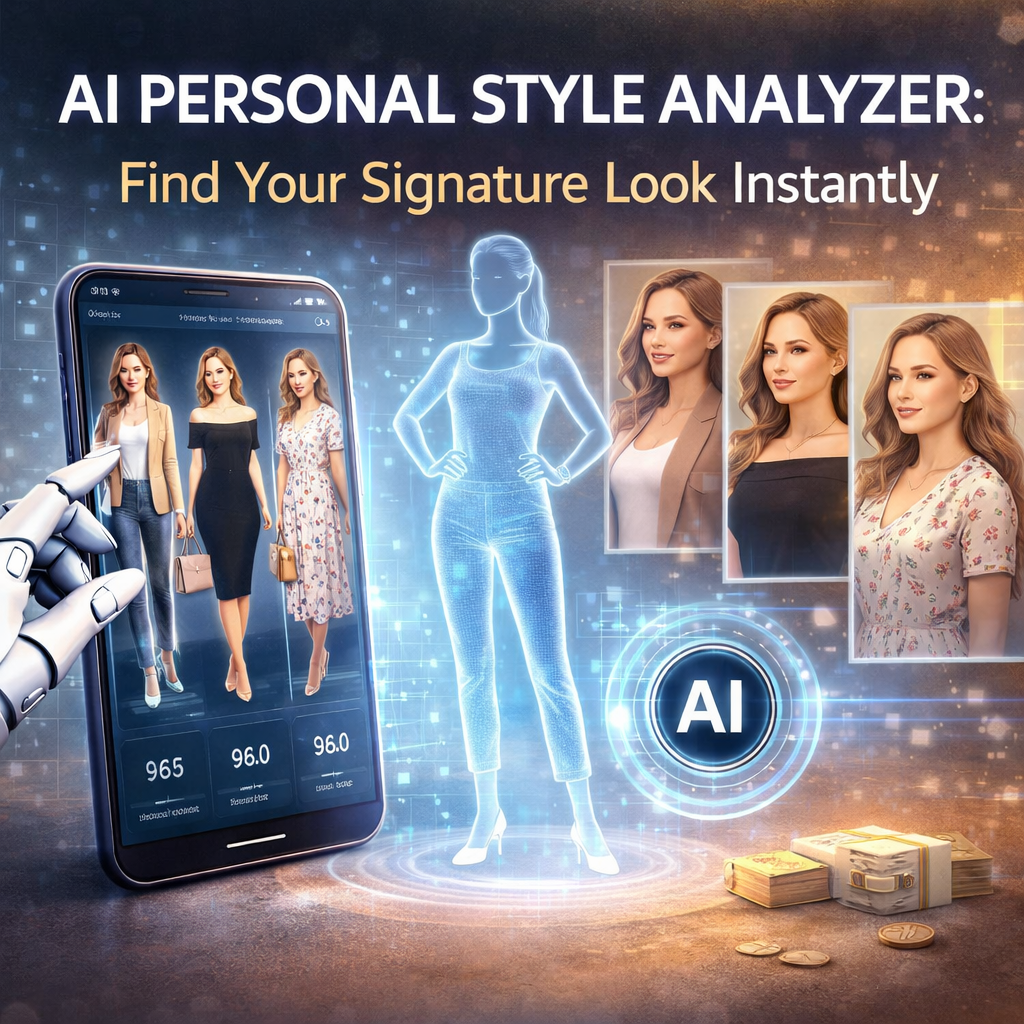
AI Personal Style Analyzer: Find Your Signature Look Instantly

find your fashion style

Struggling to define your personal style? You’re not alone. Most people spend years — and a lot of money — experimenting with trends that don’t quite fit who they are. Thanks to artificial intelligence, that guesswork is officially over.

An AI personal style analyzer can assess your preferences, body type, lifestyle, and aesthetic sensibilities to help you discover a signature look that feels authentically you — in minutes, not years.


What Is an AI Personal Style Analyzer?

An AI personal style analyzer is a smart digital tool that uses machine learning and style algorithms to evaluate your fashion preferences and generate personalized style recommendations. Unlike generic style quizzes, a quality AI analyzer goes deeper — factoring in your color palette, body proportions, lifestyle needs, and even your personality to build a cohesive style profile.

Think of it as having a personal stylist available 24/7, without the appointment or the price tag.


Why Most People Struggle to Find Their Signature Look

Finding your personal style isn’t just about knowing what looks good — it’s about knowing what works for you specifically. Most people face a few common roadblocks:

  • Too much choice: The fashion industry produces thousands of new styles every season, making it overwhelming to know where to start.
  • Trend pressure: Social media pushes viral trends that may look great on an influencer but feel totally off for your lifestyle or body type.
  • Budget confusion: Without a clear style direction, it’s easy to waste money on pieces that never quite work together.
  • Lack of self-awareness: Many people genuinely don’t know how to articulate what they like — or why certain outfits feel “right.”

This is exactly the problem AI-powered style tools are designed to solve.


How an AI Personal Style Analyzer Works

Modern AI style analyzers use a combination of data inputs and trained fashion models to generate your style profile. Here’s what typically happens behind the scenes:

1. You Share Your Preferences

The tool asks about your aesthetic preferences, favorite colors, the occasions you dress for (work, casual, events), and any style icons or looks you admire. This gives the AI a starting point.

2. The AI Identifies Your Style Archetypes

Based on your inputs, the analyzer maps you to established style archetypes — classic, bohemian, minimalist, edgy, romantic, preppy, and more. Most people are a blend of two or three.

3. You Receive a Personalized Style Profile

The tool generates a detailed breakdown of your signature style, including color palette recommendations, key wardrobe pieces, outfit formulas, and even shopping direction — all tailored specifically to you.

4. You Build a Wardrobe That Actually Works

Armed with your style profile, every future purchase becomes intentional. No more impulse buys. No more “nothing to wear” mornings despite a full closet.


Benefits of Using an AI Style Analyzer

The advantages go well beyond just looking better. Here’s what a good AI style tool can do for you:

  • Saves time — No more hours scrolling through options that don’t resonate
  • Saves money — Intentional purchases mean fewer regrettable buys
  • Builds confidence — When your clothes reflect who you are, you feel it
  • Creates consistency — A cohesive wardrobe makes getting dressed effortless
  • Removes outside noise — You stop chasing trends and start owning your aesthetic

Who Should Use an AI Personal Style Analyzer?

The short answer? Almost everyone can benefit. But it’s especially useful for:

  • People going through a life transition — starting a new job, moving to a new city, or simply feeling like it’s time for a refresh
  • Anyone who feels stuck in a style rut — wearing the same safe outfits on repeat without any real excitement
  • Minimalists building a capsule wardrobe — who want a curated, intentional collection of pieces that all work together
  • Fashion beginners — who want guidance without the overwhelming learning curve
  • Shoppers on a budget — who need to make every purchase count

What Makes a Good AI Style Tool? (What to Look For)

Not all AI style analyzers are created equal. When evaluating a tool, look for these qualities:

  • Depth of analysis: Does it go beyond surface-level color matching to consider your lifestyle, personality, and goals?
  • Personalization: Are the results genuinely tailored to you, or do they feel generic?
  • Actionable output: Does it give you specific, usable guidance — not just vague descriptions?
  • Ease of use: Is the experience intuitive and enjoyable, not tedious?
  • No account required: The best tools let you get value immediately, without friction.

Try It Now: Find Your Signature Look Instantly

Ready to stop guessing and start dressing with intention? Our AI Personal Style Analyzer does exactly that — in just a few minutes.

Simply answer a short series of questions about your preferences, lifestyle, and aesthetic sensibilities. The AI analyzes your responses and delivers a complete personal style profile — your signature look, your ideal color palette, the wardrobe essentials you actually need, and the style direction that fits your life.

✨ Discover Your Signature Style Now


Real Style, Not Just Trends

There’s a big difference between following fashion and having personal style. Fashion is what’s available. Style is what you choose — and why you choose it.

The most stylish people you know aren’t necessarily wearing the latest trends. They have a point of view. A consistent aesthetic. A wardrobe that communicates something true about who they are before they say a word.

That’s what a signature look really means — and it’s something every person can develop with the right guidance.


Frequently Asked Questions

Is an AI style analyzer accurate?

Yes — when built on well-trained models and meaningful input questions, an AI style analyzer can be remarkably accurate. The more honest and specific your answers, the more precise and useful your results will be.

Do I need to know anything about fashion to use it?

Not at all. AI style analyzers are designed to meet you where you are. You don’t need fashion vocabulary or prior knowledge — just a willingness to answer a few questions about what you like and how you live.

How long does it take?

Most AI style analyzers take anywhere from 2 to 5 minutes to complete. Our tool is designed to be fast, intuitive, and immediately actionable.

Will the results tell me what to buy?

Your style profile will give you clear direction on the types of pieces, cuts, colors, and combinations that work for you — making every shopping decision much easier and more intentional.

Can my style change over time?

Absolutely. Personal style evolves as you do — through life changes, new experiences, and growing self-awareness. You can revisit the analyzer anytime you feel like your style is shifting or you’re ready for a refresh.


Your Signature Look Is Waiting

Personal style isn’t reserved for fashion insiders or people with unlimited budgets. It’s available to anyone willing to get intentional about what they wear and why.

With AI making that process faster and more accessible than ever, there’s never been a better time to stop dressing by default and start dressing with purpose.

Your signature look is closer than you think. Try the AI Personal Style Analyzer now and find it in minutes.

Shopping Suggestion
Build Your Signature Wardrobe
Affiliate disclosure: We may earn a commission from qualifying purchases, at no extra cost to you.

Outfit Cost Calculator: How to Build Looks Without Overspending

outfit cost breakdown

We’ve all been there — you’re standing in a fitting room, holding a top that costs more than your grocery budget, telling yourself it’s an “investment piece.” Or you’ve ordered three items online, each one seemingly affordable on its own, only to check out and realize your total somehow crept past $200.

Building stylish outfits without blowing your budget isn’t about shopping less — it’s about shopping smarter. And one of the most underrated tools for doing exactly that is an outfit cost calculator.

In this guide, we’ll break down how to use a cost-per-outfit approach to build looks you actually love, without the financial guilt that so often follows a shopping spree.


What Is an Outfit Cost Calculator?

An outfit cost calculator is a simple but powerful tool that helps you tally the total cost of a complete look — from top to bottom, including accessories and shoes. Instead of thinking about each item in isolation, it gives you a full picture of what you’re actually spending to get dressed.

This matters more than most people realize. A $25 top sounds like a bargain until you pair it with a $60 skirt, $80 shoes, and a $40 bag. Suddenly, that “budget outfit” costs $205.

By calculating the true cost of a complete look before you buy, you can make smarter decisions, identify where to splurge vs. save, and avoid the kind of impulse purchases that leave your wardrobe full of clothes with no matching partners.

👉 Try it yourself: Use our free Outfit Cost Calculator here


Why Most People Overspend on Clothes (Without Realizing It)

Overspending on fashion rarely happens in one dramatic moment. It creeps in through small, seemingly reasonable purchases that add up fast. Here are the most common culprits:

1. The “It’s Only $X” Trap

Evaluating items one at a time — rather than as part of a complete outfit — is one of the biggest budgeting mistakes in fashion. Each piece feels justifiable on its own, but the total cost of building a wearable look is almost always higher than expected.

2. Buying Without a Plan

Impulse buying leads to a wardrobe full of pieces that don’t work together. You end up with five tops and nothing to wear them with, leading to more shopping trips to fill the gaps.

3. Ignoring Cost-Per-Wear

A $120 blazer you wear 30 times costs you $4 per wear. A $30 trendy top you wear twice costs $15 per wear. Understanding cost-per-wear reframes how you evaluate the value of any purchase.

4. Emotional Shopping

Shopping as a response to stress, boredom, or social media influence is almost always the enemy of a budget. Setting up a system — like calculating outfit costs before checkout — creates a natural pause point that reduces impulse decisions.


How to Use an Outfit Cost Calculator Effectively

Using an outfit cost calculator is straightforward, but getting the most out of it requires a little intention. Here’s a step-by-step approach:

Step 1: Define the Occasion

Are you building a work outfit, a casual weekend look, or something for a special event? Knowing the occasion helps you set an appropriate budget target before you start adding items.

Step 2: List Every Item You Need

Don’t just count clothing. A complete outfit includes:

  • Top (blouse, shirt, sweater, etc.)
  • Bottom (pants, skirt, shorts) or a full dress/jumpsuit
  • Outerwear if applicable (jacket, coat, blazer)
  • Shoes
  • Bag or purse
  • Accessories (jewelry, belt, scarf, hat)
  • Undergarments or shapewear if needed

Step 3: Enter the Costs

Input the real cost of each item — whether it’s something you already own, something on your wish list, or something you’re considering purchasing. Our Outfit Cost Calculator makes this fast and easy to do in real time.

Step 4: Review Your Total and Adjust

Once you see the full number, ask yourself:

  • Is this within my budget for this type of outfit?
  • Which item has the highest cost — and can I find it for less?
  • Do I already own something that could replace one of the items on the list?
  • Am I buying this because I need it, or because I want it right now?

Step 5: Apply the Cost-Per-Wear Formula

For any higher-ticket items, calculate cost-per-wear:

Cost ÷ Estimated Number of Wears = Cost Per Wear

A $90 pair of boots worn 45 times = $2 per wear. A $45 trendy sandal worn 3 times = $15 per wear. This one step alone can completely shift your perspective on what counts as a “good deal.”


Budget-Friendly Outfit Building Strategies That Actually Work

Knowing your outfit costs is only half the equation. Here are proven strategies to keep those numbers low without sacrificing style.

Build Around a Capsule Wardrobe Core

A capsule wardrobe is a curated collection of versatile, mix-and-match basics that form the foundation of multiple outfits. Think neutral-toned pants, classic white shirts, a well-fitting blazer, and quality denim. When your core pieces work together, you need fewer of them — and the cost-per-outfit drops significantly.

Use the “One New, Two Existing” Rule

Before buying anything new, challenge yourself to pair it with at least two items you already own. If you can’t build a complete outfit using mostly existing pieces, it’s a sign the new item may not be as versatile as it seems.

Invest in Shoes and Bags, Save on Trends

Footwear and handbags have a disproportionate impact on the overall feel of an outfit. A quality pair of shoes elevates even a simple look. Meanwhile, trendy clothing items have a short shelf life — spending less on those and more on lasting accessories is a smart budget allocation strategy.

Shop Secondhand for Statement Pieces

Thrift stores, consignment shops, and resale platforms like Poshmark and Depop are goldmines for unique pieces at a fraction of retail prices. Statement items — bold prints, vintage blazers, designer accessories — often cost far less secondhand and add personality to any outfit.

Set a Per-Outfit Budget Before You Shop

Rather than a vague monthly clothing budget, try setting a budget for each type of outfit you need. For example: $80 for a casual look, $150 for a work outfit, $200 for a special occasion. Use the calculator to stay within that target as you shop.


Sample Outfit Breakdown: Where Your Money Actually Goes

Let’s look at two versions of the same type of outfit — a smart casual look for a dinner out — and see how a calculator changes the outcome.

Version A: Unplanned Shopping

  • Silk-look blouse (impulse buy, full price): $68
  • Wide-leg trousers (also full price): $85
  • Heeled mules (because the others “didn’t quite work”): $95
  • Small crossbody bag (bought to match): $55
  • Earrings (checkout section add-on): $18

Total: $321

Version B: Using an Outfit Cost Calculator

  • Satin blouse (on sale): $34
  • Tailored trousers (already owned): $0
  • Block heel sandals (already owned): $0
  • Structured tote (secondhand): $22
  • Gold hoop earrings (already owned): $0

Total: $56

Same occasion. Same style goal. $265 difference — simply by planning ahead and calculating before spending.


When It’s Worth Spending More

Budget-conscious dressing doesn’t mean never spending money. It means spending it deliberately. Here’s when it genuinely makes sense to invest more:

  • High-wear basics — Items you’ll wear multiple times a week (jeans, white tees, everyday sneakers) are worth the extra cost for quality and longevity.
  • Workwear essentials — Professional clothing that represents you in career settings is worth investing in. A well-tailored blazer or quality dress pants will pay for themselves in confidence and durability.
  • Footwear for comfort — Shoes you’ll walk in all day should be comfortable and supportive. Cheap shoes that hurt your feet aren’t a bargain.
  • Outerwear — A coat or jacket is worn constantly throughout an entire season. The cost-per-wear on quality outerwear is almost always excellent.

Start Calculating Before You Start Shopping

The most stylish people aren’t always the ones with the biggest budgets. They’re the ones who know how to make every dollar work. An outfit cost calculator gives you a concrete, numbers-based way to make smarter fashion decisions — not based on emotion or impulse, but on real value.

Before your next shopping trip — online or in-store — take five minutes to map out what you actually need to complete a look. Add up the numbers. Adjust where necessary. Then shop with purpose.

It’s a small habit that makes a surprisingly large difference.

👉 Ready to build better outfits on any budget? Try our free Outfit Cost Calculator now and take the guesswork out of getting dressed.


Frequently Asked Questions

How do I calculate the cost of an outfit?

Add up the retail or purchase price of every item in your look — clothing, shoes, bag, and accessories. Our Outfit Cost Calculator lets you do this quickly and easily in one place.

What is a reasonable budget for a single outfit?

This depends on the occasion and your overall budget. A casual everyday look might reasonably cost $50–$100, while a professional or special occasion outfit might warrant $150–$300. The key is deciding your target before you shop, not after.

What is cost-per-wear and why does it matter?

Cost-per-wear is the price of a clothing item divided by the number of times you’ll wear it. It’s one of the most useful metrics in fashion budgeting because it reveals the true value of a purchase over time — not just its upfront price tag.

How can I build stylish outfits on a tight budget?

Focus on versatile basics, shop sales and secondhand platforms, use an outfit cost calculator to plan before buying, and apply the “one new, two existing” rule for new purchases. Knowing what you already own — and building around it — is the foundation of budget-friendly style.

Is it better to buy fewer, more expensive pieces or more affordable ones?

It depends on the item. For classics you’ll wear constantly (quality denim, a great blazer, everyday shoes), investing more often pays off. For trendy or occasion-specific pieces with limited wearability, more affordable options usually make more financial sense.

Shopping Suggestion
Find Affordable Alternatives
Affiliate disclosure: We may earn a commission from qualifying purchases, at no extra cost to you.

Is Luxury Fashion Worth It? Cost, Resale & Investment Explained

cost per wear luxury

You’ve spotted the perfect designer handbag. The price tag makes you pause. And the question that every fashion lover eventually asks creeps in: is luxury fashion actually worth it?

It’s not a simple yes or no. The answer depends on what you value — craftsmanship, status, longevity, or financial return. In this guide, we break down the real cost of luxury fashion, how resale markets work, and which pieces (if any) can genuinely be considered investments.

And if you want a quick, personalized answer before you buy, try our free Is It Worth It? tool — designed to help you make smarter luxury fashion decisions.


What Does “Luxury Fashion” Actually Mean?

The term “luxury fashion” gets thrown around loosely, but true luxury has a few defining characteristics:

  • Premium materials — full-grain leather, cashmere, exotic skins, fine silk
  • Artisan craftsmanship — hand-stitching, small-batch production, skilled labor
  • Heritage and brand equity — decades (sometimes centuries) of reputation
  • Controlled distribution — limited availability, waitlists, exclusive boutiques
  • Higher price points — typically starting in the hundreds and reaching into the tens of thousands

Brands like Hermès, Chanel, Louis Vuitton, Bottega Veneta, and Rolex sit firmly in this category. “Affordable luxury” brands like Coach or Michael Kors occupy a middle ground — aspirational, but not the same tier of craftsmanship or resale performance.


The Real Cost of Luxury Fashion

The sticker price is just the beginning. When evaluating whether a luxury piece is worth it, consider the total cost of ownership:

1. Purchase Price

Luxury prices have risen dramatically over the past decade. A Chanel Classic Flap bag that cost around $2,850 in 2010 now retails for over $10,000. Louis Vuitton and Hermès have similarly raised prices — sometimes multiple times per year — often outpacing inflation.

2. Maintenance & Repairs

Quality leather goods require conditioning, professional cleaning, and occasional hardware replacement. Budget for $50–$300+ per year depending on how frequently you use the piece.

3. Storage

Proper storage — dust bags, acid-free tissue, climate-controlled spaces — matters if you plan to resell. Neglect can significantly reduce resale value.

4. Insurance

High-value items should be insured. A rider on your home or renters insurance policy typically runs $1–$2 per $100 of value annually.

Bottom line: A $5,000 handbag might cost you $6,500–$7,000 over five years once you factor in maintenance and insurance. Understanding this full picture helps you assess whether the purchase makes sense for your lifestyle and budget.


Resale Value: Which Luxury Pieces Hold Their Worth?

Not all luxury fashion is created equal when it comes to resale. The secondary market — driven by platforms like The RealReal, Vestiaire Collective, and Fashionphile — has become a multi-billion dollar industry, and data is increasingly available on what holds value.

High Resale Value (Often Appreciates)

  • Hermès Birkin & Kelly bags — Consistently the gold standard. Some colorways and exotic skins sell for 2–3x retail on the secondary market.
  • Chanel Classic Flap & 2.55 — Due to aggressive retail price increases, older bags bought at lower prices often resell near or above original cost.
  • Rolex sports models — The Submariner, Daytona, and GMT-Master II have historically appreciated, though the market has softened slightly since 2022.
  • Limited edition sneakers — Certain Nike, Jordan, and New Balance collaborations hold or exceed retail on StockX and GOAT.

Moderate Resale Value (Holds Steady)

  • Louis Vuitton monogram canvas (classic styles)
  • Bottega Veneta intrecciato leather goods
  • Cartier jewelry (especially Love and Juste un Clou)
  • Burberry and Gucci (select iconic styles)

Lower Resale Value (Depreciates)

  • Fast-changing “It bag” styles that go in and out of trend quickly
  • Logo-heavy pieces from mid-tier luxury brands
  • Heavily personalized or monogrammed items
  • Clothing (in general depreciates more than accessories and jewelry)

Pro tip: Before buying, search your item on Vestiaire Collective or The RealReal to see what similar pieces are selling for secondhand. If the gap between retail and resale is small, that’s a strong signal of enduring demand.


Can Luxury Fashion Be a Real Investment?

This is where things get nuanced. A true “investment” implies a predictable positive return — and by that strict financial definition, most fashion does not qualify. However, a handful of categories have outperformed traditional asset classes over certain periods.

The Case For Luxury as Investment

  • The Knight Frank Luxury Investment Index has tracked handbags, watches, and jewelry appreciating significantly over 10-year periods.
  • Hermès Birkin bags have reportedly outperformed the S&P 500 and gold in some analyses.
  • Luxury goods have shown relative resilience during economic downturns compared to other discretionary categories.
  • Unlike stocks, you can use a luxury item while it appreciates.

The Case Against

  • Past performance doesn’t guarantee future results — the watch market correction of 2022–2023 proved that.
  • Condition matters enormously. A bag used daily will not appreciate the way one kept pristine in its box does.
  • Most luxury clothing (as opposed to accessories) depreciates significantly.
  • Illiquidity — unlike stocks, you can’t sell a handbag in seconds at a guaranteed market price.
  • Transaction costs on resale platforms run 15–30%.

The Smarter Frame: “Cost Per Use”

Rather than thinking purely about financial return, many experts recommend the cost-per-use model. A $2,000 bag used 300 times costs you about $6.67 per use — less than a daily coffee habit. A $50 fast-fashion bag that falls apart in six months and gets used 20 times costs $2.50 per use but contributes to waste and offers no resale potential.

Luxury fashion, when chosen thoughtfully, can deliver exceptional value through longevity, craftsmanship, and joy of ownership — even if the financial return isn’t guaranteed.


How to Decide If a Luxury Piece Is Worth It For You

Before reaching for your credit card, ask yourself these questions:

  1. Will I use it frequently? The higher your cost-per-use, the harder it is to justify any price.
  2. Is it a classic or a trend? Classic silhouettes hold value. Trend-driven pieces rarely do.
  3. Can I afford it without financial stress? No luxury item is worth debt or financial anxiety.
  4. Does the brand have strong resale demand? Check the secondary market before buying.
  5. Am I buying new or pre-owned? Pre-owned luxury can deliver significant savings with little quality compromise.
  6. What’s my emotional attachment to ownership vs. use? Some people love owning beautiful things; others care only about functionality.

Still not sure? Our Is It Worth It? calculator walks you through a personalized analysis based on price, usage, resale potential, and your personal style goals. It takes less than two minutes and could save you thousands.


Tips for Buying Luxury Fashion Wisely

Buy Pre-Owned When Possible

The pre-owned luxury market has never been more accessible or trustworthy. Authenticated resellers like Fashionphile, Vestiaire Collective, and The RealReal offer certified pre-owned pieces at 20–60% below retail. You get the craftsmanship without the full price premium.

Prioritize Timeless Over Trendy

The Chanel Classic Flap has been desirable since the 1950s. Trend-driven “It bags” often peak and crash within 18–24 months. When investing real money, classic wins.

Keep Everything

Original dust bags, boxes, authenticity cards, and receipts meaningfully increase resale value. Store them carefully from day one.

Understand the Brand’s Resale Ecosystem

Hermès, Chanel, and Rolex have the deepest secondary markets with the most price stability. Newer or trendier brands can be harder to resell at strong prices.

Consider Renting Before Buying

Platforms like Rent the Runway and Bag Borrow or Steal let you test a designer piece before committing. If you find yourself reaching for it constantly, it might be worth owning.


Final Verdict: Is Luxury Fashion Worth It?

It depends — and that’s not a cop-out. Luxury fashion is absolutely worth it when:

  • You choose timeless pieces with proven resale demand
  • You use them frequently enough to justify the cost per wear
  • You can afford the purchase comfortably
  • You genuinely value craftsmanship and longevity over novelty

It’s not worth it when you’re buying for the label alone, following a short-term trend, or stretching your finances to keep up with appearances.

The luxury market rewards informed, intentional buyers. Before your next big purchase, take two minutes to run it through our Is It Worth It? tool and get a personalized breakdown of cost, resale potential, and whether this piece truly fits your lifestyle.

Because the most stylish thing you can do is spend wisely.


Frequently Asked Questions

Does luxury fashion hold its value?

Some does, most doesn’t. Hermès Birkins, Chanel Classic Flaps, and certain Rolex models are well-documented for holding or appreciating in value. Most luxury clothing and trend-driven pieces depreciate significantly.

Is it better to buy luxury new or pre-owned?

Pre-owned is often the smarter choice financially. You get the same craftsmanship at 20–60% below retail, and authenticated resellers have made the process safe and reliable.

What luxury brands have the best resale value?

Hermès, Chanel, and Rolex consistently top resale value rankings. Louis Vuitton monogram pieces also hold relatively well. Mid-tier luxury brands typically depreciate faster.

Is a designer bag a good investment?

A select few — primarily Hermès Birkins and Kellys — have historically performed like investments. Most designer bags are better viewed as long-term value purchases rather than pure financial investments.

How do I know if a luxury item is worth the price?

Consider cost per use, resale value, brand reputation, and whether the piece fits your personal style long-term. Our free Is It Worth It? tool can help you weigh all these factors quickly.

Shopping Suggestion
Compare Similar Styles
Affiliate disclosure: We may earn a commission from qualifying purchases, at no extra cost to you.

AI Capsule Wardrobe Generator: Build a Minimalist Wardrobe Fast

AI Capsule Wardrobe Generator: Build a Minimalist Wardrobe Fast

If you’ve ever stared at a closet full of clothes and still felt like you had nothing to wear, you’re not alone. The average person uses only 20% of their wardrobe 80% of the time — and that gap between what we own and what we actually reach for is exactly what a capsule wardrobe is designed to close.

Now, with the rise of AI-powered tools, building that perfect minimalist wardrobe has never been easier or faster. An AI capsule wardrobe generator takes the guesswork out of the process — analyzing your lifestyle, body type, color preferences, and budget to create a curated, cohesive wardrobe you’ll actually love wearing every day.

In this guide, we’ll break down exactly what a capsule wardrobe is, why minimalist dressing works, and how you can use AI to build yours in a fraction of the time it would traditionally take.


What Is a Capsule Wardrobe?

A capsule wardrobe is a curated collection of essential, versatile clothing pieces that work seamlessly together. The concept was popularized by London boutique owner Susie Faux in the 1970s and later made famous by fashion designer Donna Karan in her iconic “Seven Easy Pieces” collection.

The core idea is simple: own fewer, better things. Instead of chasing fast fashion trends and accumulating clothes that don’t coordinate, a capsule wardrobe gives you a streamlined selection of high-quality pieces that can be mixed and matched to create dozens — sometimes hundreds — of different outfits.

A typical capsule wardrobe contains anywhere from 25 to 50 items, including tops, bottoms, dresses, outerwear, and shoes. Every piece earns its place because it works with multiple other items in the collection.

Key Benefits of a Capsule Wardrobe

  • Eliminates decision fatigue — fewer choices means less mental energy spent on getting dressed
  • Saves money long-term — investing in versatile staples means buying less overall
  • Reduces clutter — a smaller wardrobe is easier to manage and maintain
  • More sustainable — buying less and choosing quality over quantity reduces fashion waste
  • Always feeling put-together — every item coordinates, so every outfit works

Why Building a Capsule Wardrobe Is Harder Than It Sounds

The concept is simple, but the execution? That’s where most people get stuck. Building an effective capsule wardrobe requires a surprisingly complex set of decisions:

  • Which colors form the most versatile palette for your skin tone?
  • What silhouettes flatter your body type?
  • Which pieces suit your actual lifestyle — not the life you wish you had?
  • How do you balance classic staples with pieces that feel current?
  • What’s the right ratio of casual to formal items?

Get any of these wrong, and you’ll end up with a smaller but still dysfunctional wardrobe. That’s exactly why AI is changing the game.


What Is an AI Capsule Wardrobe Generator?

An AI capsule wardrobe generator is a smart tool that uses artificial intelligence to analyze your unique inputs — your style preferences, body type, lifestyle, climate, and budget — and generate a personalized capsule wardrobe recommendation tailored specifically to you.

Rather than following a one-size-fits-all template from a magazine or blog post, AI generators adapt in real time to your individual answers, producing results that are genuinely relevant to your life.

Ready to try it for yourself? Use our AI Wardrobe Generator here to get your personalized capsule wardrobe in minutes.

How Does an AI Wardrobe Generator Work?

Most AI wardrobe generators follow a similar process:

  1. Intake questionnaire — You answer questions about your style, lifestyle, budget, climate, and preferences.
  2. AI analysis — The tool processes your answers against a trained model that understands fashion principles, color theory, and wardrobe building.
  3. Personalized output — You receive a curated list of recommended pieces, often with color palettes, outfit combinations, and shopping suggestions.
  4. Refinement — Many tools allow you to tweak and adjust based on what you already own or want to prioritize.

How to Build a Minimalist Wardrobe Fast Using AI

Here’s a step-by-step approach to using an AI capsule wardrobe generator to build your minimalist wardrobe as efficiently as possible.

Step 1: Audit What You Already Own

Before you generate anything new, spend 30 minutes pulling everything out of your closet. Sort items into three piles: keepdonate, and unsure. Be honest — if you haven’t worn something in 12 months and don’t have a specific upcoming occasion for it, it’s probably safe to let it go.

Take note of the pieces you wear constantly. These are clues to your real style preferences and will help you answer the AI generator’s questions more accurately.

Step 2: Define Your Lifestyle Honestly

Your capsule wardrobe should reflect the life you actually live, not an aspirational version of it. If you work from home five days a week, you don’t need ten blazers. If you spend weekends hiking, that matters more than evening wear.

Think about how you spend your time in percentage terms. For example: 60% casual/work-from-home, 30% smart casual/social, 10% formal. This breakdown will directly shape the ratio of pieces in your capsule.

Step 3: Run the AI Capsule Wardrobe Generator

This is where the magic happens. Head to our AI Wardrobe Generator and work through the prompts carefully. The more detail you provide, the more accurate and useful your results will be.

Pay particular attention to:

  • Color palette — Stick to a neutral base (black, white, navy, grey, camel, beige) with 1–2 accent colors you love
  • Fabric preferences — Natural fabrics like cotton, linen, and wool tend to last longer and look more polished
  • Fit priorities — Note which silhouettes you consistently feel confident in

Step 4: Identify the Gaps

Once you have your AI-generated capsule list, compare it against your “keep” pile from Step 1. What’s already covered? What’s missing? This is your targeted shopping list — and it should be refreshingly short.

The goal is to only buy what you genuinely need to complete the capsule, not to replace your entire wardrobe at once.

Step 5: Shop Intentionally

Now that you have a specific, AI-curated list, you can shop with intention rather than impulse. Consider:

  • Checking thrift stores and resale apps (Depop, ThredUp, Poshmark) first for quality secondhand pieces
  • Prioritizing quality over quantity — one well-made pair of trousers beats three cheap ones
  • Sticking strictly to your color palette so everything coordinates automatically

The Classic Capsule Wardrobe Formula (AI-Enhanced)

While your AI-generated wardrobe will be personalized, most effective capsule wardrobes share a core structure. Here’s a general framework that AI tools typically build upon:

The Foundation: Neutral Basics

  • 2–3 white or neutral T-shirts
  • 1–2 button-down shirts (white or light blue)
  • 1 classic crewneck or V-neck sweater
  • 1 pair of well-fitting dark jeans
  • 1 pair of tailored trousers or chinos
  • 1 versatile dress or skirt (for those who wear them)

The Outerwear Layer

  • 1 classic trench coat or structured overcoat
  • 1 casual jacket (denim, bomber, or utility)

Footwear Essentials

  • 1 pair of clean white sneakers
  • 1 pair of ankle boots or loafers
  • 1 pair of sandals or casual flats (season-dependent)

Accessories That Multiply Outfits

  • 1–2 versatile bags (a structured tote + a crossbody)
  • A few simple, stackable jewelry pieces
  • 1 quality belt in a neutral tone

An AI capsule wardrobe generator tailors this formula to your specific inputs, so your version might lean more toward workwear, athleisure, or bohemian style — whatever genuinely suits your life.


Who Benefits Most From an AI Wardrobe Generator?

While anyone can benefit, AI capsule wardrobe tools are especially valuable for:

People Experiencing a Life Transition

Starting a new job, moving to a different climate, becoming a parent, or changing your lifestyle significantly? These transitions often render your existing wardrobe obsolete. An AI tool helps you rebuild quickly and strategically for your new reality.

Chronic “Nothing to Wear” Sufferers

If you consistently feel like your wardrobe doesn’t work despite being full, it’s likely a cohesion problem. AI can identify the gaps and disconnects that are causing the issue.

Minimalism Beginners

If you’re just starting to explore minimalist living, the wardrobe is often the best first step. It’s visible, manageable, and delivers immediate results — and an AI guide makes the learning curve much gentler.

Busy Professionals

When time is your most precious resource, spending it on outfit decisions is a luxury you can’t afford. A well-built capsule wardrobe, guided by AI, pays back that time every single morning.


Common Capsule Wardrobe Mistakes (And How AI Helps You Avoid Them)

Mistake 1: Choosing Aspirational Pieces Over Practical Ones

Buying clothes for the life you want, not the life you have, is the most common capsule wardrobe pitfall. AI tools anchor recommendations to your actual lifestyle inputs, not fantasy scenarios.

Mistake 2: Ignoring Color Cohesion

A capsule wardrobe only works if everything coordinates. Many people build “capsules” that have three different neutral tones that don’t quite match. AI generators build from a defined palette from the start.

Mistake 3: Going Too Minimal Too Fast

Purging too aggressively before you have replacements can leave you with genuine wardrobe gaps. The AI approach is additive first — identify what you need, then remove what’s truly redundant.

Mistake 4: Forgetting Seasonal Variation

A capsule wardrobe isn’t static. Many AI tools will help you plan a core year-round wardrobe with seasonal additions, so you’re never caught underprepared.


How AI Is Changing the Way We Think About Fashion

The rise of AI in fashion isn’t just about wardrobe generation — it’s part of a broader shift toward more intentional, personalized, and sustainable consumption. AI styling tools can analyze thousands of style combinations in seconds, identify patterns in what works for specific body types and color profiles, and give personalized guidance that used to require an expensive personal stylist.

For minimalists and sustainability-minded consumers, this is particularly powerful. Instead of buying speculatively and hoping things work, AI allows you to plan with precision — buying only what you need and knowing it’ll integrate seamlessly with what you already own.


Frequently Asked Questions

How many items should a capsule wardrobe have?

Most style experts recommend between 25 and 50 items for a functional capsule wardrobe, not including underwear and socks. The exact number depends on your lifestyle — someone with a varied social life may need more than someone with a consistent routine.

Is an AI wardrobe generator accurate?

The quality of your results depends largely on the quality of your inputs. The more honest and specific you are when answering the tool’s questions, the more accurate and useful the recommendations will be. A good AI generator will produce genuinely personalized results rather than generic advice.

Can I build a capsule wardrobe on a budget?

Absolutely. A capsule wardrobe is actually a budget-friendly approach over time — you buy less overall and choose more carefully. Secondhand shopping is also highly compatible with capsule building, since you’re looking for specific classic pieces rather than trend-driven items.

How often should I update my capsule wardrobe?

Most people do a seasonal refresh — swapping out weather-appropriate pieces — and a deeper annual review where they assess what’s working and what needs replacing. AI tools can help you re-evaluate as your lifestyle evolves.

Do I need a different capsule wardrobe for work and personal life?

Not necessarily. The best capsule wardrobes include pieces that transition between contexts. A well-chosen blazer can work for a client meeting and a dinner out. AI generators that ask about your lifestyle breakdown will naturally suggest pieces with this kind of versatility built in.


Start Building Your Capsule Wardrobe Today

Building a minimalist wardrobe doesn’t have to be overwhelming, time-consuming, or expensive. With the right approach — and the right AI tool — you can go from a cluttered, frustrating closet to a curated, confident wardrobe in a remarkably short amount of time.

The key is to stop shopping randomly and start building intentionally. An AI capsule wardrobe generator gives you the roadmap to do exactly that — personalized to your body, your lifestyle, your budget, and your taste.

Ready to get started? Try our free AI Wardrobe Generator now and get your personalized capsule wardrobe plan in minutes. Your future self — the one who gets dressed effortlessly every morning — will thank you.

Shopping Suggestion
Shop This Topic
Affiliate disclosure: We may earn a commission from qualifying purchases, at no extra cost to you.

AI Fashion Trends 2026: What’s Rising, Peaking & Declining

AI Fashion Trends 2026

The fashion industry is no longer just trend-driven — it’s data-driven. In 2026, artificial intelligence has moved from a buzzword to the backbone of how brands design, forecast, and sell. But not every AI-powered trend is on the rise. Some are peaking, others are fading, and a few are just beginning to reshape the entire industry.

Whether you’re a brand strategist, a style enthusiast, or a buyer trying to stay ahead of the curve, understanding where each trend sits on its lifecycle can make or break your next move. To help you cut through the noise, we’ve mapped out the biggest AI fashion trends of 2026 — and exactly where each one stands right now.

Not sure where a specific trend scores on the momentum scale? Use our free AI Trend Score Checker to get a data-backed read on any style or technology trend in real time.


📈 What’s Rising: The Trends Gaining Serious Momentum

1. Agentic AI Shopping Curators

Forget scrolling through endless product pages. In 2026, agentic AI systems are autonomously curating full outfit recommendations — factoring in your calendar, location, budget, and personal aesthetic — across multiple platforms simultaneously. These aren’t simple recommendation engines; they’re intelligent shopping assistants that predict what you’ll want before you know you want it.

Major retailers are racing to integrate agentic AI into their e-commerce experience, and early adopters are already seeing a significant reduction in cart abandonment and returns. This trend is firmly in its growth phase, with mass adoption still 12–18 months away for most mid-market brands.

2. AI-Powered Virtual Try-On at Scale

Virtual try-on technology has existed for years, but 2026 marks the point where it’s actually becoming accurate, widely accessible, and genuinely useful. Google Shopping’s rollout of its AI-powered try-on tool — which maps clothing onto your own body using generative image editing — has set a new benchmark for the category.

Zara’s own AI try-on feature has already earned the label “life changing” from early users, though it’s not without its quirks. The technology still struggles with certain silhouettes, but the trajectory is clear: virtual try-on is moving from novelty to expectation. Brands not investing in this now will be playing catch-up within two years.

Want to know how your specific brand or style segment scores on virtual try-on adoption? Run it through our AI Trend Score Checker and get an instant momentum rating.

3. AI-Driven Sustainable Fashion Optimization

Sustainability is no longer just a marketing talking point — AI is making it operationally measurable. From demand forecasting that reduces overproduction to computer vision tools that detect garment wear levels in secondhand markets, AI is actively helping brands cut waste at every stage of the supply chain.

The circular economy has received a particular boost: resale platforms are now using AI to automatically categorise and price second-hand items, with dynamic algorithms adjusting in real time based on trend relevance and condition. With 12.4% of Americans now using GLP-1 medications, even inventory planning is getting an AI-assisted overhaul as body size distributions shift across the population.

4. Micro-Trend Detection & Real-Time Forecasting

Traditional trend forecasting ran on seasonal cycles. AI-powered forecasting runs on minutes. Platforms now analyse TikTok content, runway footage, search behaviour, and customer reviews simultaneously — detecting micro-trends (the rise of a specific sleeve shape, a new fabric texture, an emerging colour story) before they surface in mainstream awareness.

For brands that move quickly, this is a genuine competitive advantage. A style trending on TikTok today can peak within two weeks — and traditional forecasting reports won’t capture it for months. The brands winning right now are those that have integrated live AI dashboards into their merchandising and buying workflows.


⚡ What’s Peaking: At the Top — But Watch for the Plateau

5. AI Virtual Influencers

AI-generated virtual influencers have had a remarkable run. Powered by large language models and 3D modelling, these digital avatars post content around the clock, carry no reputational risk, and can be A/B tested across platforms for maximum engagement. Brands have embraced them as risk-free, cost-efficient alternatives to celebrity ambassadors.

But the trend is showing early signs of saturation. Audiences are growing more discerning about authenticity, and a cultural backlash against obviously AI-generated content is building — particularly among Gen Z, who simultaneously celebrate digital creativity and reject perceived corporate manipulation. The brands that will succeed with virtual influencers going forward are those who lean into transparency rather than trying to pass AI avatars off as human.

6. Generative AI Design Tools

Tools like Midjourney, DALL·E, Adobe Firefly, and specialised platforms like Fashion Diffusion are now standard in many design studios. The ability to turn a text prompt into a photorealistic garment sketch, or a rough concept into a fully rendered 3D prototype, has dramatically compressed design timelines.

This trend is peaking in the sense that it’s now nearly ubiquitous among larger brands — which means the competitive edge it once offered is flattening. The next phase of this story isn’t about whether brands use generative AI design, but how they use it to maintain a distinct creative identity rather than blending into a sea of algorithmically homogenised aesthetics.

7. AI-Generated Personalised Fashion Recommendations

Netflix-style personalisation has arrived in fashion. AI systems that learn your style preferences, body shape, budget, and purchase history to serve hyper-relevant product recommendations are now table stakes for major e-commerce players.

The technology itself is mature and effective — but consumer trust issues are emerging. Shoppers are increasingly aware that these systems are designed to maximise purchase frequency, not wardrobe quality, and a growing segment is actively resisting algorithmic curation in favour of more intentional purchasing. The recommendation engine trend is peaking; the next evolution will be AI tools that genuinely help shoppers buy less and buy better.

Curious how the personalisation trend rates in your specific market segment? Check it on the AI Trend Score Checker for a real-time score.


📉 What’s Declining: Losing Steam in 2026

8. Generic AI Content in Fashion Marketing

The era of brands churning out AI-generated imagery and copy without meaningful human oversight is running into a wall. Consumer backlash against obviously AI-generated visuals — particularly in fashion, where aesthetic authenticity is core to brand identity — is intensifying.

This backlash isn’t just cultural noise. It has real commercial consequences. Brands that leaned too heavily on AI imagery in 2024–2025 are now walking it back, investing in hybrid workflows where AI tools support human creatives rather than replace them. The lesson: AI in fashion marketing works best as an accelerant for human creativity, not a substitute for it.

9. Fully Automated AI Trend Reports (Without Human Context)

Early adopters paid significant money for AI-generated trend reports that promised to decode the future of fashion through data alone. In practice, many of these reports turned out to be statistically coherent but contextually hollow — identifying signals without understanding the cultural nuance behind them.

The market has corrected. The most effective forecasting tools in 2026 combine machine learning with genuine human editorial expertise. Pure automation without human curation is declining as a viable product category.

10. Seasonal AI “Trend Dumps”

The idea of releasing a big, annual AI-curated trend report — a batch-processed list of what’s “in” and “out” for the season — is becoming obsolete. The fashion cycle has fragmented so dramatically that a static seasonal forecast is outdated before it’s published. Brands are shifting toward always-on AI monitoring systems rather than periodic trend drops, making the traditional seasonal dump model increasingly redundant.


🔮 The Bigger Picture: What This All Means for Fashion in 2026

The clearest pattern across all of these trends is this: AI in fashion rewards integration, not replacement. The tools that are rising are those that amplify human creativity, speed, and decision-making. The ones that are declining are those that tried to cut humans out of the equation entirely.

There’s also a growing reckoning with what might be called the homogenisation problem — when everyone uses the same AI tools trained on the same data, the risk is that fashion becomes less diverse, not more. The brands that will define the next chapter of AI in fashion are those that use these tools to deepen their creative identity, not dilute it.

For shoppers, the shift is equally significant. AI is making fashion more personalised, more accessible, and more sustainable — but it’s also raising new questions about authenticity, data privacy, and the value of human craftsmanship in a world of infinite AI-generated options.


Stay Ahead with Data-Backed Trend Intelligence

Understanding where a trend sits in its lifecycle — rising, peaking, or declining — is one of the most valuable pieces of intelligence a brand or buyer can have. Acting on a trend that’s already past its peak is as costly as missing one that’s just beginning to surge.

That’s exactly why we built the AI Trend Score Checker. It’s a free tool that gives you an instant, data-backed momentum score for any fashion or AI trend — so you can make smarter decisions about where to invest your attention, budget, and creative energy.

→ Try the AI Trend Score Checker for free


Final Thought

AI is not the future of fashion — it’s the present. The question is no longer whether to engage with these technologies, but how to do so with enough intelligence and intentionality to stay ahead of the pack. The brands and buyers who understand the lifecycle of each trend, rather than just reacting to what’s loud right now, will be the ones setting the agenda in the seasons ahead.

Bookmark this article and revisit it quarterly — the lifecycle of each trend above will shift, and knowing when something has moved from rising to peaking (or peaking to declining) is where the real competitive edge lives.

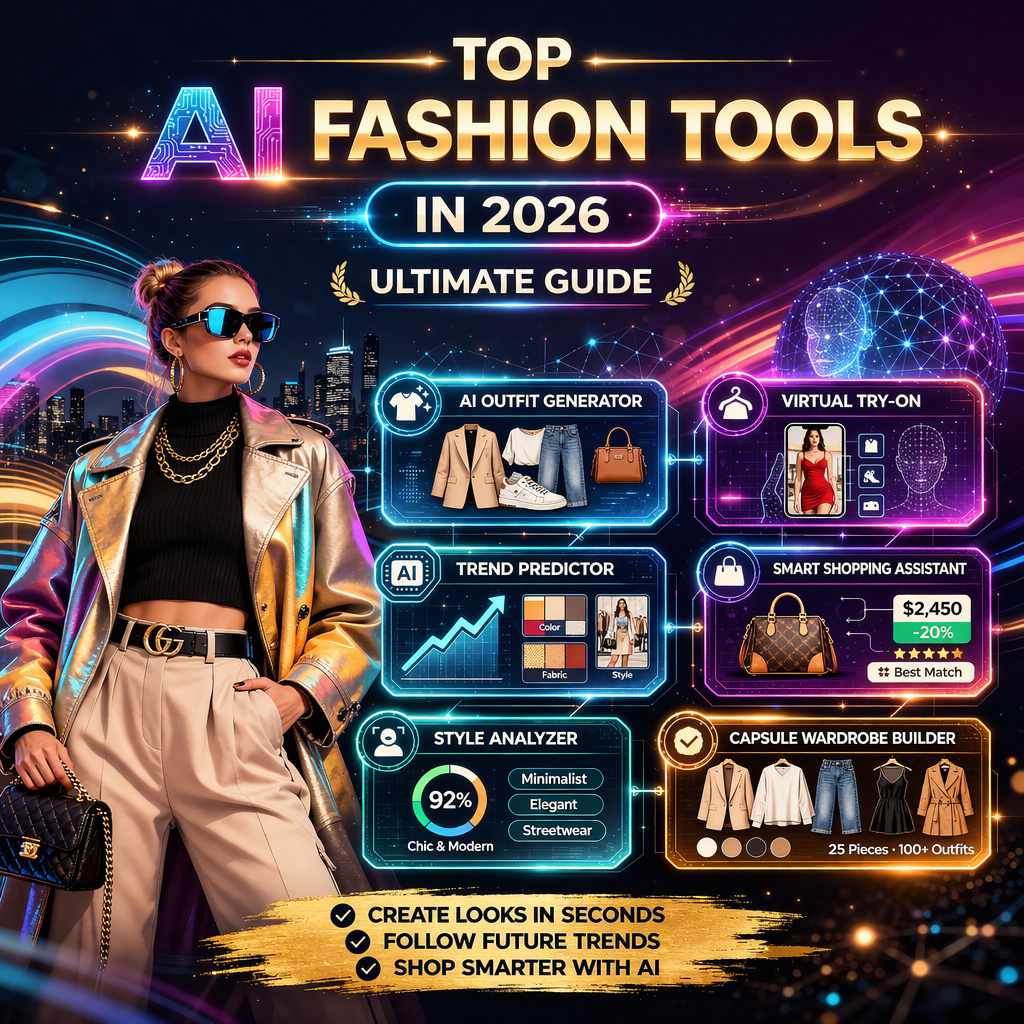
Top AI Fashion Tools in 2026 (Ultimate Guide)

fashion guide2026

The fashion industry is going through its biggest transformation since the invention of the sewing machine — and AI is driving it. Whether you are an independent designer sketching your first collection, an e-commerce brand trying to cut photoshoot costs, or a buyer at a major retailer making inventory decisions, AI tools are now available that can fundamentally change the way you work.

The numbers tell the story. The global AI fashion market was valued at $2.89 billion in 2025 and is growing at nearly 40% annually. Brands adopting AI tools report 10x faster design cycles, 30–50% fewer physical samples, and significant drops in return rates thanks to virtual try-on technology. Those that are not adopting them are already falling behind.

But with dozens of tools flooding the market, knowing which ones are worth your time — and which are overhyped — is genuinely difficult. This guide breaks down the top AI fashion tools in 2026 across five key categories, with honest assessments of what each tool does well, who it is built for, and what it costs.

Already want personalized style recommendations powered by AI? Try our free AI Personal Stylist tool — designed to help you build outfits and find your style in minutes.

👉 Try the AI Personal Stylist at FashionNewsGF.com

What Makes an AI Fashion Tool Worth Using?

Not all AI fashion tools are created equal. Before diving into the list, here are the criteria we used to evaluate every platform in this guide:

  • Output quality: Does the AI generate results that are genuinely useful in a real workflow — not just impressive in a demo?
  • Ease of use: Can a non-technical user get value without weeks of onboarding?
  • Workflow integration: Does the tool connect to your existing stack — Shopify, PLM systems, design files, social platforms?
  • Pricing transparency: Is the free tier genuinely useful, and are paid plans priced fairly for the value delivered?
  • Commercial rights: Can you legally use AI-generated outputs in products, ads, and listings?
  • Diversity and representation: Does the tool support diverse body types, skin tones, and aesthetic styles?
  • Accuracy for fashion specifically: General AI image tools often fail at fabric physics, garment proportions, and styling details. Fashion-specific tools understand these nuances.

Category 1: AI Design & Concept Generation Tools

These tools help designers move from idea to polished visual concept in minutes. Instead of spending hours sketching or briefing illustrators, you type a prompt, upload a reference image, or feed in a mood board — and get production-ready visuals almost instantly. This category has seen explosive growth among independent designers and small labels who previously could not afford illustrators or design agencies.

1. The New Black — Best All-Around AI Design Platform

Best For: Independent designers, small brands, teams needing all-in-one tools

Starting Price: $8/month

Free Tier: Yes — limited generations

The New Black is one of the most widely adopted AI design platforms in fashion, with over 500,000 designers and brands using it. You can input a text description, upload a rough sketch, or reference an existing image, and the platform generates polished, production-ready clothing design visuals within minutes. Beyond concept generation, it also handles virtual try-on, tech pack creation, and trend forecasting — making it a genuinely all-in-one solution at a very accessible price point.

What separates it from general image generators like Midjourney is that it is trained specifically on fashion data. It understands garment proportions, fabric behavior, collar construction, and how clothes actually drape on a body — details that general AI tools consistently get wrong.

Strengths:

  • Fashion-specific training for accurate garment visuals
  • All-in-one: design + try-on + tech packs + forecasting
  • Very accessible entry price for solo designers

2. Ablo AI — Best for Brand Identity & Team Collaboration

Best For: Early-stage brands building visual identity, co-founder teams

Starting Price: Free tier available; paid plans vary

Free Tier: Yes

Ablo AI positions itself as a digital co-founder for fashion brands. Upload your mood boards, sketches, or style references and it generates complete apparel designs with suggested prints, graphics, typography, and brand identity elements. It also supports real-time team collaboration, so co-founders, production partners, or investors can review and iterate in the same workspace without emailing files back and forth.

It is particularly strong for brands in the 0-to-1 stage who need to build a cohesive visual identity without a full design team. The tool bridges the gap between creative concept and the visual language of a brand.

3. NewArc.ai — Best for Sketch-to-Visual Conversion

Best For: Designers working from hand-drawn sketches, startups pitching collections

Starting Price: Free tier; paid plans from ~$15/month

Free Tier: Yes

NewArc.ai converts hand-drawn sketches into photorealistic fashion images in seconds. Unlike general AI generators, it is specifically trained to understand garment proportions, fabric textures, and fashion styling conventions. If your design process starts with pencil and paper, this is the tool that bridges analog creativity with digital output. It is especially useful for startups pitching collections to buyers or investors who need polished visuals before committing to physical sampling.

Category 2: AI Product Photography & Model Generation

This is currently the highest ROI category for most e-commerce fashion brands. AI model generators let you create photorealistic on-model product images without booking photographers, hiring models, or renting studio space. In 2026, the best tools produce outputs that are genuinely difficult to distinguish from a real photoshoot — including accurate fabric rendering, natural poses, and lighting that matches professional studio work.

The question is no longer whether AI model generators are good enough. The question is which one fits your specific workflow, budget, and catalog size.

4. PhotoRoom — Best for E-Commerce Sellers at Any Scale

Best For: Etsy, Poshmark, Shopify, Amazon sellers; mobile-first workflows

Starting Price: Free tier; paid from ~$10/month

Free Tier: Yes — generous for small sellers

PhotoRoom is the most versatile AI product photography tool available in 2026. It handles background removal, virtual model generation, AI product staging, batch editing across hundreds of SKUs, and branded template creation — all in one platform. The mobile app is particularly strong, making it ideal for sellers who shoot on their phone and need catalog-ready images without a desktop editing workflow.

As of early 2026, it supports generating up to four products in a single image for complete outfit creation — a major upgrade for brands wanting to show how pieces work together as a look rather than as isolated items.

Strengths:

  • End-to-end: background removal, model gen, staging, batch editing, branding
  • Strong mobile app for phone-based shooting workflows
  • Multi-product outfit imagery in a single generation

5. WearView — Best for Consistent Brand Identity Across Catalogs

Best For: Small brands, marketing teams, catalog-scale image consistency

Starting Price: Free tier; paid plans vary

Free Tier: Yes

WearView is a consumer-focused fashion AI suite that combines virtual try-on, AI model creation, and flat-lay-to-model transformation in one integrated platform. Its standout feature is consistent model identity: unlike most tools that generate a new model face and body for every image, WearView lets you maintain the same model appearance across your entire catalog. For brands where visual coherence matters, this is a critical advantage.

It is designed specifically for individual creators, small brands, and marketing teams who need professional results without requiring technical setup or integration work.

6. Pixa (formerly Pixelcut) — Best for Social Media & Video Content

Best For: TikTok and Instagram Reels content creators, social-first brands

Starting Price: Free tier; paid plans from ~$8/month

Free Tier: Yes

Pixa has evolved from a basic product photography app into a full AI fashion model and animation platform. Upload a flat-lay or mannequin shot and it generates on-model photos with customizable poses, backgrounds, and styling. Its standout feature in 2026 is runway walk animation: it converts any static model photo into a short animated clip purpose-built for TikTok, Instagram Reels, and social media ads. With over 100 million images processed monthly, the scale is proven.

Category 3: AI Virtual Try-On & 3D Visualization

Virtual try-on technology has matured significantly in 2026. These tools reduce return rates, increase purchase confidence, and give shoppers a meaningful way to evaluate fit and styling without visiting a physical store. For brands, the ROI case is strong: higher conversion, lower returns, and longer session engagement.

7. Style3D AI — Best End-to-End Platform for Brands & Designers

Best For: Fashion brands, design teams, manufacturers needing full design-to-production workflow

Starting Price: $99/month

Free Tier: Limited — free templates available

Style3D AI is widely considered the most comprehensive end-to-end AI fashion platform in 2026. It takes a sketch and turns it into a physics-accurate 3D garment with realistic fabric simulation, supports full virtual photoshoots, generates graded patterns and tech packs ready for manufacturing handoff, and integrates trend forecasting directly into the design flow. Brands using it report up to 90% reduction in physical prototyping and 50% faster collection launches.

For brands selling on Shopify or Amazon, it also supports AR integration — meaning shoppers can visualize garments in their environment before buying. Plans start at $99/month, positioning it as a serious investment for brands that are ready to build a fully digital design infrastructure.

Strengths:

  • Sketch-to-3D with physics-accurate fabric simulation
  • Direct manufacturing handoff via graded patterns and tech packs
  • AR integration with Shopify and Amazon
  • Built-in trend forecasting layer

8. Reactive Reality (PICTOFiT) — Best for Personalized Virtual Try-On

Best For: Retailers focused on reducing returns, personalized shopping experiences

Starting Price: Custom / enterprise pricing

Free Tier: Demo available

Reactive Reality takes a different approach to virtual try-on. Instead of generic model overlays, shoppers create a personalized AI avatar from a selfie and basic body measurements. The result is a digital twin that shows how a garment fits their specific proportions, not a generic body type. Fashion brands using PICTOFiT report higher engagement, longer session times, and meaningfully lower return rates because shoppers gain real confidence in how a garment will fit them personally.

Through its SDK, PICTOFiT can be embedded in brand websites, mobile apps, or even physical in-store smart mirrors — giving it genuine omnichannel flexibility.

9. FASHN AI — Best for Studio-Quality On-Model Photography

Best For: Brands needing premium product detail pages, agencies with high-quality bar

Starting Price: Free tier; paid plans vary

Free Tier: Yes

FASHN AI develops its own in-house virtual try-on models specifically optimized for premium product photography. It generates on-model images from flat-lay shots with a particular focus on fabric accuracy — prints, textures, and fine detail are preserved in a way that cheaper tools often miss. The platform also supports model swapping, where you can change the model while keeping the product, pose, lighting, and background consistent. For brands with a high visual standard, FASHN competes directly with traditional photoshoots at a fraction of the cost.

Category 4: AI Trend Forecasting Tools

Traditional trend forecasting meant expensive agency subscriptions and reports that arrived months after the data was collected. AI-driven forecasting now processes real-time signals from social media, street style, runway coverage, and e-commerce analytics to surface what is emerging right now — before it peaks in mainstream retail. For brands making inventory bets months in advance, this kind of early signal intelligence can be the difference between a sell-out collection and excess stock.

10. Heuritech — Best for Enterprise Trend Intelligence

Best For: Large fashion houses, enterprise retail brands making significant inventory decisions

Starting Price: From ~€12,000/year

Free Tier: No — enterprise only

Heuritech is the most data-rigorous AI trend forecasting platform in the market. It analyzes over 3 million social media images daily to predict fashion trends up to 24 months in advance, with a reported 90% accuracy rate. Trusted by Louis Vuitton, Dior, and Adidas, it is designed for teams that need validated, data-backed intelligence before committing to design and sourcing decisions at scale.

The price point reflects its enterprise positioning — it is not a tool for small brands. But for organizations where a single bad trend bet can mean millions in dead inventory, the ROI case is strong.

11. Designovel — Best for Automated AI-Driven Fashion Operations

Best For: Enterprise brands seeking full AI automation; Korean/Asian market retailers

Starting Price: Custom pricing

Free Tier: No

Designovel made headlines by successfully operating an entire fashion brand — Dali Hotel — with fully automated AI operations and no human fashion expertise required on the operations side. It combines real-time trend forecasting with generative design capabilities, analyzing global data from social media, street style, runway reports, and e-commerce to predict emerging colors, silhouettes, and consumer preferences. The platform then generates design prompts aligned with those forecasts, tightening the loop between what the data says and what the design team creates.

Dramatically reduced marketing costs — just 2.5% of monthly sales versus the industry standard of 10–20% — demonstrate the efficiency gains possible when AI handles both the intelligence and the creative brief.

12. Stylumia — Best for Demand Sensing & Inventory Planning

Best For: Buyers, merchandisers, planners managing inventory risk

Starting Price: Custom pricing

Free Tier: No

Stylumia focuses specifically on demand sensing — predicting not just what styles are trending, but how many units of each will actually sell in a given market and timeframe. It is built for the commercial side of fashion: buyers, merchandisers, and planners who need to translate trend signals into purchase order quantities. If your pain point is excess inventory or missed sell-throughs, Stylumia directly targets that problem.

Category 5: AI Personal Styling Tools

AI personal styling tools bring the experience of having a private stylist to anyone with a smartphone. These tools analyze your wardrobe, body type, coloring, lifestyle, and preferences to recommend outfits, suggest new pieces, and help you get more out of what you already own. In 2026, this category has expanded beyond novelty — the best tools deliver genuinely useful, personalized guidance.

13. FashionNewsGF AI Personal Stylist — Best Free AI Stylist for Everyday Fashion Advice

Best For: Anyone wanting personalized outfit recommendations and style guidance

Starting Price: Free

Free Tier: Yes — fully free to use

The FashionNewsGF AI Personal Stylist is one of the most accessible AI styling tools available right now — and it is completely free to use. Whether you are trying to build a capsule wardrobe, figure out what to wear to a specific event, or get guidance on what pieces would work best for your body type and coloring, this tool delivers instant, personalized recommendations without requiring an account, a subscription, or any technical setup.

It is a great starting point if you want to experience what AI can do for personal style before investing in any of the paid tools in this guide.

Strengths:

  • Completely free — no account or credit card required
  • Instant personalized outfit recommendations
  • Great entry point for consumers exploring AI styling tools

👉 Try it now: FashionNewsGF.com/personal-stylist


Quick Comparison: Which Tool Is Right for You?

Here is a summary to help you match the right tool to your specific situation:


Your Situation Recommended Tool Why
Solo designer, tight budget The New Black All-in-one design + try-on from $8/mo
E-commerce seller on Shopify/Amazon PhotoRoom Batch editing, model gen, mobile-friendly
Building a brand from scratch Ablo AI Visual identity + team collaboration
Need consistent catalog imagery WearView Consistent model identity across all SKUs
Social media / TikTok content Pixa Runway walk animations for Reels & TikTok
Full design-to-production pipeline Style3D AI End-to-end: sketches to 3D to tech packs
Reducing e-commerce returns Reactive Reality Personalized digital twin try-on
Enterprise trend intelligence Heuritech 90% accuracy, 24-month forecasting
Personal style advice (free) FashionNewsGF AI Stylist Free, instant, personalized recommendations


How to Choose the Right AI Fashion Tool: A Framework

With so many options, it is easy to get paralyzed by choice. Here is a simple four-step process for deciding which tool or tools to adopt:

  1. Identify your biggest bottleneck. Is it design speed? Product photography costs? Return rates? Trend uncertainty? Start with the tool that solves your most expensive problem first.
  2. Start with free tiers. Most tools on this list have free trials or generous free tiers. Spend a week with two or three options before committing to a subscription.
  3. Check commercial rights before publishing. Some free tiers restrict commercial use. Always read the terms before using AI-generated images in ads, product pages, or marketing materials.
  4. Test with your actual products. AI tools behave very differently across product types. Sheer fabrics, small printed text, and intricate embroidery are still challenging for most tools. Run your specific catalog through a free trial before assuming it will work.

Frequently Asked Questions

Are AI-generated fashion model images realistic enough for product pages?

Yes — in 2026, the best tools produce images that are very difficult to distinguish from real photoshoots, especially for standard garment types like t-shirts, dresses, jackets, and pants. More challenging items like sheer fabrics, intricate embroidery, and small printed text still require quality review. Testing with your specific product mix during a free trial is the best way to assess quality before committing.

Can I use AI-generated images commercially?

Most paid plans across the tools in this guide grant commercial usage rights. You can typically use generated images on product pages, social media, ads, and marketing materials. The important rule: always verify the specific terms of service for each tool before publishing. Free tier content often has different restrictions than paid.

Will AI replace fashion designers?

No — and the evidence from brands using these tools supports that clearly. AI is most valuable as an accelerator of creative work, not a replacement for it. It handles time-consuming tasks like generating variations, creating product imagery, and processing trend data so that designers can spend more time on the high-value creative decisions that actually differentiate a brand. The most effective use of AI in fashion in 2026 is as a creative collaborator, not a substitute.

What is the best free AI fashion tool for personal style?

For personalized outfit recommendations and styling advice, the FashionNewsGF AI Personal Stylist is one of the best free options available right now. It requires no account and no technical setup — just describe your situation and get personalized guidance immediately.

Try it free: fashionnewsgf.com/personal-stylist

Final Thoughts

AI has moved from being a buzzword in fashion to being a genuine competitive advantage. The brands and designers thriving in 2026 are not necessarily the ones with the biggest budgets — they are the ones who have identified which specific AI tools solve their most expensive problems and have integrated those tools into their daily workflows.

Whether you are a solo designer trying to get your first collection visualized on a tight budget, an e-commerce brand looking to cut photography costs and reduce returns, or an enterprise buyer trying to make smarter inventory decisions, there is a tool on this list that can make a real difference to your results this year.

Start with the free tiers. Test with your actual products and workflow. And if you are looking for a zero-commitment way to experience what AI styling can do for you personally, the FashionNewsGF AI Personal Stylist is the perfect place to start.

Ready to try AI-powered personal styling for free? No sign-up required — just instant, personalized fashion advice tailored to your style, body type, and lifestyle.

👉 Try the AI Personal Stylist — completely free at FashionNewsGF.com


Celebrity Fashion and Red Carpet Looks: Inspiration for Every Event

Fashion News GF

Celebrity fashion is a major part of pop culture, and red carpet looks are often the most talked-about and imitated. But what makes a celebrity fashion look red carpet-worthy? In this article, we’ll explore the elements that go into creating a truly iconic red carpet moment. We’ll also take a look at some of the most popular celebrity fashion red carpet looks of all time, and the trends that are sure to be big in 2023.

II. Celebrity Fashion Red Carpet Looks

Celebrity fashion red carpet looks are often the most talked-about and imitated looks of the year. They are often seen as the ultimate in style and glamour, and they can inspire our own fashion choices for years to come.

There are a few key elements that make a celebrity fashion look red carpet-worthy. First, the look must be well-tailored and fit perfectly. Second, the look must be cohesive and have a clear sense of style. Third, the look must be appropriate for the event and the celebrity’s personal style.

When it comes to celebrity fashion red carpet looks, there are no rules. Anything goes, as long as it is executed perfectly. We have seen celebrities wear everything from ball gowns to jumpsuits to tuxedos on the red carpet. The only limit is your imagination.

III. What Makes a Celebrity Fashion Look Red Carpet-Worthy?

There are a few key elements that make a celebrity fashion look red carpet-worthy. These include:

  • A high level of craftsmanship and attention to detail
  • A unique and eye-catching design
  • A perfect fit
  • A bold color or print
  • A statement accessory

When it comes to celebrity fashion, there is no one-size-fits-all approach. What makes a look red carpet-worthy for one celebrity may not be the same for another. However, the elements listed above are generally considered to be essential for creating a truly unforgettable red carpet moment.

III. What Makes a Celebrity Fashion Look Red Carpet-Worthy?

There are a few key elements that make a celebrity fashion look red carpet-worthy. These include:

  • The fit
  • The fabric
  • The color
  • The styling

The fit of a celebrity fashion look is essential for making it red carpet-worthy. The clothes should be perfectly tailored to the celebrity’s body, and they should not be too tight or too loose. The fabric of a celebrity fashion look should be luxurious and high-quality. It should be something that looks and feels expensive. The color of a celebrity fashion look should be bold and eye-catching. It should be something that will stand out on the red carpet. The styling of a celebrity fashion look is also important. The clothes should be put together in a way that is both stylish and flattering.

When all of these elements come together, it creates a celebrity fashion look that is truly red carpet-worthy.</p

V. Celebrity Fashion Red Carpet Trends to Watch for in 2023

Here are some of the celebrity fashion red carpet trends to watch for in 2023:

* Bold colors: Bright, saturated colors will be popular on the red carpet in 2023. Look for shades of fuchsia, cobalt blue, emerald green, and yellow.
* Statement jewelry: statement jewelry will be big this year. Look for oversized earrings, necklaces, and bracelets.
* Floral prints: Floral prints are always a popular choice for the red carpet, and they will be even more popular in 2023. Look for bold, colorful floral prints.
* Metallics: Metallics will also be a big trend on the red carpet in 2023. Look for gold, silver, and copper.
* Sheer fabrics: Sheer fabrics will be another popular trend on the red carpet in 2023. Look for dresses, tops, and skirts made of sheer fabrics.
* Wide-legged pants: Wide-legged pants will be a big trend on the red carpet in 2023. Look for pants with a loose, relaxed fit.
* Chic jumpsuits: Chic jumpsuits will be another popular trend on the red carpet in 2023. Look for jumpsuits in bold colors and prints.
* Statement handbags: Statement handbags will be big this year. Look for handbags with unique shapes, colors, and textures.
* Comfortable shoes: Comfortable shoes will be essential for the red carpet in 2023. Look for heels that are not too high and shoes that are made of comfortable materials.

VI. How to Dress for the Red Carpet Like a Celebrity

Dressing for the red carpet is a lot like walking a tightrope. You want to look amazing, but you also don’t want to upstage the stars. Here are a few tips on how to dress for the red carpet like a celebrity:

  • Choose a dress that is flattering to your figure and your personality.
  • Make sure your dress is appropriate for the event.
  • Accessorize your look with statement jewelry and shoes.
  • Get your hair and makeup done professionally.
  • Practice your walk and your poses in front of a mirror.

By following these tips, you can put your best foot forward and look like a celebrity on the red carpet.

VII. Celebrity Fashion Red Carpet Makeup Looks

Celebrity makeup looks on the red carpet are always some of the most talked-about aspects of their overall appearance. From bold lips to smoky eyes, there are many different ways to create a red carpet-worthy makeup look. Here are a few tips for creating your own celebrity-inspired makeup look:

  • Start with a good skincare routine. This will help to create a smooth and flawless base for your makeup.
  • Use a primer to help your makeup stay in place all night long.
  • Choose a foundation that is the right shade for your skin tone.
  • Highlight your best features with concealer and bronzer.
  • Use a smoky eye shadow palette to create a dramatic eye look.
  • Line your eyes with a black or brown eyeliner.
  • Add a touch of drama to your lashes with mascara.
  • Finish off your look with a bold lip color.

With a little bit of practice, you can create your own celebrity-inspired makeup look that will turn heads on the red carpet.

Celebrity Fashion Red Carpet Hairstyles

VIII. Celebrity Fashion Red Carpet Hairstyles

Celebrity hairstyles are always a hot topic, and the red carpet is no exception. From sleek updos to glamorous waves, there are endless ways to style your hair for a big event. Here are a few celebrity hair inspiration looks to try for your next red carpet event:

  • Sleek updo: This is a classic red carpet hairstyle that is always elegant and sophisticated. To achieve this look, start by blow-drying your hair straight. Then, create a deep side part and use a curling iron to create loose waves. Finally, pull your hair back into a low ponytail and secure it with a few bobby pins.
  • Glamour waves: This hairstyle is perfect for a more glamorous look. To create this look, start by blow-drying your hair with a round brush. Then, use a curling iron to create loose waves. Finally, spritz your hair with a texturizing spray to add volume and definition.
  • Messy bun: This is a relaxed and effortless hairstyle that is perfect for a more casual red carpet event. To create this look, start by gathering your hair into a ponytail. Then, loosely twist the ponytail and secure it with a few bobby pins. Finally, tousle your hair with your fingers to create a messy look.

No matter what your style, there is sure to be a celebrity hair inspiration look that you can recreate for your next red carpet event. So get creative and have fun with your hair!

Conclusion

Celebrity fashion red carpet looks are a great source of inspiration for anyone looking to create a stylish and memorable look. By following the tips in this article, you can learn how to dress for the red carpet like a celebrity and turn heads wherever you go.


The Impact Of Social Media On Fashion

Fashion News GF

Social media has had a profound impact on the fashion industry. It has changed the way people shop for fashion, the way brands market their products, and the way fashion is designed.

In this section, we will discuss the impact of social media on fashion in more detail. We will explore how social media has changed the way people shop for fashion, how brands use social media to market their products, and how social media has influenced the design of fashion.

We will also discuss the challenges and opportunities that social media presents for the fashion industry. Finally, we will provide some tips for fashion brands on how to use social media effectively.

How Social Media is Changing the Fashion Industry

Social media is changing the fashion industry in a number of ways.

First, social media is making it easier for people to discover new fashion brands. In the past, people were limited to finding new fashion brands by visiting brick-and-mortar stores or by reading fashion magazines. Today, people can discover new fashion brands by following them on social media, watching their fashion videos, or reading their blog posts.

Second, social media is giving consumers more control over the fashion they see. In the past, fashion brands dictated what consumers saw. Today, consumers can use social media to find fashion that they like and that fits their personal style.

Third, social media is making it easier for fashion brands to connect with their customers. In the past, fashion brands had to rely on traditional marketing methods to reach their customers. Today, fashion brands can use social media to build relationships with their customers, get feedback on their products, and promote their latest collections.

Social media is also changing the way fashion brands operate. In the past, fashion brands were focused on selling their products. Today, fashion brands are also focused on building relationships with their customers and creating a community around their brand.

Overall, social media is having a major impact on the fashion industry. It is making it easier for people to discover new fashion brands, giving consumers more control over the fashion they see, and making it easier for fashion brands to connect with their customers.

IV. The Role of Influencers in Fashion

Influencers are people who have a large following on social media and who are able to influence the opinions and behaviours of their followers. In the fashion industry, influencers can be used to promote new products, generate awareness for brands, and drive sales.

There are a number of ways that influencers can be used to promote fashion. They can create content that features their own personal style, share photos of themselves wearing new products, or collaborate with brands on sponsored content. Influencers can also be used to host contests and giveaways, or to create product reviews.

Influencers can be a valuable tool for fashion brands, as they can help to reach a wider audience and generate more sales. However, it is important to note that not all influencers are created equal. When choosing an influencer to work with, it is important to consider their reach, engagement, and authenticity.

Influencers can play a significant role in the fashion industry, and they are becoming increasingly important as social media continues to grow in popularity. By working with influencers, fashion brands can reach a wider audience, generate more sales, and build stronger relationships with their customers.

How to Use Social Media to Promote Your Fashion Brand

Social media is a powerful tool that can be used to promote your fashion brand. By using social media effectively, you can reach a wider audience, build relationships with your customers, and drive sales.

Here are some tips for using social media to promote your fashion brand:

  • Create a strong presence on all major social media platforms.
  • Post high-quality content that is relevant to your target audience.
  • Engage with your followers by responding to comments and questions.
  • Use social media to run contests and giveaways.
  • Use social media to promote your products and sales.

By following these tips, you can use social media to grow your fashion brand and reach a wider audience.

VI. The Benefits of Social Media for Fashion Retailers

Social media can offer a number of benefits for fashion retailers, including:

  • Increased brand awareness
  • Improved customer engagement
  • Increased sales
  • Enhanced customer service
  • Cost-effectiveness

Let’s take a closer look at each of these benefits in more detail.

Increased brand awareness

Social media is a great way for fashion retailers to reach a wider audience and increase brand awareness. By posting interesting and engaging content, fashion retailers can attract new customers and build relationships with existing ones.

Improved customer engagement

Social media is a great way for fashion retailers to engage with their customers on a personal level. By responding to comments and queries, running contests and giveaways, and sharing behind-the-scenes content, fashion retailers can build relationships with their customers and create a sense of community.

Increased sales

Social media can be a great way to drive sales for fashion retailers. By sharing product images, running sales and promotions, and offering coupons and discounts, fashion retailers can increase their sales and generate revenue.

Enhanced customer service

Social media can be a great way for fashion retailers to provide customer service. By responding to comments and queries, fashion retailers can resolve customer issues quickly and easily, and build a positive reputation for their brand.

Cost-effectiveness

Social media is a cost-effective way for fashion retailers to reach a wider audience and grow their business. Compared to traditional marketing methods, such as print advertising and TV commercials, social media is a relatively inexpensive way to reach a large number of people.

Overall, social media can offer a number of benefits for fashion retailers, including increased brand awareness, improved customer engagement, increased sales, enhanced customer service, and cost-effectiveness. By using social media effectively, fashion retailers can reach a wider audience, build relationships with their customers, and grow their business.

VII. The Challenges of Social Media for Fashion Brands

Social media can be a great way for fashion brands to connect with their customers, but it also comes with a number of challenges. Here are some of the challenges that fashion brands face when using social media:

  • The ever-changing landscape. Social media is constantly changing, and it can be difficult for brands to keep up. What works today may not work tomorrow, and brands need to be constantly adapting their strategies to stay ahead of the curve.
  • The need for constant content creation. Social media users are constantly bombarded with content, and it can be difficult for brands to stand out from the crowd. Brands need to create engaging and interesting content on a regular basis in order to keep their followers engaged.
  • The need for a strong social media presence. In order to get the most out of social media, brands need to have a strong presence on all of the major platforms. This can be a time-consuming and expensive undertaking, and it’s not always easy to get the results that you want.
  • The potential for negative feedback. Social media is a public forum, and brands need to be prepared for negative feedback from their customers. This can be difficult to deal with, but it’s important to remember that negative feedback can also be a valuable opportunity to learn and improve.

Despite the challenges, social media can still be a valuable tool for fashion brands. By understanding the challenges and being prepared to deal with them, brands can use social media to reach new customers, build relationships with their existing customers, and drive sales.

How to Measure the ROI of Social Media for Fashion

VIII. How to Measure the ROI of Social Media for Fashion

Measuring the ROI of social media for fashion can be challenging, but it is essential for understanding the impact of your marketing efforts and making informed decisions about how to allocate your budget. There are a number of different ways to measure the ROI of social media, but some of the most common methods include:

  • Tracking website traffic from social media
  • Tracking conversions from social media
  • Using social media analytics tools
  • Conducting surveys and polls
  • Using a social media ROI calculator

Each of these methods has its own advantages and disadvantages, so it is important to choose the methods that are most appropriate for your business and your goals.

Tracking website traffic from social media is a good way to measure the number of people who visit your website after clicking on a link from a social media platform. This metric can be used to track the overall impact of your social media marketing efforts, as well as to identify specific posts or campaigns that are driving traffic to your website.

Tracking conversions from social media is a good way to measure the number of people who take a specific action after clicking on a link from a social media platform. This metric can be used to track the effectiveness of your social media marketing efforts in generating leads, sales, or other desired outcomes.

Using social media analytics tools is a good way to get a more comprehensive view of your social media performance. These tools can track a variety of metrics, including website traffic, conversions, engagement, and reach. They can also be used to identify trends and patterns in your social media data.

Conducting surveys and polls is a good way to get feedback from your customers and followers about your social media marketing efforts. This feedback can be used to improve your content, strategies, and campaigns.

Using a social media ROI calculator is a good way to get a quick estimate of the return on investment for your social media marketing efforts. These calculators typically take into account factors such as website traffic, conversions, and advertising costs.

No matter which methods you choose to use, it is important to track the ROI of your social media marketing efforts so that you can make informed decisions about how to allocate your budget and improve your results.

IX. The Future of Social Media in Fashion

Social media is constantly evolving, and its impact on the fashion industry is likely to continue to grow. In the future, we can expect to see even more use of social media for marketing, sales, and customer engagement.

Here are some of the ways that social media is likely to change the fashion industry in the future:

  • Social media will become even more integrated with e-commerce.
  • Brands will use social media to create more personalized shopping experiences for customers.
  • Social media will be used to connect brands with influencers and other key opinion leaders.
  • Social media will be used to create more immersive and engaging shopping experiences.

The future of social media in fashion is full of possibilities. By using social media effectively, brands can reach new customers, build relationships with their existing customers, and drive sales.

Fashion Collaborations and Designer Partnerships: A Comprehensive Guide

Fashion News GF

Fashion collaborations are a growing trend in the fashion industry. They can take many forms, from limited-edition collections to co-branded products. When done well, fashion collaborations can benefit both brands and designers.

In this comprehensive guide, we will discuss everything you need to know about fashion collaborations. We will cover topics such as:

  • What is a fashion collaboration?
  • Benefits of fashion collaborations for brands
  • Benefits of fashion collaborations for designers
  • Types of fashion collaborations
  • How to create a successful fashion collaboration
  • Examples of successful fashion collaborations
  • How to pitch a fashion collaboration to a brand
  • How to get your fashion collaboration featured in the media
  • Conclusion

By the end of this guide, you will have a solid understanding of fashion collaborations and how to use them to grow your business.</p

II. What is a fashion collaboration?

A fashion collaboration is a partnership between two or more brands or designers to create a new product or collection. Collaborations can be between brands of the same type, such as two clothing brands, or between brands of different types, such as a fashion brand and a beauty brand.

Fashion collaborations can take many forms, from a simple co-branded product to a full-blown collection designed by two designers. They can be used to reach new customers, create buzz for a brand, or simply experiment with new ideas.

In recent years, fashion collaborations have become increasingly popular. Some of the most successful collaborations have included Nike x Off-White, Supreme x Louis Vuitton, and Yeezy x Adidas. These collaborations have helped to boost the sales of both brands and have introduced new audiences to each brand.

If you are a fashion brand or designer, collaborating with another brand can be a great way to grow your business and reach new customers. By working with a partner, you can tap into their customer base and access their distribution channels. You can also benefit from their expertise and resources.

III. Benefits of fashion collaborations for brands

There are many benefits of fashion collaborations for brands, including:

  • Increased brand awareness
  • Enhanced brand image
  • Improved sales
  • Increased customer engagement
  • Access to new markets
  • Increased credibility
  • Enhanced product development

By collaborating with a designer, brands can tap into the designer’s expertise and creativity to create unique and innovative products that appeal to their target audience. This can help brands to increase brand awareness, enhance their brand image, and improve sales. Collaborations can also help brands to reach new markets and attract new customers. Additionally, collaborations can help brands to build credibility and establish themselves as leaders in their industry. Finally, collaborations can help brands to improve product development and create products that are more relevant to their target audience.

IV. Benefits of fashion collaborations for designers

Fashion collaborations can offer a number of benefits for designers, including:

  • Increased exposure to new audiences
  • Enhanced brand awareness
  • Access to new markets
  • Increased sales
  • Improved design skills
  • Reputational benefits

By collaborating with a brand, designers can reach a wider audience and introduce their work to new customers. This can lead to increased sales and brand awareness. Additionally, collaborating with a brand can give designers access to new markets and resources. For example, a designer who collaborates with a major retailer may be able to sell their products in stores all over the world.

Collaborations can also help designers to improve their design skills. By working with other creative professionals, designers can learn new techniques and approaches. This can help them to develop their own unique style and create more innovative designs.

Finally, collaborations can also benefit designers’ reputations. By working with a well-known brand, designers can associate themselves with a certain level of quality and prestige. This can help them to attract new clients and secure future collaborations.

V. Types of fashion collaborations

There are many different types of fashion collaborations, each with its own unique benefits and challenges. Some of the most common types of collaborations include:

  • Collaborations between brands and designers
  • Collaborations between brands and influencers
  • Collaborations between brands and celebrities
  • Collaborations between brands and retailers
  • Collaborations between brands and non-profit organizations

Each type of collaboration has its own unique benefits and challenges. For example, collaborations between brands and designers can help to create new and innovative products, while collaborations between brands and influencers can help to reach a wider audience.

When considering which type of collaboration to pursue, it is important to carefully consider the goals of the collaboration and the resources that are available. By carefully planning and executing a fashion collaboration, brands can create mutually beneficial partnerships that can help to grow their businesses and reach new audiences.

VI. How to create a successful fashion collaboration

There are a few key things to keep in mind when creating a successful fashion collaboration.

First, you need to have a clear idea of what you want to achieve with the collaboration. Are you looking to create a limited-edition capsule collection? A one-of-a-kind piece? A long-term partnership? Once you know what you want to achieve, you can start to develop a strategy for how to reach your goals.

Second, you need to find the right partner. This is someone who shares your vision and values, and who has the skills and resources to help you create a successful collaboration. It’s important to do your research and make sure that you’re collaborating with someone who is a good fit for your brand.

Third, you need to create a strong marketing plan. This will help you to reach your target audience and generate excitement about the collaboration. Your marketing plan should include a clear message, strong visuals, and a compelling call to action.

Finally, you need to execute your plan flawlessly. This means paying attention to detail, working with your partner closely, and staying on top of deadlines. If you do all of these things, you’ll be well on your way to creating a successful fashion collaboration.

VII. Examples of successful fashion collaborations

Here are some examples of successful fashion collaborations:

  • In 2019, Nike collaborated with Virgil Abloh to create the Air Jordan 1 x Off-White “”Chicago”” sneaker. The shoe was a huge success, selling out in minutes and reselling for thousands of dollars.
  • In 2020, Gucci collaborated with The North Face to create a capsule collection of outdoor gear. The collection was popular with both fashion and outdoor enthusiasts, and sold out quickly.
  • In 2021, Prada collaborated with adidas to create a line of sneakers and apparel. The collection was praised for its innovative design and high-quality materials.

These are just a few examples of the many successful fashion collaborations that have taken place in recent years. These collaborations have helped to bring together different brands and audiences, and have created some truly innovative and stylish products.

How to pitch a fashion collaboration to a brand

IX. How to get your fashion collaboration featured in the media

Once you have created a successful fashion collaboration, you will want to get it featured in the media. This can help to increase brand awareness and sales. Here are a few tips for getting your fashion collaboration featured in the media:

  • Reach out to fashion journalists and editors. Send them a press release about your collaboration and include high-quality images of the products. You can also invite them to attend a launch event or fashion show.
  • Partner with influencers. Collaborate with influencers who have a large following in your target market. They can help to promote your collaboration to their fans and followers.
  • Use social media. Share photos and videos of your collaboration on social media and tag relevant brands and influencers.
  • Run a contest or giveaway. Offer a contest or giveaway to promote your collaboration. This can help to generate excitement and buzz around the products.

By following these tips, you can increase your chances of getting your fashion collaboration featured in the media. This can help to boost brand awareness and sales.

How to get your fashion collaboration featured in the media

Once you’ve created a successful fashion collaboration, the next step is to get it featured in the media. This can help you to reach a wider audience and generate more awareness for your brand. Here are a few tips for getting your fashion collaboration featured in the media:

Pitch your story to fashion journalists. Once you have a finished product, reach out to fashion journalists and bloggers who cover your industry. Tell them about your collaboration and why it’s newsworthy. Be sure to include high-quality images of the collection and a press release.
Attend fashion events. Attending fashion events is a great way to network with journalists and bloggers. You can also use these events to promote your collaboration and get people excited about it.
Use social media. Social media is a great way to promote your fashion collaboration and get people talking about it. Share photos of the collection, behind-the-scenes footage, and stories about the collaboration.
Partner with influencers. Partnering with influencers is a great way to reach a wider audience. Influencers can help you to promote your collaboration and get people excited about it.

By following these tips, you can increase your chances of getting your fashion collaboration featured in the media. This can help you to reach a wider audience, generate more awareness for your brand, and boost your sales.”

Affiliate Disclosure: FashionNewsGF.com is a participant in the Amazon Services LLC Associates Program, an affiliate advertising program designed to provide a means for sites to earn advertising fees by advertising and linking to Amazon.com. As an Amazon Associate we earn from qualifying purchases. Learn more