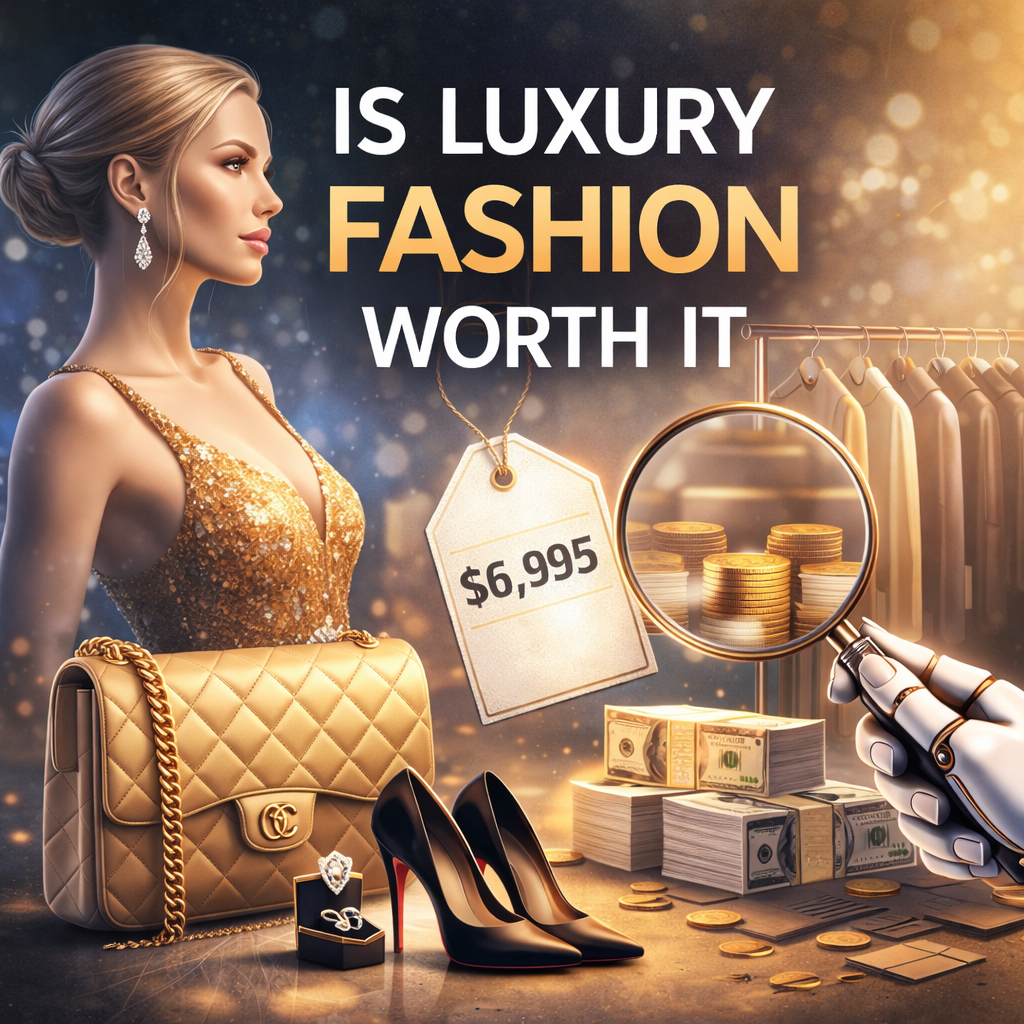
You’ve spotted the perfect designer handbag. The price tag makes you pause. And the question that every fashion lover eventually asks creeps in: is luxury fashion actually worth it?
It’s not a simple yes or no. The answer depends on what you value — craftsmanship, status, longevity, or financial return. In this guide, we break down the real cost of luxury fashion, how resale markets work, and which pieces (if any) can genuinely be considered investments.
And if you want a quick, personalized answer before you buy, try our free Is It Worth It? tool — designed to help you make smarter luxury fashion decisions.
What Does “Luxury Fashion” Actually Mean?
The term “luxury fashion” gets thrown around loosely, but true luxury has a few defining characteristics:
- Premium materials — full-grain leather, cashmere, exotic skins, fine silk
- Artisan craftsmanship — hand-stitching, small-batch production, skilled labor
- Heritage and brand equity — decades (sometimes centuries) of reputation
- Controlled distribution — limited availability, waitlists, exclusive boutiques
- Higher price points — typically starting in the hundreds and reaching into the tens of thousands
Brands like Hermès, Chanel, Louis Vuitton, Bottega Veneta, and Rolex sit firmly in this category. “Affordable luxury” brands like Coach or Michael Kors occupy a middle ground — aspirational, but not the same tier of craftsmanship or resale performance.
The Real Cost of Luxury Fashion
The sticker price is just the beginning. When evaluating whether a luxury piece is worth it, consider the total cost of ownership:
1. Purchase Price
Luxury prices have risen dramatically over the past decade. A Chanel Classic Flap bag that cost around $2,850 in 2010 now retails for over $10,000. Louis Vuitton and Hermès have similarly raised prices — sometimes multiple times per year — often outpacing inflation.
2. Maintenance & Repairs
Quality leather goods require conditioning, professional cleaning, and occasional hardware replacement. Budget for $50–$300+ per year depending on how frequently you use the piece.
3. Storage
Proper storage — dust bags, acid-free tissue, climate-controlled spaces — matters if you plan to resell. Neglect can significantly reduce resale value.
4. Insurance
High-value items should be insured. A rider on your home or renters insurance policy typically runs $1–$2 per $100 of value annually.
Bottom line: A $5,000 handbag might cost you $6,500–$7,000 over five years once you factor in maintenance and insurance. Understanding this full picture helps you assess whether the purchase makes sense for your lifestyle and budget.
Resale Value: Which Luxury Pieces Hold Their Worth?
Not all luxury fashion is created equal when it comes to resale. The secondary market — driven by platforms like The RealReal, Vestiaire Collective, and Fashionphile — has become a multi-billion dollar industry, and data is increasingly available on what holds value.
High Resale Value (Often Appreciates)
- Hermès Birkin & Kelly bags — Consistently the gold standard. Some colorways and exotic skins sell for 2–3x retail on the secondary market.
- Chanel Classic Flap & 2.55 — Due to aggressive retail price increases, older bags bought at lower prices often resell near or above original cost.
- Rolex sports models — The Submariner, Daytona, and GMT-Master II have historically appreciated, though the market has softened slightly since 2022.
- Limited edition sneakers — Certain Nike, Jordan, and New Balance collaborations hold or exceed retail on StockX and GOAT.
Moderate Resale Value (Holds Steady)
- Louis Vuitton monogram canvas (classic styles)
- Bottega Veneta intrecciato leather goods
- Cartier jewelry (especially Love and Juste un Clou)
- Burberry and Gucci (select iconic styles)
Lower Resale Value (Depreciates)
- Fast-changing “It bag” styles that go in and out of trend quickly
- Logo-heavy pieces from mid-tier luxury brands
- Heavily personalized or monogrammed items
- Clothing (in general depreciates more than accessories and jewelry)
Pro tip: Before buying, search your item on Vestiaire Collective or The RealReal to see what similar pieces are selling for secondhand. If the gap between retail and resale is small, that’s a strong signal of enduring demand.
Can Luxury Fashion Be a Real Investment?
This is where things get nuanced. A true “investment” implies a predictable positive return — and by that strict financial definition, most fashion does not qualify. However, a handful of categories have outperformed traditional asset classes over certain periods.
The Case For Luxury as Investment
- The Knight Frank Luxury Investment Index has tracked handbags, watches, and jewelry appreciating significantly over 10-year periods.
- Hermès Birkin bags have reportedly outperformed the S&P 500 and gold in some analyses.
- Luxury goods have shown relative resilience during economic downturns compared to other discretionary categories.
- Unlike stocks, you can use a luxury item while it appreciates.
The Case Against
- Past performance doesn’t guarantee future results — the watch market correction of 2022–2023 proved that.
- Condition matters enormously. A bag used daily will not appreciate the way one kept pristine in its box does.
- Most luxury clothing (as opposed to accessories) depreciates significantly.
- Illiquidity — unlike stocks, you can’t sell a handbag in seconds at a guaranteed market price.
- Transaction costs on resale platforms run 15–30%.
The Smarter Frame: “Cost Per Use”
Rather than thinking purely about financial return, many experts recommend the cost-per-use model. A $2,000 bag used 300 times costs you about $6.67 per use — less than a daily coffee habit. A $50 fast-fashion bag that falls apart in six months and gets used 20 times costs $2.50 per use but contributes to waste and offers no resale potential.
Luxury fashion, when chosen thoughtfully, can deliver exceptional value through longevity, craftsmanship, and joy of ownership — even if the financial return isn’t guaranteed.
How to Decide If a Luxury Piece Is Worth It For You
Before reaching for your credit card, ask yourself these questions:
- Will I use it frequently? The higher your cost-per-use, the harder it is to justify any price.
- Is it a classic or a trend? Classic silhouettes hold value. Trend-driven pieces rarely do.
- Can I afford it without financial stress? No luxury item is worth debt or financial anxiety.
- Does the brand have strong resale demand? Check the secondary market before buying.
- Am I buying new or pre-owned? Pre-owned luxury can deliver significant savings with little quality compromise.
- What’s my emotional attachment to ownership vs. use? Some people love owning beautiful things; others care only about functionality.
Still not sure? Our Is It Worth It? calculator walks you through a personalized analysis based on price, usage, resale potential, and your personal style goals. It takes less than two minutes and could save you thousands.
Tips for Buying Luxury Fashion Wisely
Buy Pre-Owned When Possible
The pre-owned luxury market has never been more accessible or trustworthy. Authenticated resellers like Fashionphile, Vestiaire Collective, and The RealReal offer certified pre-owned pieces at 20–60% below retail. You get the craftsmanship without the full price premium.
Prioritize Timeless Over Trendy
The Chanel Classic Flap has been desirable since the 1950s. Trend-driven “It bags” often peak and crash within 18–24 months. When investing real money, classic wins.
Keep Everything
Original dust bags, boxes, authenticity cards, and receipts meaningfully increase resale value. Store them carefully from day one.
Understand the Brand’s Resale Ecosystem
Hermès, Chanel, and Rolex have the deepest secondary markets with the most price stability. Newer or trendier brands can be harder to resell at strong prices.
Consider Renting Before Buying
Platforms like Rent the Runway and Bag Borrow or Steal let you test a designer piece before committing. If you find yourself reaching for it constantly, it might be worth owning.
Final Verdict: Is Luxury Fashion Worth It?
It depends — and that’s not a cop-out. Luxury fashion is absolutely worth it when:
- You choose timeless pieces with proven resale demand
- You use them frequently enough to justify the cost per wear
- You can afford the purchase comfortably
- You genuinely value craftsmanship and longevity over novelty
It’s not worth it when you’re buying for the label alone, following a short-term trend, or stretching your finances to keep up with appearances.
The luxury market rewards informed, intentional buyers. Before your next big purchase, take two minutes to run it through our Is It Worth It? tool and get a personalized breakdown of cost, resale potential, and whether this piece truly fits your lifestyle.
Because the most stylish thing you can do is spend wisely.
Frequently Asked Questions
Does luxury fashion hold its value?
Some does, most doesn’t. Hermès Birkins, Chanel Classic Flaps, and certain Rolex models are well-documented for holding or appreciating in value. Most luxury clothing and trend-driven pieces depreciate significantly.
Is it better to buy luxury new or pre-owned?
Pre-owned is often the smarter choice financially. You get the same craftsmanship at 20–60% below retail, and authenticated resellers have made the process safe and reliable.
What luxury brands have the best resale value?
Hermès, Chanel, and Rolex consistently top resale value rankings. Louis Vuitton monogram pieces also hold relatively well. Mid-tier luxury brands typically depreciate faster.
Is a designer bag a good investment?
A select few — primarily Hermès Birkins and Kellys — have historically performed like investments. Most designer bags are better viewed as long-term value purchases rather than pure financial investments.
How do I know if a luxury item is worth the price?
Consider cost per use, resale value, brand reputation, and whether the piece fits your personal style long-term. Our free Is It Worth It? tool can help you weigh all these factors quickly.