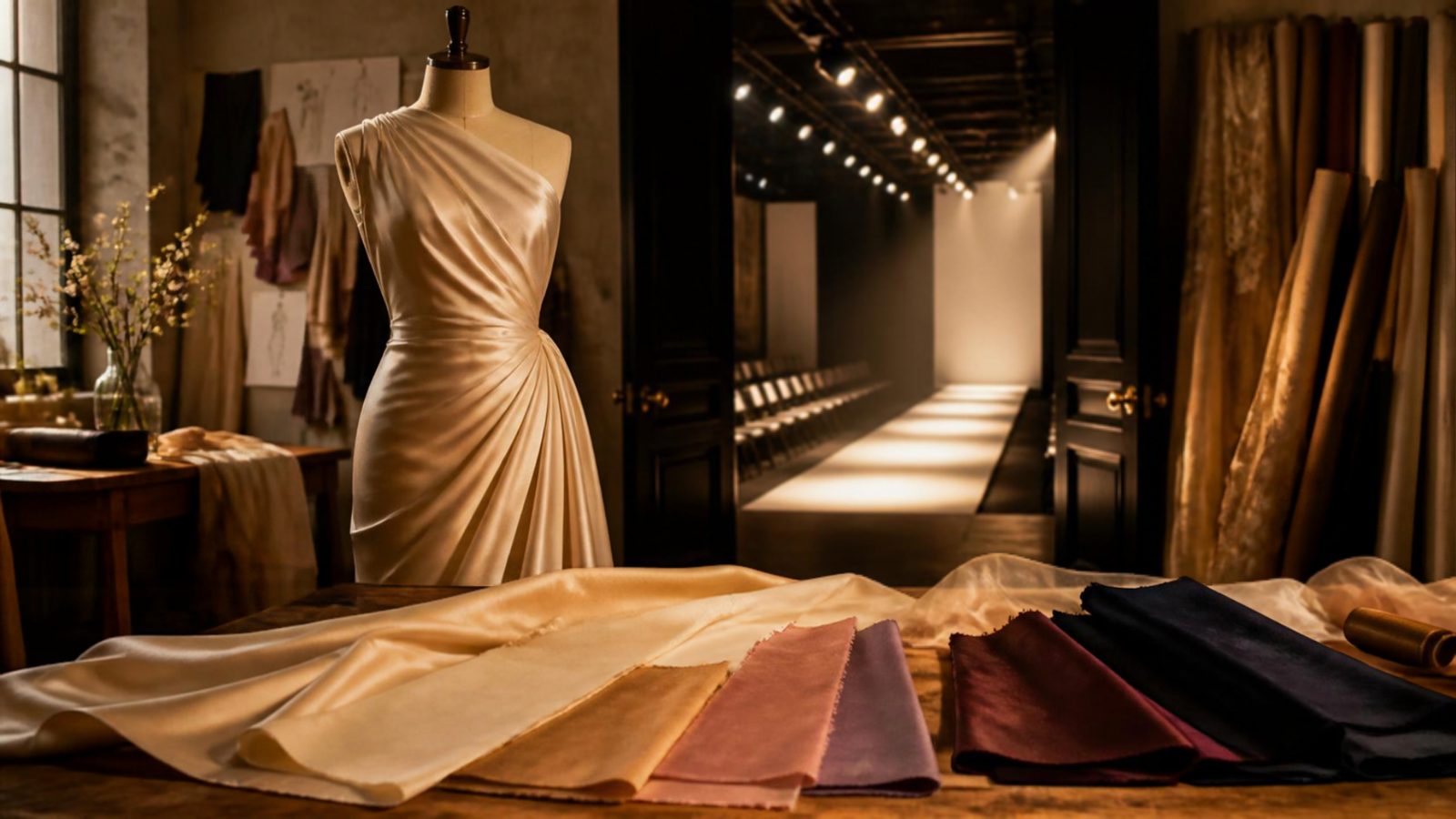
At New York Fashion Week this month, the most interesting AI in the room wasn’t generating models or campaign images — it was working backstage, before a single extra garment got cut. Google says it built custom tools in Google Flow, its AI creative studio, alongside designers Jane Wade and Sergio Hudson to help them plan their shows. Google published details on September 18, and the project is worth a look for one reason above all: it points AI at the expensive, slow decisions that happen before a runway show, not at the creative work audiences actually came to see.
What the Two Designers Actually Got
The tools were built by Google’s Envisioning Studio with support from Google Labs, and each one was built around a specific problem in that designer’s studio rather than handed over as a general-purpose app.
For Jane Wade, the target was casting and fittings. Google says in-person casting and fittings can take a design team as long as three full days. Her styling suite let the team swap hair, makeup, accessories, shoes, and garments on models digitally. That meant they could judge whether a look felt balanced, or whether something was missing from the collection, before anyone made a physical piece. According to Google, that cut out cutting and sewing extra garments that would never have made it to the runway.
Sergio Hudson’s tool dealt with money. He was staging a show on a tight budget. In past seasons, asking his production crew to change lighting or props added cost, because every design revision needed a fresh 3D rendering. His runway visualization tool simulated the show environment instead. He could adjust the venue setup, lighting, and props within budget limits he set himself, and refine the paths models would walk, without paying for another round of renders each time.
Why “Backstage AI” Is the Smarter Bet
This year has been rough for AI’s image in fashion. When Gucci promoted its February Milan show with images labeled as AI-created, critics online dismissed the campaign as “AI slop.” Tools that promise to replace the photoshoot outright, which we’ve covered here before, run into the same question every time: why pay luxury prices for something no human made?
The Google project avoids that argument. Nothing the tools produced was meant for the audience. The collections were still designed, sewn, and walked by people. The AI helped with the decisions that come before all that: which styling works, which piece isn’t needed, what the lighting should look like. When those decisions go wrong, they cost fabric, labor, and production budget. That’s why pre-production is a better use of AI than making the finished product. It also answers the complaint about creative homogenization: if the output is a planning decision rather than a published image, there’s no generic “AI look” to criticize.
The waste angle matters too. Every sample that doesn’t get cut is fabric and labor saved. For small labels, where one wasted sample can take a real bite out of a season’s budget, that could matter as much as the time saved.
What to Keep in Perspective
This is a case study published by Google about its own product, so read it that way. Google hasn’t released hard numbers such as hours saved, samples avoided, or dollars cut from production. It also hasn’t said which underlying AI models powered the tools. Two designers working closely with a Google team is also very different from an independent label building the same thing alone.
The practical takeaway is Google’s pitch that anyone can describe a tool or workflow in plain language and build it in Flow without writing code. If that holds up for small studios, the useful question for a designer isn’t “should AI design my collection?” It’s “which of my slow, costly pre-show decisions could I test digitally first?” Fittings, colorway comparisons, and set planning are the obvious places to start.
FAQ
What is Google Flow?
Google Flow is Google’s AI creative studio. According to Google, users can build their own custom tools in it by describing the tool or workflow they want in natural language, with no coding experience required.
Did AI design the collections shown at New York Fashion Week?
No. According to Google’s account, the tools helped Jane Wade and Sergio Hudson with show preparation: styling and fitting decisions for Wade, and runway staging within budget for Hudson. The clothes themselves were still designed and made by the designers’ teams.
Can smaller fashion brands use the same approach?
Google says Flow’s tool-building doesn’t require coding, which in principle opens it up to small studios. But the NYFW tools were built with direct help from Google’s own team, and Google hasn’t published results data. Brands should start with a single, well-defined pre-production task and measure whether it actually saves time or samples.
Source: Google, The Keyword blog — “Reimagining New York Fashion Week prep with Google Flow” (Yeawon Choi, UX Designer, Envisioning Studio, September 18, 2026), https://blog.google/innovation-and-ai/technology/ai/google-flow-fashion-week/ — with additional context from Outlook Luxe’s February 2026 report on reaction to Gucci’s AI-generated Milan Fashion Week imagery.
By Michelle Jones, Fashion News GF